


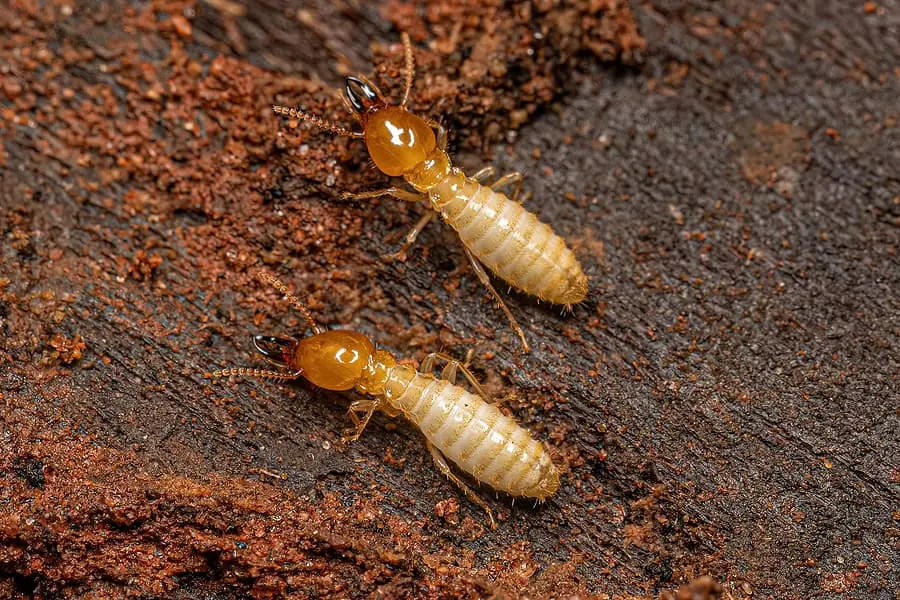
A holiday home in Plett can stand empty for ten months of the year. Subterranean termites don't take holidays. By the time someone notices a sagging cupboard door in December, they've often been busy since the previous summer.
Suspect termites in a Plettenberg Bay house? Get it inspected before you touch anything, and above all before you spray. Subterranean termites nest underground and reach the timber in a building through cracks, joints and soil tunnels of their own making, eating it from the inside where nobody sees. What lasts is a treated barrier in the soil along and under the building, together with treatment of the live galleries. A can of spray kills the termites in sight and leaves the colony untouched, and broken tunnels are simply rebuilt somewhere else.
We inspect and treat termites in holiday homes, permanent homes, estates, guest houses, lodges and commercial buildings across Plettenberg Bay and the surrounding area.
Why termites go unnoticed in Plett
More than in most towns, Plett homes are empty for long stretches. Nobody is there to notice mud tubes creeping up the garage wall in winter, or the swarm of winged termites pouring out of a crack after spring rain. Caretakers and rental agents tend to look at the obvious things: the pool, the garden, the locks. Termites get a long head start, and the first sign is often damage: a door frame that crumbles, a built-in cupboard that's come loose from the wall, or skirtings that sound hollow.
The other thing about Plett is the timber. Big decks with views over the bay, timber stairs down to the beach, wooden pergolas, timber ceilings, cladding and thatch-roofed lapas are all part of the town's style, and much of that timber sits close to, or in contact with, the soil.
Signs to ask your caretaker to check
If you're not in Plett often, send this list to whoever looks after the house:
- Thin brown tunnels of soil on walls, foundations, garage floors, pillars or the backs of cupboards
- Small piles of identical, papery wings on windowsills or near lights
- Skirting boards, door frames or deck boards that sound hollow or feel soft
- Paint that bubbles or cracks over timber
- Boxes or papers stored on the garage floor that have been eaten from below
- Soil packed into cracks in tiles or plaster where it shouldn't be
Our subterranean termites profile has photos of each.
Decks, stairs and outdoor timber
Timber posts set into soil give termites a direct route into decks, and from decks into the house. On older decks, the timber treatment may have worn off cut ends and post bases. If you're replacing or extending a deck, use treated timber, keep wood out of soil where you can, and have the soil around the post footings treated. If an existing deck feels spongy or posts sound hollow, have it looked at before a board gives way under someone.
How we treat termites in Plett
- Inspection The house, garage, outbuildings, decks and stairs, and the ground along the foundations, checking for live routes as well as damage.
- A clear proposal You, or your caretaker, see exactly where the termites are working and what we plan to treat, including any drilling.
- Soil treatment A termiticide barrier along the foundations and around deck and stair footings, trenched into open ground or injected through drilled holes where it's paved.
- Direct treatment Live galleries in timber are treated where they are.
- A written summary If you're not in Plett, you'll get a plain account of what we found and did, and what needs a carpenter.
The work is covered by our guarantee, and its terms come in writing with your quote.
Planning around the season
If you can, have termite work done outside December and Easter, when the house is empty and drilling and trenching won't disturb guests or family. Treated areas need to dry, and paving that's been drilled needs to be made good. Let us know your booking calendar if the house is let.
Thatch and lapas
Thatched roofs and lapas use timber poles and battens, and the poles that go into the ground or sit on a base close to the soil are at risk. Check pole bases for soil tubes and softness.
Building or renovating in Plett?
Treat the soil before the slab is cast on any new house, extension or renovation. Doing it later costs far more. See soil poisoning.
Termites or wood borer?
Earth tunnels and timber hollowed out with no holes on the surface: termites. Small round holes with fine powder beneath them: wood borer beetles. When you sell, the beetle certificate in Plett deals with the beetles only, not termites.
What it costs
We quote after the inspection. The things that matter are how much foundation and how many deck and stair footings need treating, how much paving or flooring has to be drilled, how awkward the site is (dune and steep sites take longer), and how far the termites have spread. Termites in one garage are a far smaller job than a full barrier round a large house with lots of paving and decking.
Background on the termites themselves is on termite control; for the rest of our work in Plett, see pest control in Plettenberg Bay. Phone 044 012 5011 or request an inspection, and let us know if a caretaker will meet us.
Which termite is it?
Three termites, three very different problems. Match what you're seeing to the right one.
 In the timber
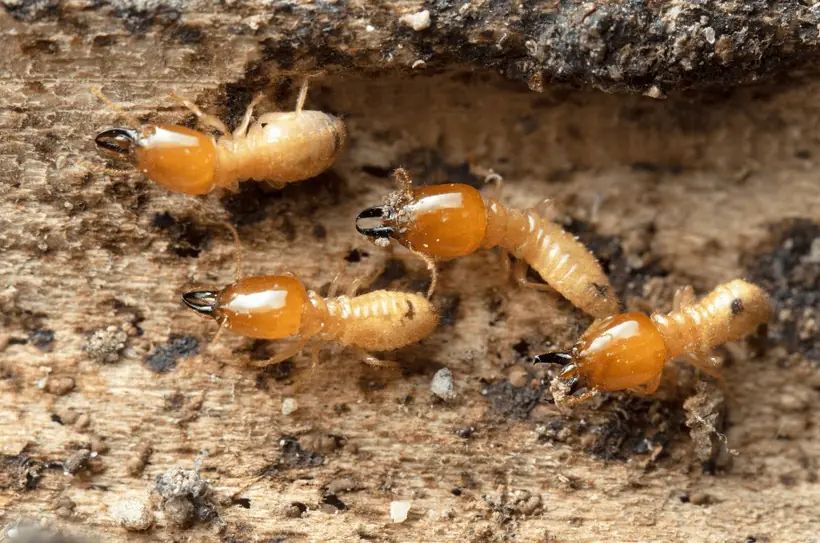
Drywood termites
Live and nest inside dry wood
- Nest
- Inside the wood itself
- Soil contact
- None, no mud tubes
- Eats
- Furniture, frames, roof timber
- Tell-tale sign
- Tiny hard pellets
What you'll notice
Small heaps of sand-like pellets under pin holes in timber, that come back after you sweep them up.
Risk level
- Building timber
- Lawn and garden
- Hard to spot
 In the soil
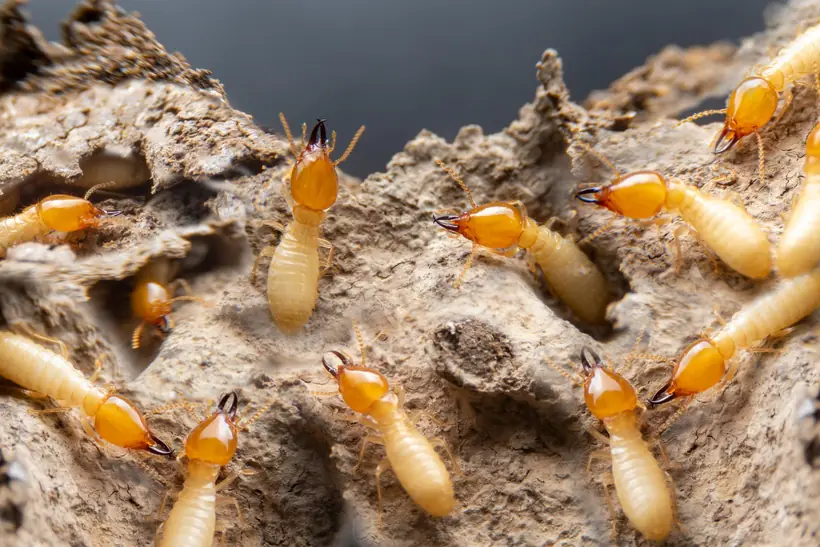
Subterranean termites
Nest underground, travel in mud tubes
- Nest
- In the soil
- Gets in by
- Mud tubes up walls
- Workers
- Pale cream, a few mm
- Swarms
- Warm evenings after rain
What you'll notice
Pencil-thick mud tubes up a foundation, a wall or the back of a cupboard, and wings on the windowsill after rain.
Risk level
- Building timber
- Lawn and garden
- Hard to spot
 In the lawn
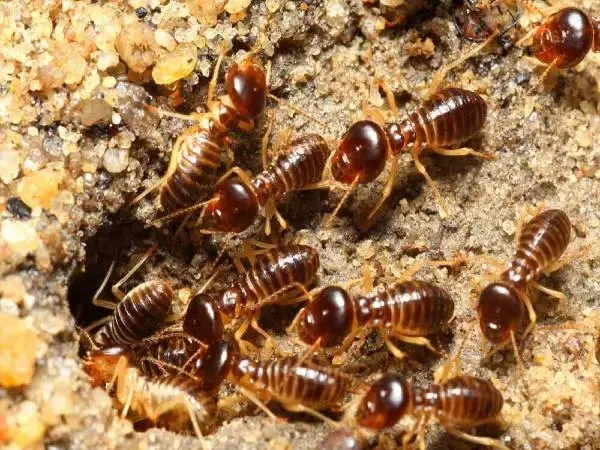
Harvester termites
Cut grass and carry it underground
- Nest
- Deep underground
- Eats
- Grass and plant litter
- Workers
- Brown to almost black
- Out foraging
- Cool mornings and evenings
What you'll notice
Small holes with loose soil heaps, grass cut into short pieces, and bare patches that grow in dry weather.
Risk level
- Building timber
- Lawn and garden
- Hard to spot
Frequently asked questions
Can termites damage a holiday home while it's empty?
Yes. With nobody there to notice the early signs, termites can work for months before the damage shows. Ask your caretaker to look for mud tubes and shed wings after rain.
Must we be home while you inspect for termites?
No. Your caretaker or agent can let us in, and we'll send you a clear report of what we found and what we suggest.
We found a pile of small wings on the windowsill. What does that mean?
Termites and flying ants both drop their wings after a swarm. If the four wings are all the same length, it points to termites, so get it looked at, especially if it happened indoors.
When is the best time to treat a holiday home?
When nobody's staying, away from December and Easter, so drilling and trenching won't disturb anyone.
Are newer estate homes safe from termites?
Not automatically. Treated roof timbers help, but termites can still reach skirtings, door frames and built-in cupboards from the ground, particularly where soil or paving has been built up against the walls.
Will the treatment smell or mark the house?
No. We use odourless products that don't stain, and the house is fine to use once the treated areas have dried.