


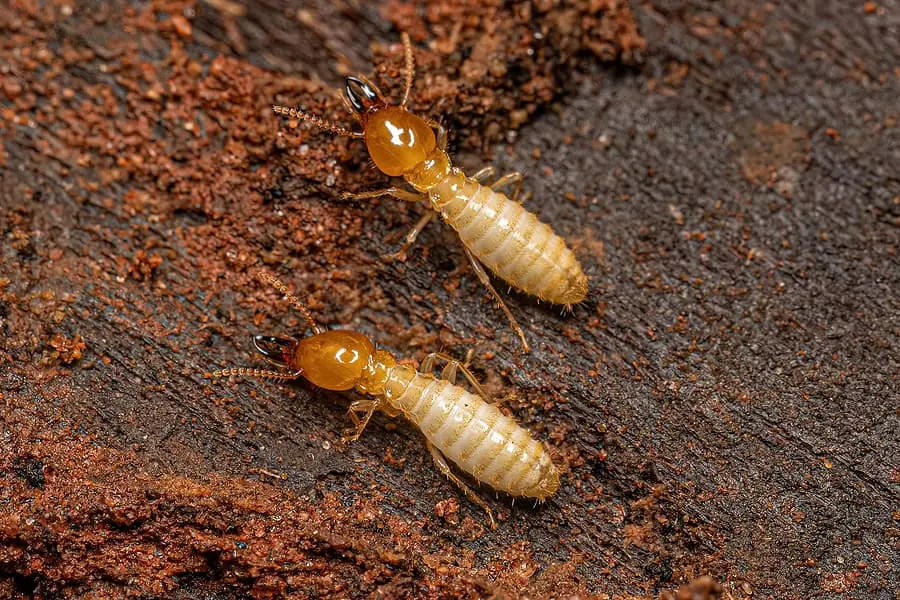
Sandy soil drains fast, so you'd think termites would struggle here. They don't. They simply follow the water to wherever your house keeps it.
Subterranean termites in Sedgefield are stopped by treating the soil around and under the house so they can't reach the timber, dealing with any active galleries we find, and fixing whatever is keeping the ground damp against the walls. In loose sand termites travel easily, and they head for moisture: an outside tap that drips, a bed that's watered every evening, the shaded ground under a deck that never quite dries out.
We inspect and treat houses, holiday homes, cottages and new builds in Sedgefield and along the coast towards Buffalo Bay and Wilderness.
Sand, water and timber
Sedgefield sits on sand between the sea, Swartvlei and Groenvlei. Sand is easy to tunnel through, and its surface dries quickly, so termites keep deeper and come up where it stays moist. Around a house, that usually means:
- Garden beds and lawn irrigated right up to the walls
- The ground under decks and timber stairs, which stays shaded and damp
- Leaking taps, geyser overflows and downpipes that empty against the foundations
- Sand that has crept up over the years until it sits above the damp course
Add timber decks, cladding, wooden floors and the occasional timber-framed home, and there's plenty for them to eat once they arrive.
Signs to look for
- Thin, earthy tubes on foundation walls, deck posts, inside cupboards and behind skirtings
- Deck boards or stair treads that feel spongy, or sound papery when tapped
- Door frames or skirtings that crumble when pressed, with soil packed into the damage
- Swarms of winged insects indoors after a warm, humid spell or the first summer rain, followed by little piles of discarded wings
Termite damage often hides behind a perfectly painted surface. If a skirting gives under a screwdriver, stop prodding and leave it for the inspection, so we can see where they're working.
Decks deserve their own check
A deck is often the first part of a Sedgefield house that termites reach. Posts set straight into sand, bearers resting on the ground and boards fixed tight against the wall all give them a route. When we inspect, we look under the deck as well as along it, and we'll tell you if posts should be lifted onto concrete footings or the sand underneath cleared back from the timber.
How we treat
- Inspection Inside, outside and under the floor or deck where we can get to it, looking for activity, damage and moisture.
- A treated zone around the house In sandy ground, a trench along the foundations is treated and filled in again. Where paving or a slab runs up to the wall, small holes are drilled so the soil beneath can be reached.
- Active galleries Timber where termites are working is treated directly.
- The moisture We point out leaks, irrigation and sand levels so the treated zone isn't undermined.
You stay in the house throughout. Children and pets keep clear of the work area until it has dried, and that's all. Termite treatments come with our guarantee, written into the quote along with its terms.
Empty from Easter to December
When nobody's living in the house for most of the year, a colony can work away unseen the whole time. If the place is let, ask your agent or cleaner to glance along the skirtings and deck posts at each changeover, and book an inspection every couple of years. Nobody needs to be home for it.
New builds and extensions
If you're building, treat the soil before the slab goes down. It happens in two stages, first in the open foundation trenches and then on the levelled ground under the floor, and you get a certificate for the bank and the municipality. The soil poisoning page explains when to call us.
Buying a house here?
A beetle certificate is about wood-boring beetles and says nothing about termites. If the house you're buying has a deck, wooden floors or cladding close to the ground, a separate termite inspection before transfer tells you what you're taking on, and gives you time to sort it out before the furniture arrives.
A word about mulch
Thick bark mulch and woodchips piled against the house look tidy and keep beds moist. They also give termites a damp, food-filled bridge straight to the walls. Keep mulch at least a hand-width from the foundations, and never let it cover the damp course.
What it costs
Sedgefield termite quotes take in the length of the foundations, the amount of paving to drill through, the extent of live damage, whether the deck needs attention, and whether any timber has to be treated. We'll inspect before we quote, so the number you get reflects your house rather than a guess.
How these termites live and travel is explained on our subterranean termites page, and the wider region is covered under termite control. Everything else we do here is on the Sedgefield page. To book an inspection, phone 044 012 5011 or request one online.
Which termite is it?
Three termites, three very different problems. Match what you're seeing to the right one.
 In the timber
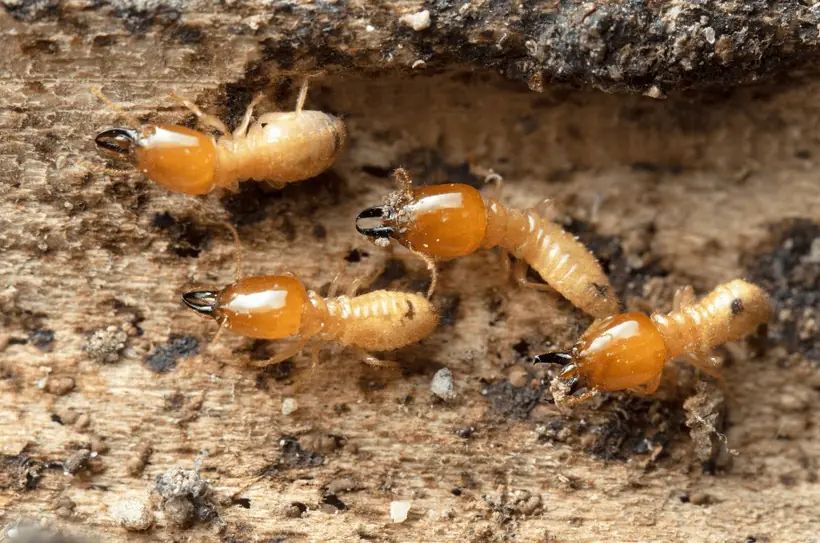
Drywood termites
Live and nest inside dry wood
- Nest
- Inside the wood itself
- Soil contact
- None, no mud tubes
- Eats
- Furniture, frames, roof timber
- Tell-tale sign
- Tiny hard pellets
What you'll notice
Small heaps of sand-like pellets under pin holes in timber, that come back after you sweep them up.
Risk level
- Building timber
- Lawn and garden
- Hard to spot
 In the soil
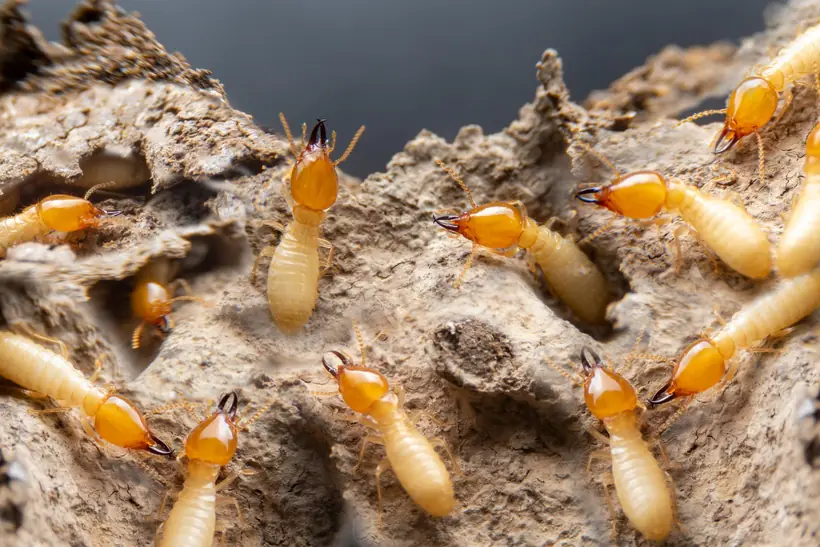
Subterranean termites
Nest underground, travel in mud tubes
- Nest
- In the soil
- Gets in by
- Mud tubes up walls
- Workers
- Pale cream, a few mm
- Swarms
- Warm evenings after rain
What you'll notice
Pencil-thick mud tubes up a foundation, a wall or the back of a cupboard, and wings on the windowsill after rain.
Risk level
- Building timber
- Lawn and garden
- Hard to spot
 In the lawn
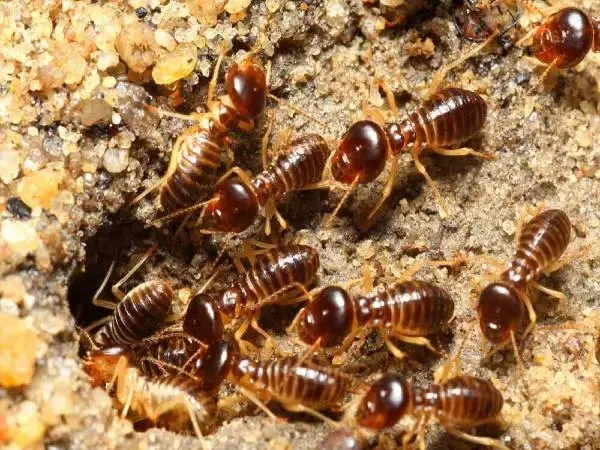
Harvester termites
Cut grass and carry it underground
- Nest
- Deep underground
- Eats
- Grass and plant litter
- Workers
- Brown to almost black
- Out foraging
- Cool mornings and evenings
What you'll notice
Small holes with loose soil heaps, grass cut into short pieces, and bare patches that grow in dry weather.
Risk level
- Building timber
- Lawn and garden
- Hard to spot
Frequently asked questions
Can termites really live in Sedgefield's sandy soil?
Yes. Sand is easy for them to tunnel through. They stay deeper where it's dry and come up wherever a garden bed, a leak or a deck keeps it damp.
Our deck boards feel soft. Is it termites or rot?
It can be either, or both. Termite damage usually has soil packed into it, while rot is soft, dark wood with no soil. An inspection will tell you which.
Should the sand under a new deck be treated?
It's worth doing, along with standing the posts on concrete footings rather than setting them straight into sand.
Do we need to be home for an inspection?
No. A caretaker or neighbour can open up, and the results come to you by email.
Do termites go for thatched roofs?
Subterranean termites start with timber at ground level, so the poles and frames where they meet the soil matter far more than the thatch itself.
Is garden mulch a problem?
Bark and woodchips against the walls keep the soil damp and give termites a bridge. Keep mulch a hand-width from the foundations.