


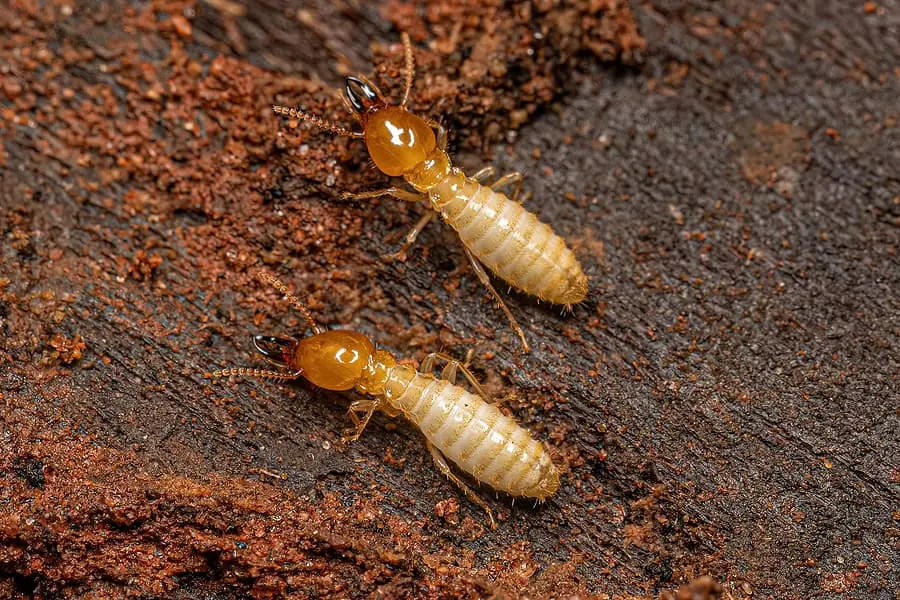
George gets more rain than most of the Garden Route, and subterranean termites like damp soil. If you've found mud tubes on a wall or winged insects pouring out of a crack after a storm, here's what happens next.
Found termites in a George house? Don't spray them and don't scrape off the mud tubes. Photograph what you've found, leave it as it is and get the building inspected. Subterranean termites nest underground and come up into the house through hairline gaps, so lasting control means putting a treated zone in the soil around and beneath the building, which cuts the colony off from the timber it has been feeding on. Spray from a can kills a handful of workers and sends the rest deeper into the walls.
We inspect and treat termites in homes, townhouse complexes, estates, churches, schools and business premises all over George, in old suburbs and new developments alike.
Why George has termite trouble
Three things about George suit subterranean termites. The first is the rain: George sits under the Outeniqua Mountains and gets regular rain through the year, so the soil stays damp, and termites need moisture to survive. The second is the timber: many older George homes have timber floors, door frames, skirtings and roof structures that termites can reach from the ground. The third is growth: new suburbs and estates have gone up on old farms, plantations and bush, and the termite colonies that lived there didn't leave when the houses went up.
What a George termite problem usually looks like
It often starts with something small. A thin brown tunnel creeping up the inside of a garage wall. A door frame that crumbles when someone replaces a hinge. A built-in cupboard that has started to lean. Or a swarm: on a warm, muggy evening after rain, dozens of winged insects pour out of a crack in the floor or from behind a skirting, fly to the lights and drop their wings on the windowsill.
Other signs we look for on inspection:
- Skirtings or door frames that sound hollow when tapped, or give way under a screwdriver tip
- Paint that bubbles or cracks over timber
- Soil packed into cracks in plaster, tile grout or floor joints
- Cardboard boxes, books and files on a garage or storeroom floor that have been eaten from underneath
- Mud tubes on foundations, pillars, pipes and the backs of cupboards
Not sure if they're termites or flying ants? Our guide to flying ants or termites sets them side by side, and the subterranean termites profile explains how a colony works.
How we treat termites in George homes
- Inspect Inside and out: walls, floors, cupboards, the roof space, the garage and the soil along the foundations. We're establishing where the termites are working, how they're getting in, and how the floors and foundations are built.
- Agree the plan Termite work often means drilling through paving, patios or floors to reach the soil, so we walk you through the activity and the proposed treatment before anything is drilled.
- Barrier Termiticide goes into the soil along the foundations, by trenching in open ground and by drilling and injecting through paving and slabs, leaving an unbroken treated zone the colony can't cross without contact.
- Treat what's active Tubes and timber with live termites in them are treated directly.
- Repairs Timber that's too far gone needs a carpenter or builder, once the termites are under control.
Termite work carries our guarantee, on terms we put in writing with your quote.
Building or extending in George?
Building a new house, granny flat, garage or extension? Get the soil under the new slab treated before the concrete goes in. It's far simpler and cheaper than treating afterwards, and the certificate is worth keeping with your building plans for the day you sell. See soil poisoning in George.
Selling a house?
A beetle certificate covers wood-boring beetles, not termites. If you're selling an older house and want to know about termites too, ask for both to be checked. Our page on beetle certificates in George explains what the inspection covers.
Termites in the lawn?
If the problem is bare, dying patches in the lawn with small soil heaps and holes, and short pieces of cut grass nearby, that's harvester termites, a different species that eats grass rather than houses. They're treated differently. See harvester termites.
What helps in the meantime
- Stack firewood, offcuts and old cardboard well away from the house and garage walls
- Fix dripping taps, gutters and downpipes that keep the soil wet along the foundations
- Put stored boxes on shelves or pallets rather than straight on the garage floor
- Pull garden beds and mulch back so they don't bury the air bricks or sit against the wall
What it costs
We quote only after an inspection. The length of foundation to be treated, how much paving or floor has to be drilled, whether there's a suspended timber floor, and how far the termites have spread all affect it. Termites in one corner of a garage are a fraction of the work of a full barrier around a big house with paved surrounds.
Our termite control page covers the whole region, and pest control in George lists our other services. Book a termite inspection in George on 044 012 5011, or through the website.
Which termite is it?
Three termites, three very different problems. Match what you're seeing to the right one.
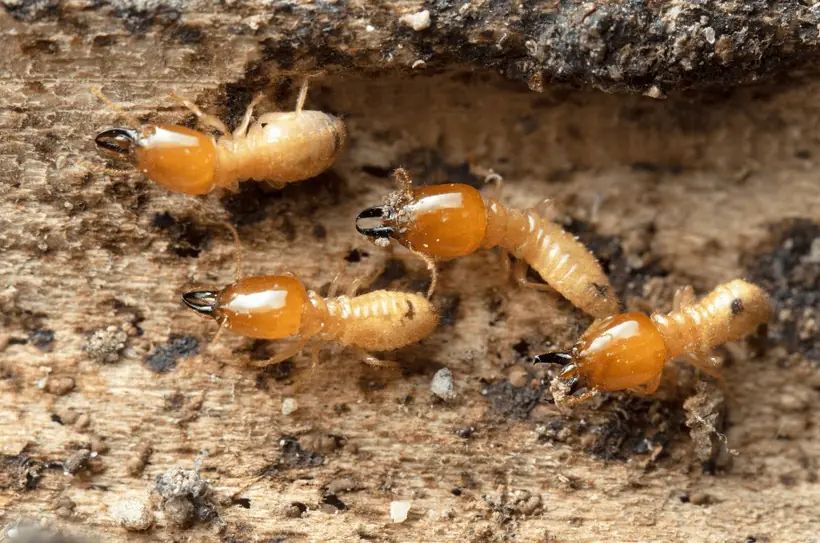 In the timber
Drywood termites
Live and nest inside dry wood
- Nest
- Inside the wood itself
- Soil contact
- None, no mud tubes
- Eats
- Furniture, frames, roof timber
- Tell-tale sign
- Tiny hard pellets
What you'll notice
Small heaps of sand-like pellets under pin holes in timber, that come back after you sweep them up.
Risk level
- Building timber
- Lawn and garden
- Hard to spot
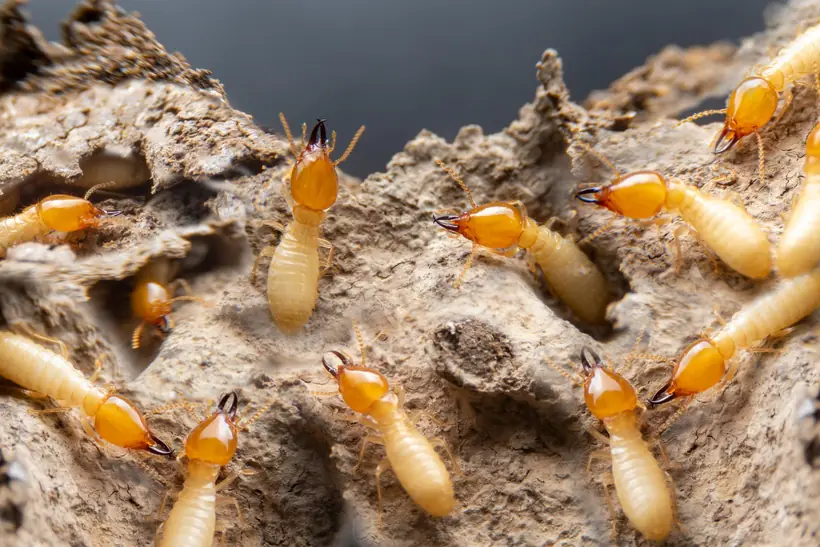 In the soil
Subterranean termites
Nest underground, travel in mud tubes
- Nest
- In the soil
- Gets in by
- Mud tubes up walls
- Workers
- Pale cream, a few mm
- Swarms
- Warm evenings after rain
What you'll notice
Pencil-thick mud tubes up a foundation, a wall or the back of a cupboard, and wings on the windowsill after rain.
Risk level
- Building timber
- Lawn and garden
- Hard to spot
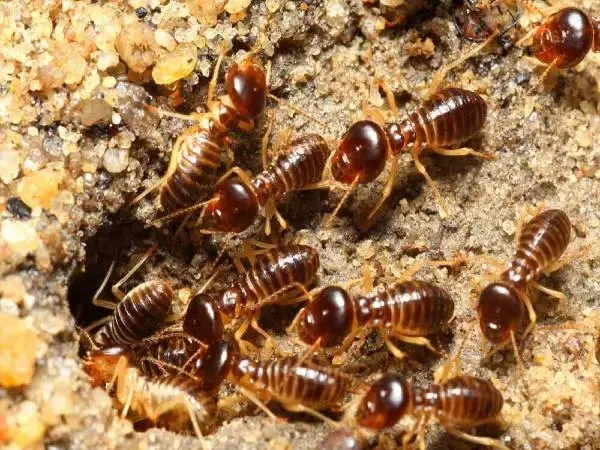 In the lawn
Harvester termites
Cut grass and carry it underground
- Nest
- Deep underground
- Eats
- Grass and plant litter
- Workers
- Brown to almost black
- Out foraging
- Cool mornings and evenings
What you'll notice
Small holes with loose soil heaps, grass cut into short pieces, and bare patches that grow in dry weather.
Risk level
- Building timber
- Lawn and garden
- Hard to spot
Frequently asked questions
How can I tell if there are termites in my George house?
Thin mud tubes running up walls or foundations, skirtings and door frames that sound hollow when tapped, paint that bubbles over timber, and swarms of winged insects after rain. An inspection tells you for sure.
Why do termites do well around George?
The soil stays damp for much of the year, and subterranean termites need moisture. Where a house has timber they can reach from the ground, they'll find it.
Should I break open the mud tubes?
Leave them. Breaking a tube just sends the termites off to build another one somewhere less obvious. Photograph what you see and show us.
Will you need to drill through my paving?
Where paving or a slab runs right up to the wall, yes: small holes let us treat the soil underneath. We'll mark where they go before we start.
What does the guarantee on termite work look like?
It's in writing. You get the terms with your quote, so you know what's covered before you say yes.
I'm selling in George. Does the beetle certificate cover termites?
No, that certificate is about wood-boring beetles. If you or the buyer want termites checked too, book a termite inspection alongside it.