

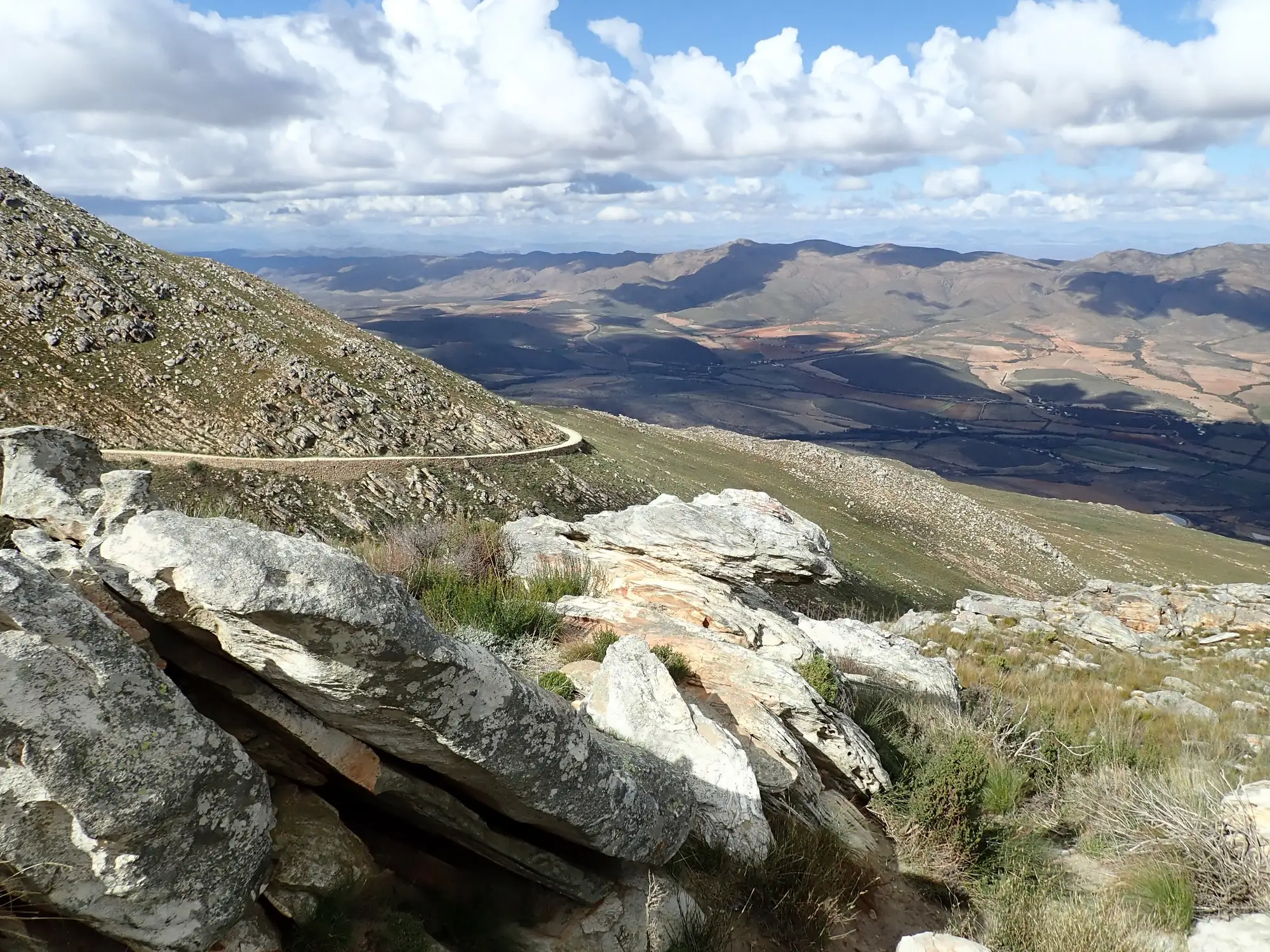
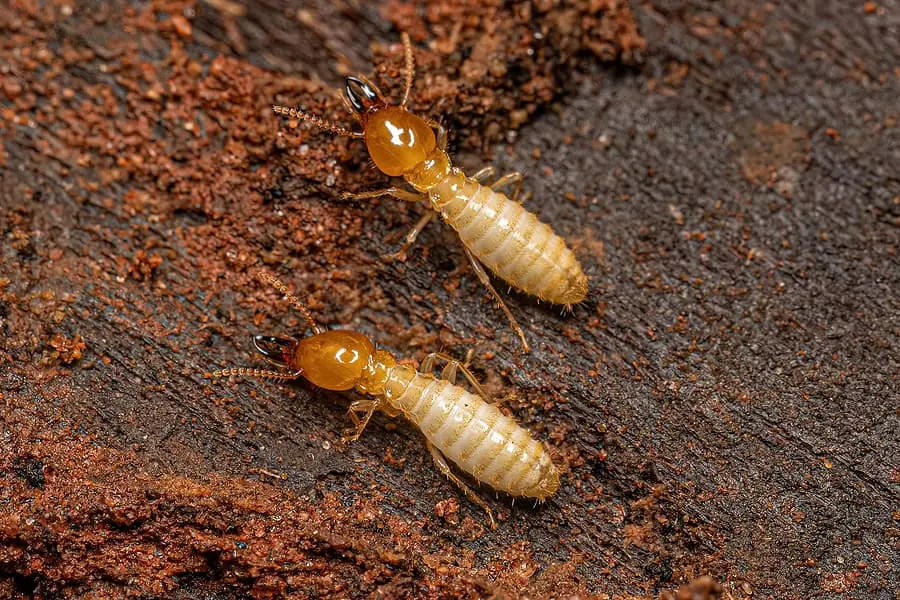
Bare patches in the lawn and a hollow-sounding door frame are two very different termite problems. In Oudtshoorn you can have both on one property.
Oudtshoorn has two termite problems, and they need different answers. Harvester termites strip lawns, gardens and grazing but never touch the house. Subterranean termites stay underground and eat timber: door frames, skirtings, built-in cupboards and floors. We treat both, and the first job on any visit is working out which one you've got.
Harvester termites: bare patches and cut grass
In a dry Klein Karoo year, harvester termites are hard to miss. Workers come up through small holes in the ground, cut grass into short lengths and carry it below, mostly in the cooler parts of the day and through autumn and winter. Signs:
- Small, round holes with little heaps of loose soil around them
- Short pieces of cut grass lying near the holes
- A lawn or camp that thins out and goes bare in patches, worst in drought
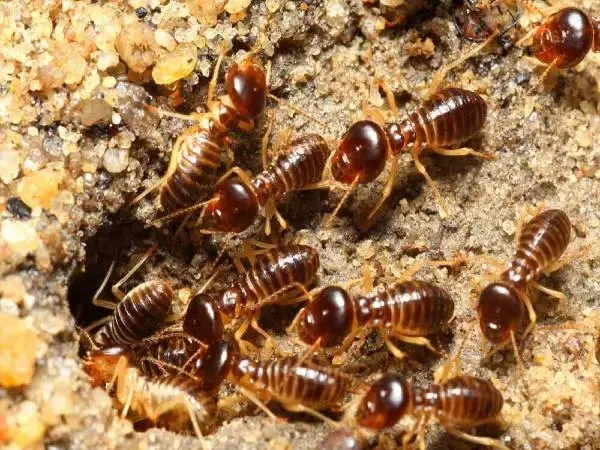
- Pale workers and darker, big-headed soldiers out in the open on a cool morning or an overcast afternoon
The treatment goes in at the active holes while the workers are out foraging, because that's how it gets back to the nest. Treating at midday in January, when nothing is moving, wastes everyone's time. A watered lawn usually recovers well once the termites are under control; veld takes longer and may need resting from grazing for a season. The harvester termites profile explains their life cycle, and grazing camps are covered under farm pest control.
Subterranean termites: the ones that damage houses
Their colonies are underground, and they enter a building through cracks in the slab, gaps around pipes, expansion joints and soil heaped against a wall. They avoid light and dry air, so they travel inside mud tubes and eat timber from the inside out. In a town where the air is dry most of the year, they head for moisture: a leaking geyser overflow, a flower bed watered right against the wall, a bath that has been dripping quietly for years.
What to look for:
- Earth tubes about as thick as a pencil climbing a wall, a foundation or the inside of a cupboard
- A skirting or door frame that sounds hollow, or gives under your thumb
- Paint bubbling or cracking over timber
- Winged termites inside after the first summer storms, and drifts of shed wings on windowsills
For the winged ones, our flying ants or termites guide helps you tell which is which.
Older houses in town
Oudtshoorn's older homes, including the sandstone houses from the ostrich-feather years, have thick walls, timber floors on joists and plenty of original joinery. That timber is exactly what termites want, and a suspended floor with damp soil underneath is an easy target. If you've bought an older house or are restoring one, have it inspected for termites before new floors or cupboards go in.
How we treat a house
- Inspection Inside and out, looking for tubes, damage, moisture and the routes into the building.
- A treated zone in the soil A shallow trench along the foundations, or small drill holes through paving and slab edges, so the soil against the building can be treated. Termites can't cross that zone without picking up the treatment.
- Active galleries Any in the timber are treated on the spot.
- The cause We point out leaks and soil levels that need fixing, because a treated zone with a wet flower bed against it won't last as well.
Our guarantee applies to termite treatments, and you'll see its terms on paper when we quote.
Building new?
Have the soil treated before the slab is cast. We need two visits: one while the foundation trenches are open, and one after the ground under the floor is levelled and compacted, before the plastic goes down. You get a certificate afterwards. Our soil poisoning page explains the timing in more detail.
The mistake we'd like to talk you out of
Assuming the Karoo is too dry for termites. Dry air keeps them underground and close to moisture, and the soil under a house, shaded and often watered around the edges, stays cooler and damper than the veld outside. A house in Oudtshoorn can have an active colony under the kitchen while the garden looks bone dry.
What it costs
For a house, the price depends on the length of the foundations, how much paving or slab must be drilled, how much active damage there is and whether timber needs treating as well. For harvester termites, it's the area of lawn or veld and the number of active holes. A suburban lawn is quick; a whole camp is a different job. We look before we quote.
For background on the house-wrecking kind, read about subterranean termites, and for the rest of the region see termite control. For everything else in town, see pest control in Oudtshoorn. Book a termite inspection on 044 012 5011 or online.
Which termite is it?
Three termites, three very different problems. Match what you're seeing to the right one.
 In the timber
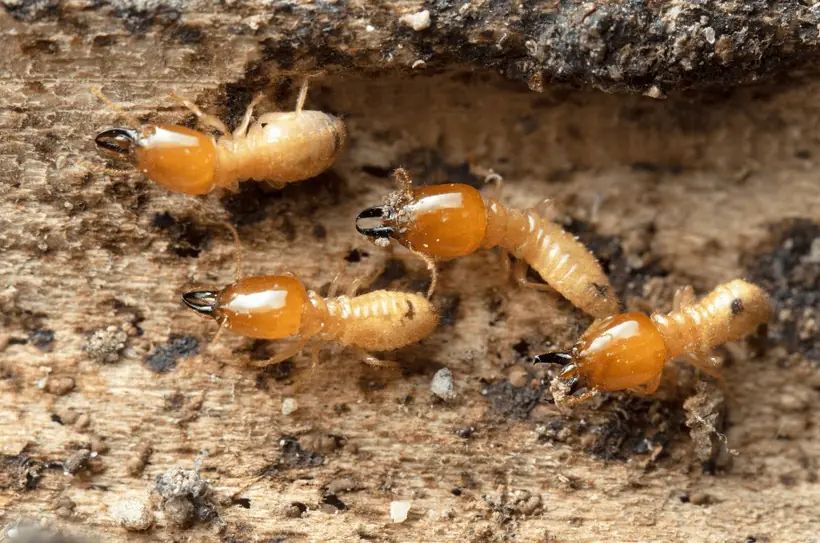
Drywood termites
Live and nest inside dry wood
- Nest
- Inside the wood itself
- Soil contact
- None, no mud tubes
- Eats
- Furniture, frames, roof timber
- Tell-tale sign
- Tiny hard pellets
What you'll notice
Small heaps of sand-like pellets under pin holes in timber, that come back after you sweep them up.
Risk level
- Building timber
- Lawn and garden
- Hard to spot
 In the soil
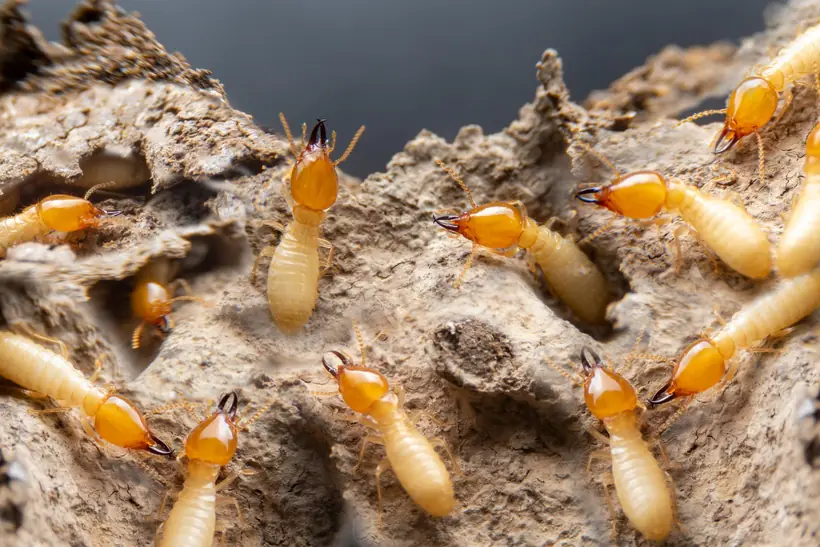
Subterranean termites
Nest underground, travel in mud tubes
- Nest
- In the soil
- Gets in by
- Mud tubes up walls
- Workers
- Pale cream, a few mm
- Swarms
- Warm evenings after rain
What you'll notice
Pencil-thick mud tubes up a foundation, a wall or the back of a cupboard, and wings on the windowsill after rain.
Risk level
- Building timber
- Lawn and garden
- Hard to spot
 In the lawn
Harvester termites
Cut grass and carry it underground
- Nest
- Deep underground
- Eats
- Grass and plant litter
- Workers
- Brown to almost black
- Out foraging
- Cool mornings and evenings
What you'll notice
Small holes with loose soil heaps, grass cut into short pieces, and bare patches that grow in dry weather.
Risk level
- Building timber
- Lawn and garden
- Hard to spot
Frequently asked questions
Will the termites stripping my lawn move into the house?
No. They feed on grass, dry leaves and plant litter, and leave timber alone. They can, however, strip a lawn or a camp bare in a dry year.
What time of day do you treat harvester termites?
When the workers are above ground: cool mornings, late afternoons and overcast days, more so in autumn and winter.
Are termites a problem in old Oudtshoorn houses?
They can be where there are timber floors, original joinery and moisture under the floor. An inspection tells you whether anything is active.
Can we stay in the house while you treat?
Yes. The drilling and treating happen around you. Keep children and pets away from the work area until it has dried.
Will the treatment harm my garden?
It goes into a narrow band along the foundations, not across the garden. Keep new beds and plantings out of that strip so it stays intact.
What are the winged insects after the first summer rain?
Either termites leaving the nest to start new colonies, or flying ants. A termite has no pinched waist, and its four wings are all the same length.