

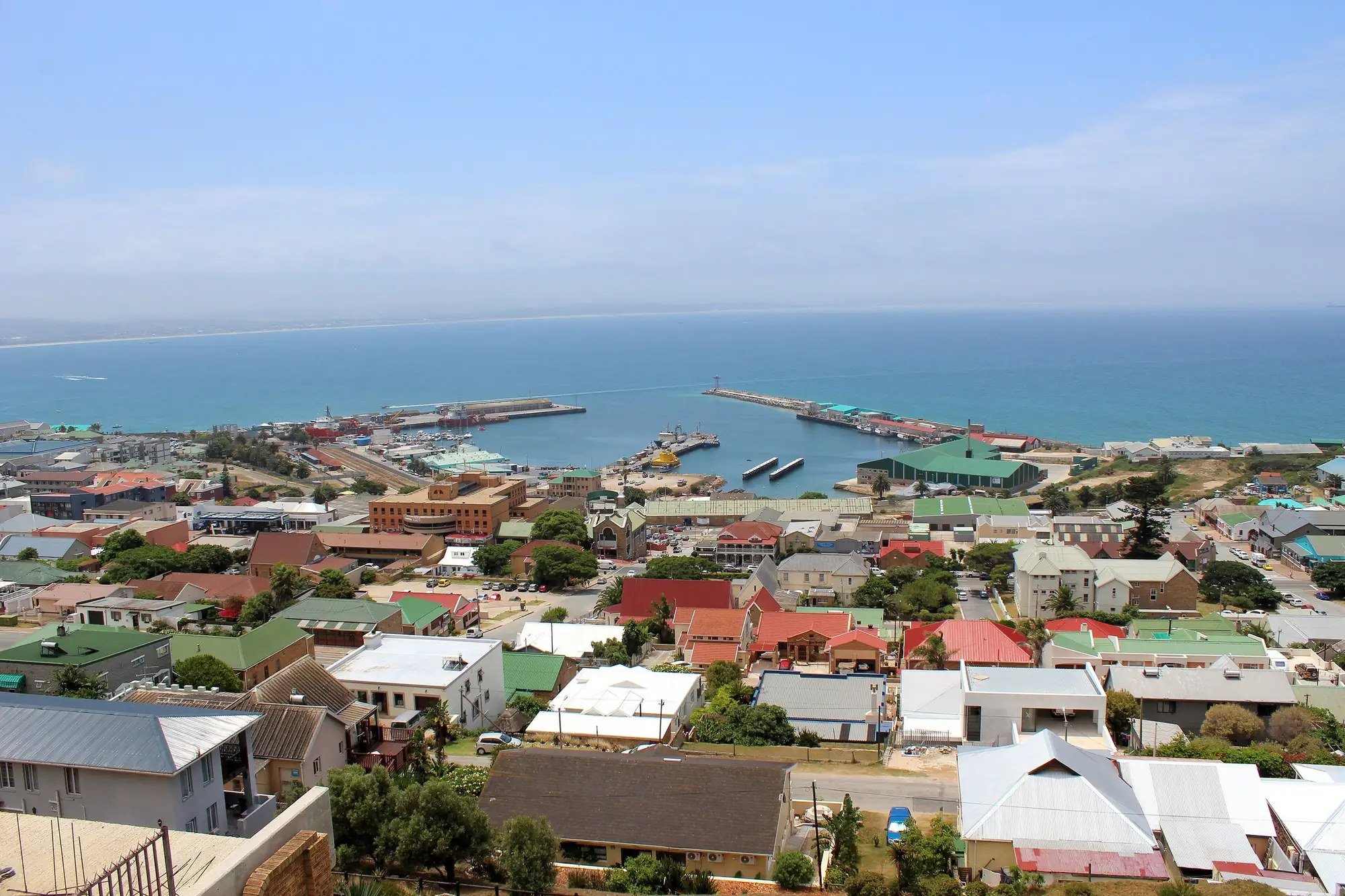
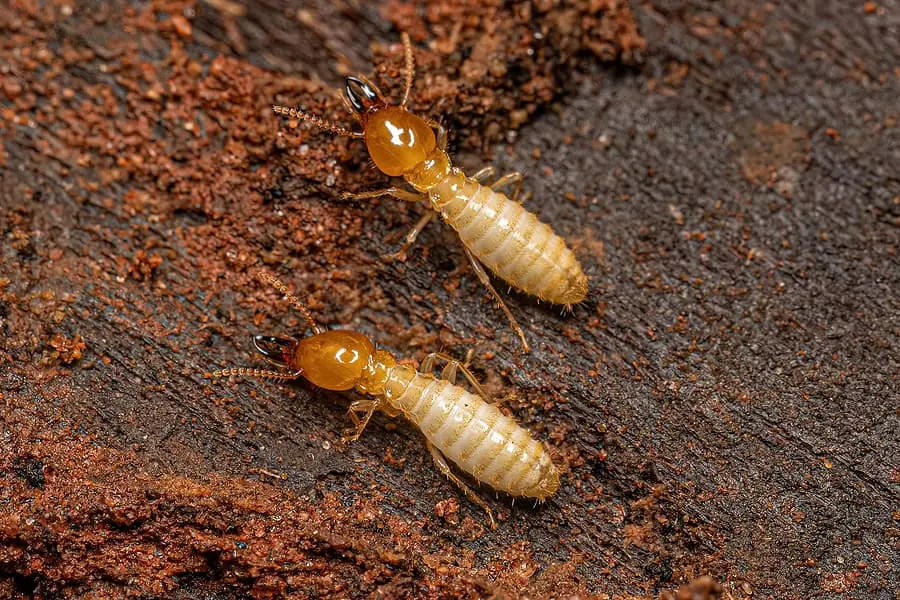
Mossel Bay is drier and windier than George, and people sometimes assume that means no termites. It doesn't. Subterranean termites find the damp spots: the leaking tap, the irrigated bed, the garage floor that never quite dries.
If you think a Mossel Bay house, complex or warehouse has termites, leave the mud tubes as they are, take photos and get it inspected. Subterranean termites nest in the ground and make their way into buildings through cracks, joints and their own earth tunnels, feeding on timber, paper, cardboard and anything else made of plant fibre. Lasting control comes from treating the soil along and under the building, so every termite coming up from the nest has to pass through it, and from treating active galleries directly. Spraying the termites in view, or breaking their tunnels, only shifts them further along the wall.
Termite inspections and treatments cover homes, townhouse and retirement complexes, schools, churches, warehouses and industrial premises across Mossel Bay.
Termites in a drier town
Mossel Bay gets less rain than George or Knysna, so termite activity tends to concentrate where moisture does. Colonies here tend to work where there's water:
- Irrigated beds and lawns against the house, especially where the sprinklers wet the wall
- Leaking taps, gutters and downpipes that keep one spot of soil permanently damp
- Garages and storerooms where boxes, papers and timber sit on a concrete floor
- Bathrooms and kitchens on the ground floor, where a slow plumbing leak keeps the slab moist
- Gaps around pipes that come up through the floor slab
That's useful to know, because fixing the moisture is part of keeping them out.
What termite damage looks like in Mossel Bay homes
- Thin, pencil-thick soil tunnels running up garage walls, along skirtings or behind cupboards
- Built-in cupboards, especially in kitchens and bathrooms, with soft or crumbling bases
- Door frames that sound hollow or crumble when the hinge is replaced
- Swarms of winged insects from a crack in the floor after the first warm rain, with piles of shed wings on windowsills
- Cardboard boxes in the garage eaten from underneath
Our subterranean termites profile shows what to look for, and if you've found winged insects, our guide to flying ants or termites helps tell them apart.
Retirement complexes and townhouses
Mossel Bay has many retirement villages and townhouse complexes, with units built close together on shared foundations. Termites don't stop at the wall between two units. If one unit has termites, the neighbouring units and the common property should be inspected too, and treatment is far more effective done as one job. We work with body corporates, managing agents and village managers to plan inspections and treatments for the whole complex, and to keep disruption to residents low.
Warehouses and industrial buildings
The harbour, the industrial areas and the businesses that serve them store a lot of timber pallets, cardboard and paper on concrete floors. Termites coming up through expansion joints in a warehouse slab can do real damage to stock and to timber fittings before anyone notices. Pallets left against walls and stock stored directly on the floor make it worse. An inspection and a barrier treatment along the building's perimeter and expansion joints protects the building. Our commercial pest control contracts can include regular termite checks.
How we treat
- Inspection Inside and out, including garages, storerooms, roof spaces and the ground along the foundations, looking for live routes and for whatever is keeping the soil damp.
- Proposal We point out the activity and explain what we'd treat and where any drilling would go.
- Barrier Termiticide is trenched into exposed soil along the foundations and injected through drilled holes in paving and slabs.
- Galleries Live termites in tunnels and timber are treated where they're found.
- Moisture We'll name the leaks and irrigation habits that are drawing termites to the walls.
As with all our termite work, it carries our guarantee, and the terms come in writing with your quote.
Building in Mossel Bay?
Get the soil treated before the slab goes down on any new house, extension or development. You won't find cheaper termite protection. Read about soil poisoning; builders and owner-builders can follow the steps in soil poisoning for a new build.
What helps
- Fix dripping taps, leaking gutters and downpipes that soak the ground beside the walls
- Aim sprinklers at the bed, not the wall
- Store boxes and timber on shelving, off the garage floor and away from the walls
- Don't let soil, mulch or paving sand bank up over the air bricks
- Stack firewood away from the house
What it costs
Termite treatment is always quoted after an inspection. What it costs comes down to how much foundation needs treating, how much paving or flooring must be drilled, whether it's one house or a whole complex, and how far the activity has spread. One garage is a small job next to a warehouse perimeter or a row of townhouses.
There's more on termites generally at termite control, and the rest of our Mossel Bay work is on pest control in Mossel Bay. Mossel Bay owners and complexes can call 044 012 5011 to book an inspection, or ask online.
Which termite is it?
Three termites, three very different problems. Match what you're seeing to the right one.
 In the timber
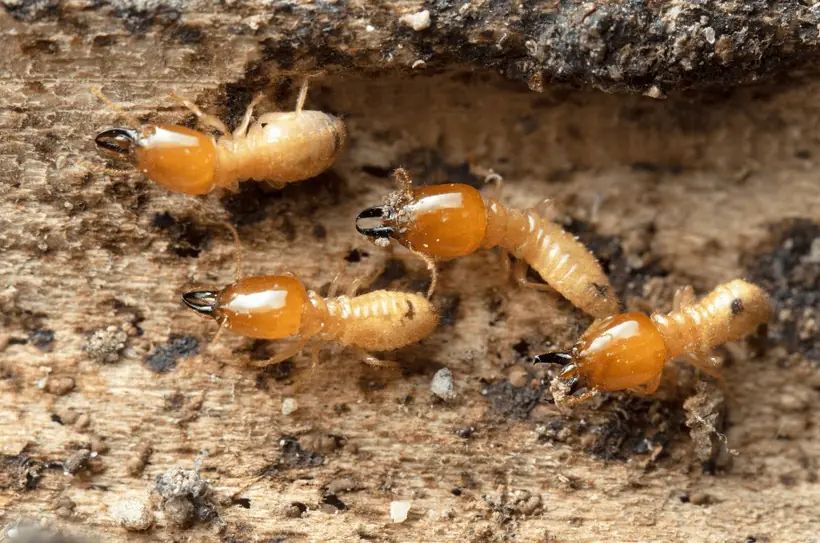
Drywood termites
Live and nest inside dry wood
- Nest
- Inside the wood itself
- Soil contact
- None, no mud tubes
- Eats
- Furniture, frames, roof timber
- Tell-tale sign
- Tiny hard pellets
What you'll notice
Small heaps of sand-like pellets under pin holes in timber, that come back after you sweep them up.
Risk level
- Building timber
- Lawn and garden
- Hard to spot
 In the soil
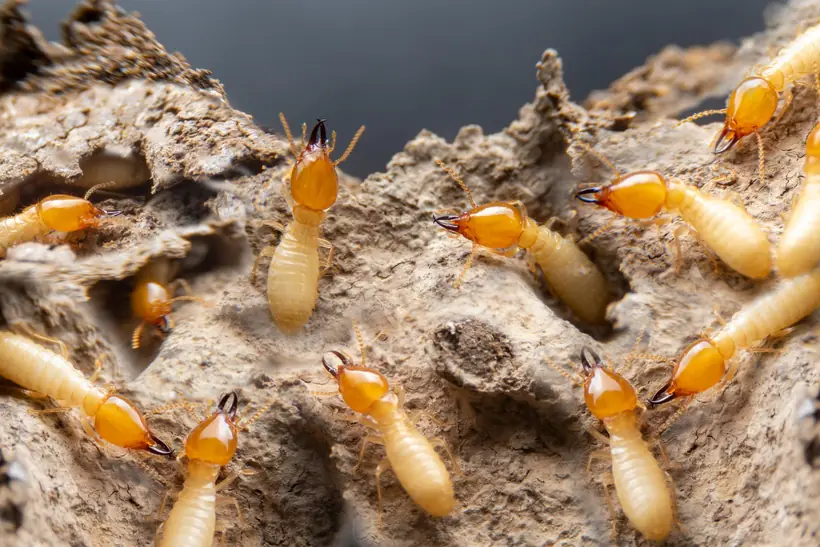
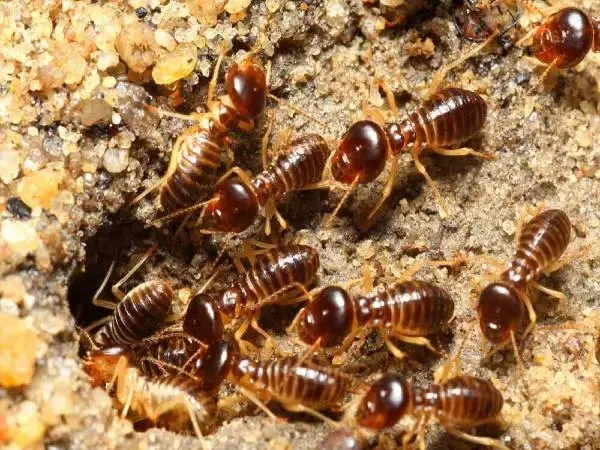
Subterranean termites
Nest underground, travel in mud tubes
- Nest
- In the soil
- Gets in by
- Mud tubes up walls
- Workers
- Pale cream, a few mm
- Swarms
- Warm evenings after rain
What you'll notice
Pencil-thick mud tubes up a foundation, a wall or the back of a cupboard, and wings on the windowsill after rain.
Risk level
- Building timber
- Lawn and garden
- Hard to spot
 In the lawn
Harvester termites
Cut grass and carry it underground
- Nest
- Deep underground
- Eats
- Grass and plant litter
- Workers
- Brown to almost black
- Out foraging
- Cool mornings and evenings
What you'll notice
Small holes with loose soil heaps, grass cut into short pieces, and bare patches that grow in dry weather.
Risk level
- Building timber
- Lawn and garden
- Hard to spot
Frequently asked questions
Are there termites in Mossel Bay if it's so dry?
Yes. Subterranean termites concentrate where the soil stays damp: irrigated beds, leaking taps and gutters, and under ground-floor kitchens and bathrooms.
Can termites spread between units in a complex?
Yes. Units share foundations and walls, so if one unit has termites, the neighbours and common property should be inspected too.
Do you treat warehouses for termites?
Yes. We treat along the building perimeter and expansion joints, and advise on keeping pallets and stock off floors and away from walls.
Why are my kitchen cupboards crumbling at the bottom?
A slow leak under the sink, combined with termites coming up through the slab, can do exactly that. Have it inspected before you replace the cupboards, or the new ones may go the same way.
Should a new house in Mossel Bay have soil poisoning?
Ideally, yes. It's done before the slab is cast, the one time the soil under the whole house is easy to reach.
Can I sort termites out with a spray from the hardware shop?
Spraying the termites you can see kills a few workers and leaves the colony underground untouched. Control has to reach the soil they're travelling through.