


A warm, sticky evening after the first proper rain, and suddenly there are hundreds of winged insects around the lights and a pile of wings on the windowsill. Here's how to work out what you're looking at.
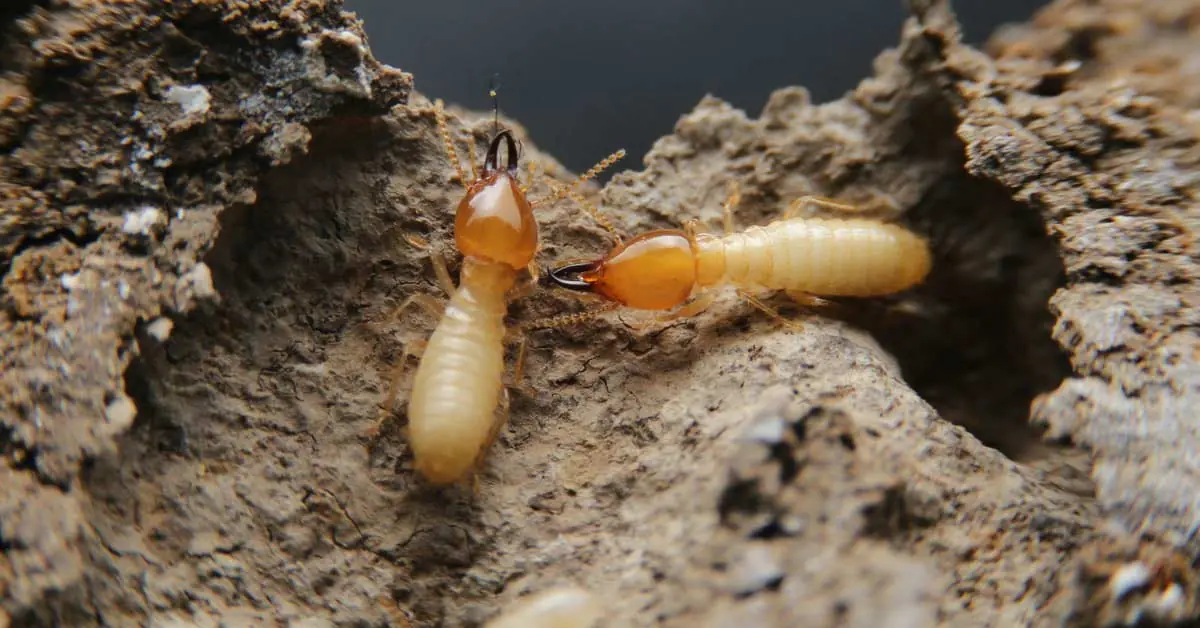
Catch one and look at its middle. A flying ant is pinched in sharply between the chest and the abdomen, like a wasp. A termite is the same width from head to tail, a little soft cigar with no waist at all. That one check usually settles it, and you don't need a magnifying glass to do it.
If it's termites and they came out inside the house, book an inspection. If they're ants, or termites that came up out of the lawn, it's usually a nuisance rather than a threat to the building. The rest of this guide explains why, and what to do while the swarm is still on.
Three things to look at
Put a few in a clear glass or press one onto a strip of sticky tape and hold it up to the light.
- The waist. Ants: a narrow neck between the body sections. Termites: broad and straight all the way down
- The wings. Termite wings are all the same size, much longer than the body, and pale or smoky. Ants have a big front pair and a noticeably smaller back pair
- The feelers. An ant's antennae bend at an angle, like an elbow. A termite's are straight and look like a short string of beads
Wings that have already dropped off are a clue on their own. Termites shed theirs within minutes of landing, so a drift of identical loose wings along a windowsill or skirting usually means termites. Ants hang on to their wings much longer.
Why they all come out at once
Neither the ants nor the termites are looking for your house. They're the young kings and queens of a colony, sent out to pair up and start a new nest. Colonies wait for the right conditions before they release them: warm, humid, still air, usually after the first good rains of the season, and often at dusk. Every colony in the area gets the same signal, which is why the neighbours have them too.
The swarm itself is short. The insects fly weakly, gather at lights, drop their wings and look for soil to burrow into. Most are eaten by birds, lizards and frogs or die before morning.
Where they came out matters more than what they are
This is the part people skip, and it's the most useful thing you can tell us.
- Out of a crack inside the house (a floor joint, behind a skirting, under a door frame, the edge of a built-in cupboard): the colony has a route into the building. With termites, that's a reason to act
- Out of the lawn, a paving joint or a flower bed: the nest is in the garden. Worth knowing, but not the same thing as termites in the walls
- Only around the outside lights: they could have flown in from anywhere on the street. That on its own tells you very little
Before you sweep up, stand where they were thickest and note the exact spot. A strip of masking tape on the floor next to the crack is perfect.
The first hour: what to do
- Switch off outside lights and close the windows. They're drawn to light, and fewer will come in
- Collect a few in a jar or on tape, and take a clear photo next to a coin for scale
- Mark the place they came out, then photograph that too
- Vacuum or sweep up the rest. That's genuinely all they need
- Send us the photos, by email or WhatsApp, with a note of where in the house they appeared
What not to do
Don't empty a can of insect spray into the crack. It kills the swarmers you can see and does nothing to the colony underneath, which carries on as before. Worse, it can kill off the workers near the opening, so when we inspect there's less to find and the route is harder to trace.
Don't break open a mud tube or pull off a skirting board to see what's behind it either. Termite workers abandon a disturbed spot and move along, and a live tube we can follow is worth a lot more than a broken one.
If they're termites
Swarmers don't eat timber. The damage is done by the pale, blind workers you never see, which travel from the soil into the wood through mud tunnels or the timber itself. A swarm coming out indoors means a mature colony is close by and has a way in. It doesn't tell you how much damage there is. That's what the inspection is for.
We check skirtings, door frames, built-ins and floors near the spot, look for tubes on walls and foundations, and work out where the termites are coming up. Treatment for the building is a barrier of treated soil along the foundations and walls, so workers coming up from below pick up the product. Our termite control page sets that out, and subterranean termites covers the insect itself. If you're building, the time to deal with termites is before the slab goes down, which is the subject of soil poisoning for new builds.
If they're ants
Flying ants coming out indoors usually means a nest in a wall cavity, under a floor or in the gap behind a kitchen unit. They don't eat the house. The answer is the same as for the workers that trail across your counters: bait that the ants carry back to the nest, so the colony, not just the visible ants, is dealt with. See ant control and the Argentine ants profile for the trails that so many Garden Route kitchens know well.
Termites in the lawn, Klein Karoo style
Around Oudtshoorn and in drier gardens along the coast, you may see darker termites coming out of small holes in the lawn, with little heaps of soil and short pieces of cut grass nearby. Those are harvester termites. They eat grass, not houses, though a big colony can strip a lawn. They're treated differently, at the foraging holes.
One swarm, then nothing
A quiet month after a swarm doesn't mean the problem has gone. A termite colony may only release swarmers on a few evenings a year, and between those evenings it gives no outward sign. If they came out inside, have the house looked at even if you never see another one.
Not sure from the photo? Use our identification page, or call 044 012 5011 and send us the pictures. We'll tell you which one you've got before anyone talks about treatment.
Frequently asked questions
Can the flying termites themselves damage my house?
No. Swarmers don't feed on wood. They're there to mate and found new colonies. The damage comes from the worker termites of an established colony, which is why a swarm indoors is a reason to inspect.
Do flying termites or flying ants bite?
Termite swarmers can't bite or sting a person. Flying ants are harmless too. The worst either will do is get into your food and your hair.
I found a pile of wings but no insects. What happened?
A swarm came out while nobody was watching, and the insects shed their wings and crawled off or died. Equal-sized wings piled near a door or window point to termites. Note where the pile is and send us a photo.
The swarm only lasted one evening. Do I still need an inspection?
If they came out inside the house, yes. Colonies only swarm briefly, and the workers carry on out of sight for the rest of the year.
How do I send you a sample?
Press a few onto clear sticky tape or drop them in a small jar, photograph them next to a coin, and email or WhatsApp us the picture with a note of where you found them.
Should I put down ant poison from the shop?
For ants, shop bait can work on a small problem placed right on the trail and not disturbed. For termites, no: it won't reach the colony, and it makes the route harder to trace when we inspect.