

The quickest way to lose an ant problem is to stop killing the ants you can see. It sounds backwards, so here's why it works, and what's different about ants in the Klein Karoo.
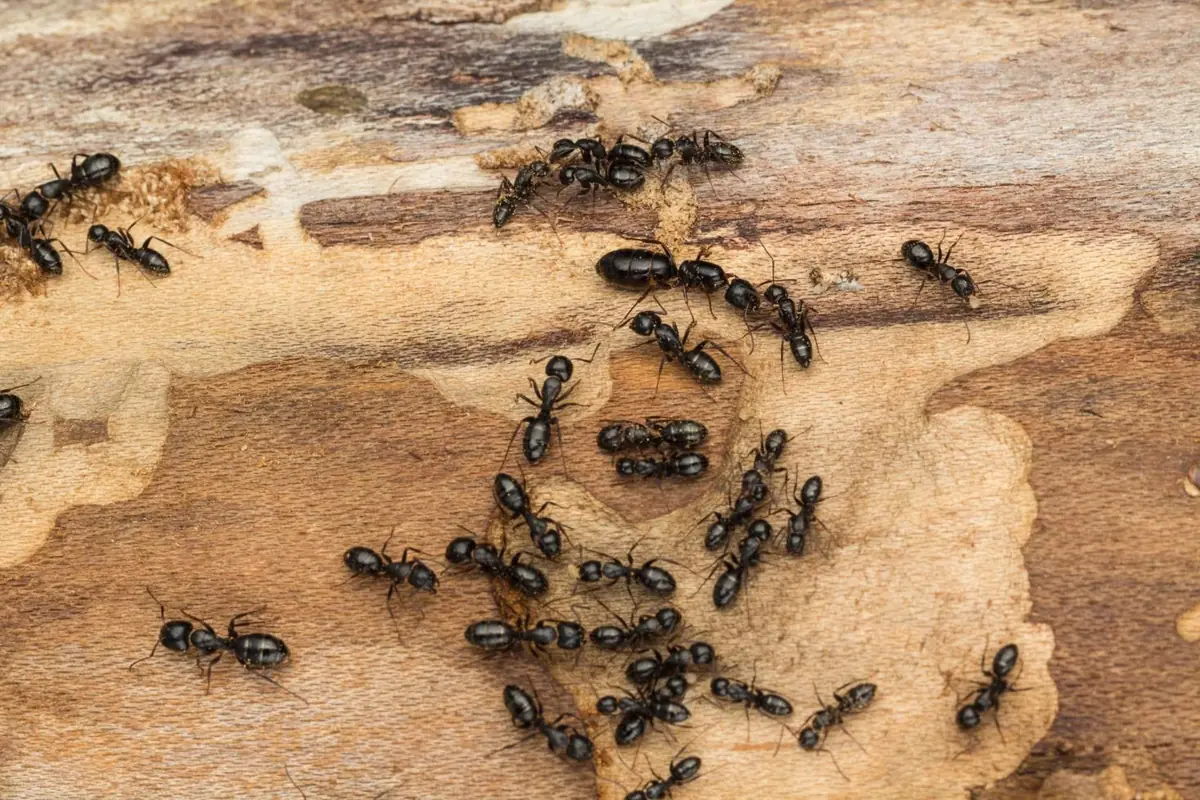
Every ant on your kitchen counter is a worker sent out to find food and water for a nest you can't see. Kill her with spray and the nest sends more. Let her carry a slow-acting bait home and she feeds it to the queens and the young, and in a week or two the trail dries up because there's nothing left at the other end. That's the basis of how we treat ants in Oudtshoorn: bait where they're feeding, a barrier where they get in, and a look at what's drawing them inside.
We treat ants in homes, guest houses, restaurants, shops and farmhouses in and around Oudtshoorn.
Heat and water
In the Klein Karoo, a heatwave sends ants indoors in a hurry. They're after water and somewhere cool: the shower floor, the drip tray under the fridge, the pot plants on the stoep, the sink where someone left a wet cloth. Fix dripping taps and wipe up water at night and you take away half the reason they're there. The bait does the rest.
Which ants
- Small brown ants in long trails across the counter and up the walls. In irrigated town gardens these are often Argentine ants, an invasive species whose nests link up across whole streets
- Big, fast, dark ants that nest in sandy lawns, leave crater-like openings in the soil and bite when you're weeding. These are pugnacious ants, and you'll know them when you kneel on a nest
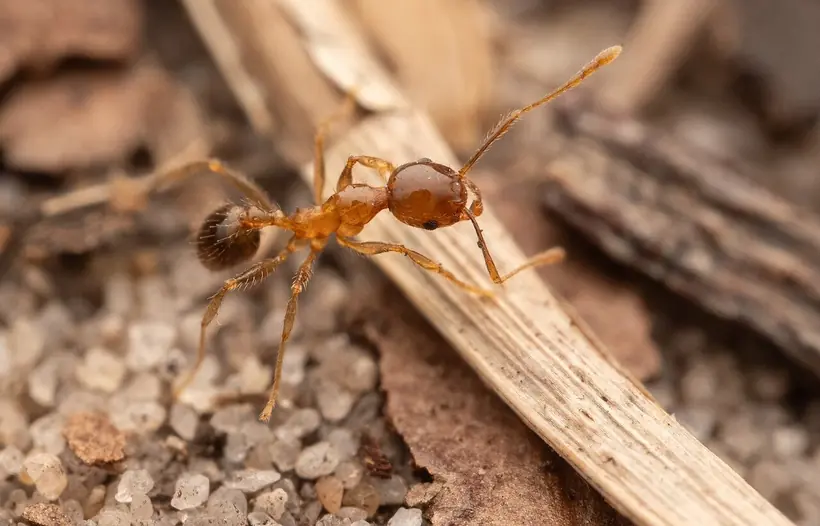
- Tiny pale ants around the bathroom and kitchen, nesting in wall cavities and behind tiles
- Winged ants pouring out of the ground after the first big storm. Usually ants starting new nests, but check they aren't termites
If you can't tell, compare them with the pictures in flying ants or termites, or WhatsApp us a clear photo so we bring the right bait.
Ants on the citrus and the roses
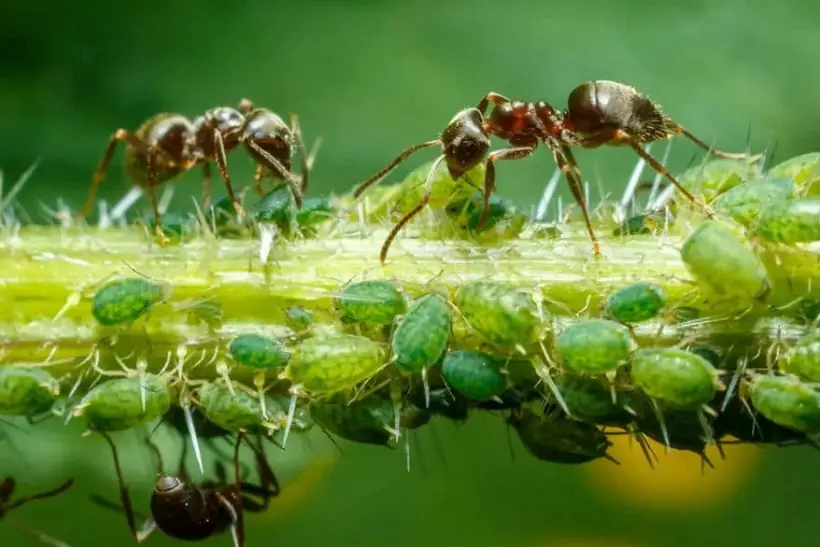
If ants are running up and down your lemon tree, vine or roses, look at the leaves. They're probably tending aphids, scale insects or mealybugs, feeding on the sticky honeydew those pests produce and chasing off the ladybirds and wasps that would otherwise eat them. Control the ants, and band the trunk so they can't climb back, and the garden's natural predators get on with the job. Many people spray the aphids for years without realising the ants are what keep bringing them back.
How we treat
- Trace the trails We follow them back outside to find where they're nesting and how they're getting in.
- Bait Placed on the trails and close to the nests, in cracks and stations out of the way of children and pets, so the workers carry it home.
- Barrier A residual band on the outside wherever the trails enter: door frames, window sills, pipe entries, the joints between paving and wall.
- Lawns Pugnacious ant nests in lawns and paths are treated directly.
You can stay at home throughout, the cupboards stay as they are, and children and pets can be back on treated floors once they're dry.
Sugar, rusks and the dog's bowl
Inside, ants follow the sweet and the greasy. Keep sugar, honey, syrup and rusks in jars with lids that actually seal, and wipe benches down last thing at night. Stand the pet food bowl in a slightly larger dish of water, a little moat the ants can't cross. Rinse cooldrink cans and jam jars before they go into the recycling, because a sticky recycling bag in a warm Karoo kitchen is often the first thing a scout finds. None of this replaces treatment, but it means the bait isn't competing with a better meal.
Guest houses and restaurants
Ants in a guest bathroom or along the breakfast buffet don't do your reviews any favours. We place baits behind equipment and in cracks, away from food and guests, at a time that suits your service, and we can set up regular visits through summer. Our commercial pest control page explains how that works.
Boiling water and chalk lines
Pouring boiling water into a nest kills the workers on top and leaves the queens deep below untouched. Chalk lines, cinnamon and coffee grounds redirect a trail for a day. Neither ends the problem, and the trails they break make it harder to bait the colony properly. If you're waiting for us, leave the trail alone and just keep food covered.
What it costs
A house with one or two trails into the kitchen is a short job. A large property with nests in the lawn, the paving and the walls, or a guest house with several units, takes longer and may need a follow-up. What you pay comes down to the property's size, the number of nests, and whether you want one visit or a summer service.
Ant biology and our general method are on ant control. Anything else in Oudtshoorn: pest control in Oudtshoorn. To book, ring 044 012 5011 or fill in our online form.
Which ant is it?
Four ants, four different nests to find. Match what you're seeing to the right one.
 In the garden
Black garden ant
Small dark ant of lawns and flowerbeds
- Colour
- Dark brown to black
- Nests
- Lawns, beds, under stones
- Feeds on
- Honeydew from aphids
- Indoors
- Follows sweet food in
What you'll notice
Ants running up and down plant stems to clusters of aphids, and small nests in lawns and flowerbeds.
Risk level
- Comes indoors
- Garden and paving
- Hard to get rid of
 Under the paving
Brown coastal ant
Pheidole megacephala
- Size
- Tiny, with big-headed soldiers
- Colour
- Yellowish to reddish brown
- Nests
- Under paving and foundations
- Gives it away
- Sand in paving joints
What you'll notice
Fine sand pushed up between paving bricks and along the foundations, with tiny brown ants and the odd big-headed soldier.
Risk level
- Comes indoors
- Garden and paving
- Hard to get rid of
 In the kitchen
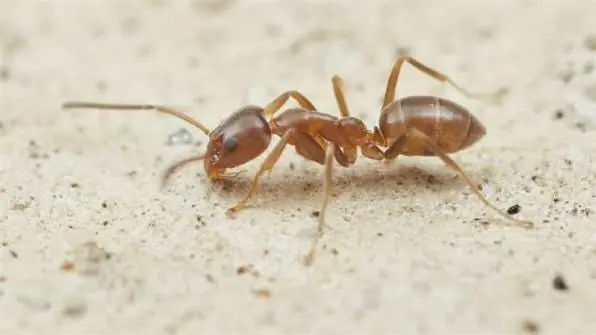
Argentine ant
Linepithema humile
- Size
- 2 to 3 mm, all the same
- Colour
- Plain light to dark brown
- Nests
- Moist soil, under paving and pots
- Comes in
- After rain, in neat trails
What you'll notice
Long, steady trails of small brown ants along skirtings, counter tops and cables, especially after rain.
Risk level
- Comes indoors
- Garden and paving
- Hard to get rid of
 In the walls
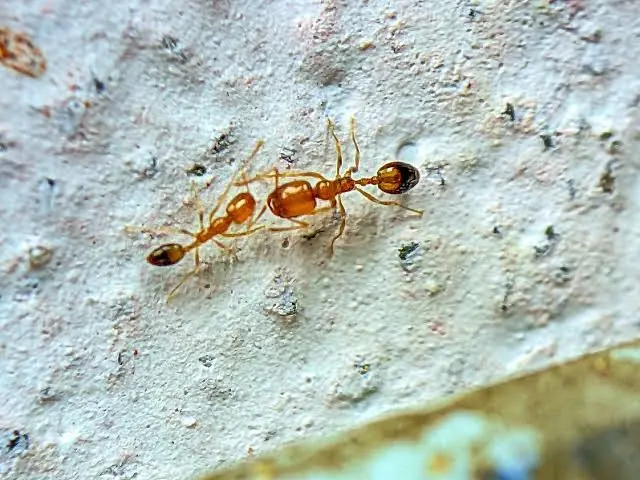
Pharaoh ant
Monomorium pharaonis
- Size
- About 2 mm, very small
- Colour
- Pale yellow, darker tail end
- Nests
- Wall cavities, behind tiles
- Seen at
- Basins, kettles, fittings
What you'll notice
Tiny pale ants around basins, kettles and bathroom fittings, coming out of gaps behind the tiles.
Risk level
- Comes indoors
- Garden and paving
- Hard to get rid of
Frequently asked questions
Why are ants biting us in the garden?
They're probably pugnacious ants, the big, fast ants that nest in sandy lawns and paths. They bite hard when the nest is disturbed, and their nests can be treated directly.
Why are there ants all over my citrus tree?
They're farming aphids, scale or mealybugs for their honeydew and protecting them from predators. Controlling the ants lets ladybirds and other natural enemies get back to work.
The ants only come in during heatwaves. Why?
They're looking for water and somewhere cooler. Fix dripping taps and wipe up water around sinks and showers, and the bait does the rest.
Can you treat a guest house kitchen without closing it?
Yes. Baits go into cracks and behind equipment, out of the way, and we time the visit around your service.
Will bait harm the birds and lizards in the garden?
Bait is used in small amounts on trails and in stations, placed where pets and wildlife are unlikely to get at it.
Should I pour boiling water down the nest?
It kills the workers near the surface and nothing more. Leave the trail so the workers can carry the bait home.