


It rains for two days, the sun comes out, and by lunchtime there's a line of tiny ants from the back door to the sugar bowl. In George, that's practically a season of its own.
Ants in a George kitchen stop for good only when the colony behind them dies, and that takes bait, not spray. A slow-acting ant bait, put down where the ants are feeding and travelling, is picked up by the workers and carried home to the queens and the brood. Add a barrier where they're getting in and the job is done. The supermarket can kills the ants on the counter and scatters the rest, which split off into new nests. That's why a sprayed trail so often turns into three trails a week later.
We treat ants in homes, flats, restaurants, schools, offices and shops across George.
Why George homes get so many ants
George's rain is the main reason. When the soil floods after a downpour, ant nests in lawns, flowerbeds and under paving fill with water, and the ants move to higher, drier ground, which often means into the house. The same thing happens in reverse during a hot, dry spell, when they come inside looking for water. Green, well-watered gardens, dense flowerbeds against the walls and paving laid on sand give them plenty of places to nest close to the house.
The ant behind those long kitchen trails in George is the small brown Argentine ant, an invasive species that lives in vast, linked networks of nests, each with several queens. Other ants around George homes:
- Pavement ants that push up little piles of sand between pavers and bricks
- Black house ants that nest in wall cavities, under floors and around window frames
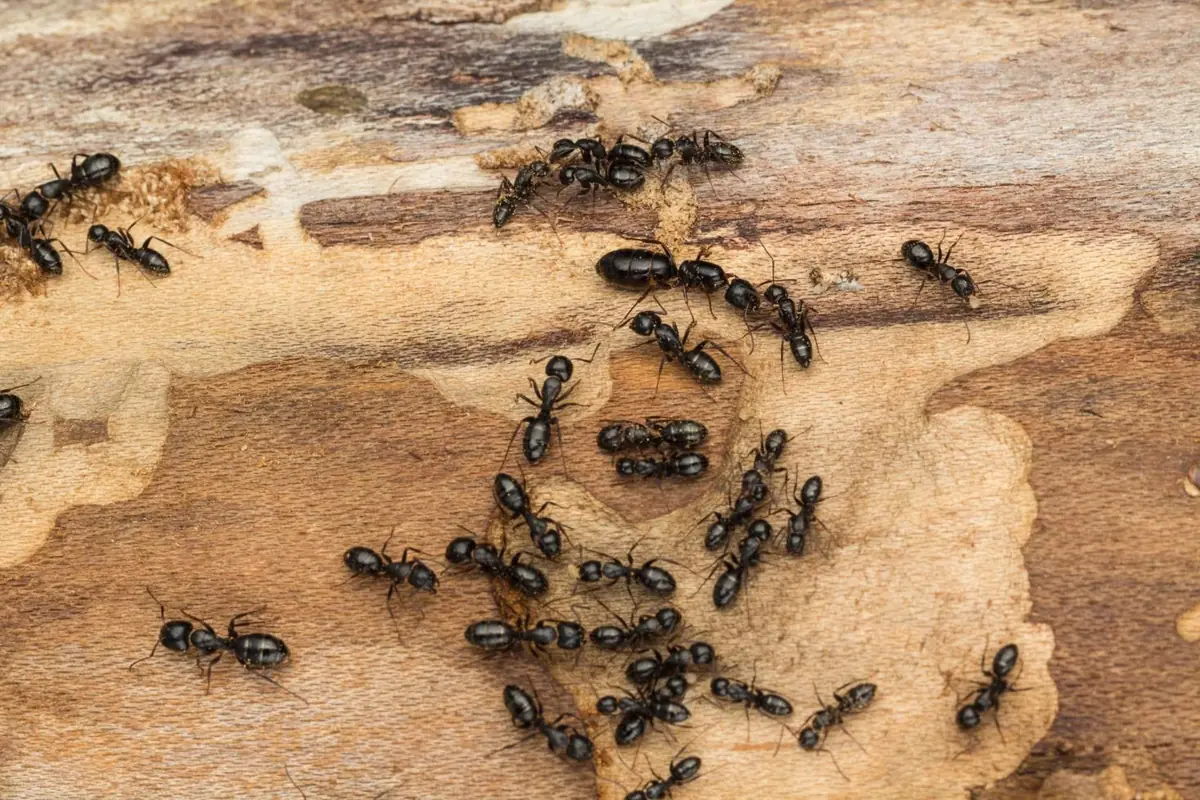
- Larger black ants that make big nests in lawns and garden beds and occasionally invade a kitchen
- Flying ants that swarm after rain. Check they aren't termites with our flying ants or termites guide
How we treat ants in George
- Trace them home From wherever you see them, we follow the ants back to their way in and, as far as we can, to the nests, indoors and out.
- Bait where they feed It goes on the busy trails and close to the nests. Don't worry if there are more ants on it for the first few days: they're carrying it back.
- Close the doors A non-staining residual treatment at thresholds, window frames, pipe entries and along the foundations.
- Treat the garden nests Under paving, in beds and along the walls, wherever we can get at them.
- Tell you what's drawing them And what to change.
The cupboards stay as they are and you stay at home, and children and pets can use treated areas once they've dried.
What helps at home
- Clean trails off with a cloth and soapy water. It wipes away the scent the ants follow without breaking up the nest
- Seal the sugar, honey, syrup and pet food
- Give cold drink cans and bottles a rinse before the recycling bag
- Prune plants away from the walls and roof; ants use them as bridges
- Fix dripping taps and air conditioner drains, which become the water source in dry spells
- Leave the bait alone once it's down, and don't spray anywhere near it
Ants in businesses
In restaurants, coffee shops and food stores, ants are a hygiene problem, and they're attracted by exactly what these places have: sugar, syrup, spills and warmth. Treatment needs to be careful around food and prep areas. Regular visits under a commercial pest control contract stop them building up. Offices and schools see ants in staff kitchens and tuck shops, usually after rain.
Ants on new estates
Newer estates and developments around George have their own ant pattern. Paving laid on a bed of sand, irrigation systems that keep flowerbeds wet, freshly planted gardens with lots of mulch, and houses built close together all suit ants, especially pavement ants and Argentine ants. Sand pushed up between pavers along the house is the giveaway. Treating the paving edges and the beds against the walls, and keeping mulch a hand's width away from the foundations, makes a big difference. If the estate's common areas are infested too, the body corporate or estate manager is the right person to talk to about a wider treatment.
When ants come back
Ants can come back from neighbouring properties, especially Argentine ants, whose nest networks ignore boundary walls. If you're in a townhouse complex or on a row of houses close together, treating the whole complex or several houses together gives a much longer result. We're happy to work with a body corporate.
Ants and termites
Winged insects coming up out of the floor after rain are worth a closer look. A termite's body is straight from front to back, with four wings of equal length; an ant is pinched in at the waist. If you've got termites, go to termite control in George.
What it costs
For George properties, we look at the size of the plot, how many nests are active, whether the nests are under paving or in the lawn, and whether you'd like a once-off treatment or ongoing control. One trail from one nest is a small job; a big garden with several kinds of ants nesting in it is a bigger one.
Read our main ant control page for more on how ants live, or see pest control in George for our other services. Call 044 012 5011 or book an ant treatment online.
Frequently asked questions
Why do ants come into my George house after rain?
Heavy rain floods their nests in lawns, beds and under paving, and the ants head for drier ground, which is often your kitchen.
The ants seemed worse for a day or two after the bait went down. Is that normal?
Yes. More workers turn up because they've found food worth carrying home, and that's how the bait reaches the queens. Don't wipe the bait away.
What should I clean the trail with?
Warm soapy water. It wipes away the scent trail without killing the workers you need to carry bait home. Leave the insect spray in the cupboard.
Can you treat a whole townhouse complex?
Yes, and the result lasts longer. Ant nests ignore boundary walls, so doing the complex together stops ants moving from one unit to the next.
Are those flying ants or termites?
Check the waist: an ant is pinched in the middle, a termite isn't. An ant's front wings are also longer than its back pair, while a termite's four wings match.
Will the treatment hurt our dog?
Bait goes where dogs can't easily get at it, and sprayed areas are fine for pets once dry. We'll tell you on the day how long to keep them off.