

Guests notice ants before you do: on the bathroom basin, along the breakfast counter, in the sugar bowl. In Wilderness, between lakes and forest, they have plenty of reasons to come inside.
Ants in a Wilderness house or guest house are dealt with by baiting their trails so workers carry the bait back to the queens, treating the outside of the building where they get in, and removing whatever is drawing them indoors. That ends the nest instead of just the trail. A can of spray on the counter kills what you can see and often makes things worse, because the colony replaces those workers and can split into several new nests.
We treat ants in homes, holiday rentals, guest houses, lodges, restaurants and shops in Wilderness and the hills around it.
When the lakes rise
Houses on the low ground between the river, the lagoon and the lakes sit on soil that becomes waterlogged after heavy rain. Ant nests in that soil flood, and the ants move up and out, looking for somewhere dry, which is very often inside. You'll see them streaming up through gaps in floor tiles, along skirtings and around door frames a day after a downpour. Sometimes they settle again once the ground dries; often, having found food, they stay. Baiting while they're active, and treating the outside where they come in, deals with both.
Ants from the forest edge
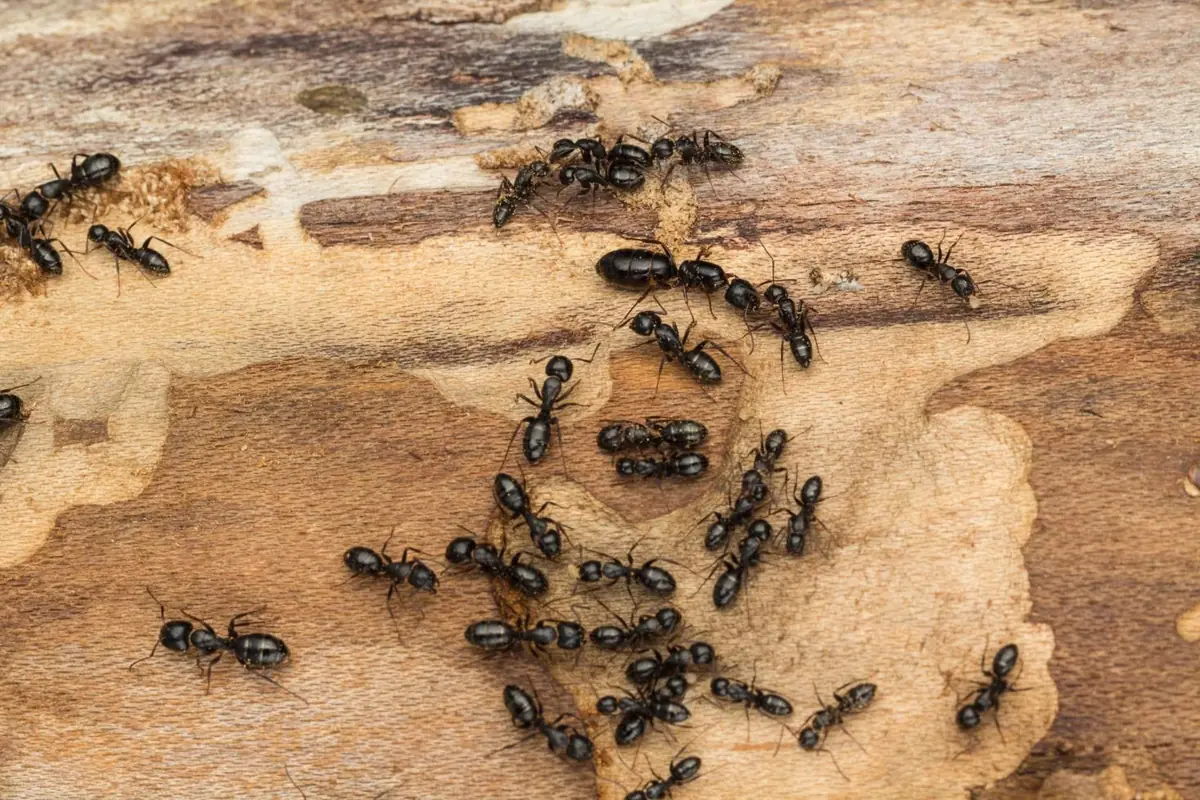
Homes on the forested slopes get a different visitor: large black ants, much bigger than the little brown trailing ants, that wander in at night from the bush. These are sugar ants. They nest in soil, under stones and in damp or rotting wood, and they're drawn to anything sweet. They don't sting, though big ones can nip. Because they forage alone or in loose groups, a single bait station won't get them all, so we place bait along the edges where the garden meets the bush and treat the doors and windows they come through.
Other ants you'll meet
- Small brown ants in long trails, usually the invasive Argentine ant, whose nests connect from garden to garden
- Very small, pale ants around basins and kettles, living in gaps behind tiles and in hollow walls
- Winged ants swarming from the ground or a crack after rain. Check they aren't termites using our flying ants or termites guide, because Wilderness's damp suits both
For guest houses and restaurants
A trail across a guest's bathroom basin or along the breakfast buffet is the kind of thing that ends up in a review. We work out of sight of guests: bait goes into cracks, behind equipment and into stations, and outside treatments are done while guests are out. A regular service through summer, with a quick visit if something flares up between, keeps you ahead. Our commercial pest control page explains how contracts work.
In rooms between guests, a few habits help: wipe down the basin and the tea tray, empty bins, don't leave sugar sachets and biscuits out in open bowls, and check that windows close properly.
How we treat
- Inspection We follow trails inside and outside to find nests, entry points and food sources.
- Baiting A bait that works slowly enough for the workers to carry it home and share it, placed along the trails and beside nests.
- Barrier A residual treatment along the outside walls, door frames, window sills and where pipes enter.
- Advice What's attracting them and how to take it away.
You don't need to empty cupboards or leave the house. Treated surfaces are fine for children and pets once they've dried.
Holiday rentals between guests
Self-catering cottages are the hardest to keep ant-free, because every new group brings food, and leaves some behind. A short checklist for the cleaners helps: wipe out the fridge seal and the microwave, empty the toaster crumb tray, check under the kettle and behind the coffee machine, and take every bin out, not just the kitchen one. If a trail is spotted, the cleaner should leave it and let us know rather than spraying it, so we can follow it to the nest.
The mistake that keeps ants coming back
Cleaning up after the ants rather than before. Wiping the counter after the trail appears takes away the scent for an hour; wiping it at night, before they find anything, takes away the reason to come in. In a house with ants, the last job of the day should be a damp cloth over the benches, a lid on the sugar, and the pet bowls picked up.
What it costs
Expect the quote to reflect the property's size, the number of trails and nests, how many units or kitchens are involved, and whether you'd like one visit or a summer service. A home with one or two trails is a short visit. A guest house with several rooms and a garden that backs onto the forest takes longer.
More about ants in general is on ant control. The rest of what we do around the lakes is on pest control in Wilderness, and up the hill on pest control in Hoekwil. Ring 044 012 5011 or book a visit.
Frequently asked questions
Why do ants pour into the house after heavy rain?
On low ground near the lakes, rain floods their nests and the ants move up looking for somewhere dry, which is often your house.
What are the big black ants that come in at night?
Probably sugar ants from the forest edge. They're attracted to sweet things and forage alone or in small groups, so they need bait along the garden edge as well as treatment at the doors.
Can you treat a guest house without guests noticing?
Yes. Baits go into cracks and stations out of sight, and outside treatments are done while guests are out.
Will the ants come back after treatment?
Colonies in neighbouring gardens can send new scouts in time. A barrier outside and good habits indoors keep the result going longer.
Do I need to move food out of the cupboards?
No. Bait goes in cracks and corners, away from food, and you carry on as normal.
Are ants in the bathroom a sign of a leak?
Sometimes. Ants are drawn to moisture, so if they keep appearing at the same spot, check for a leaking pipe or a damp wall behind the tiles.