


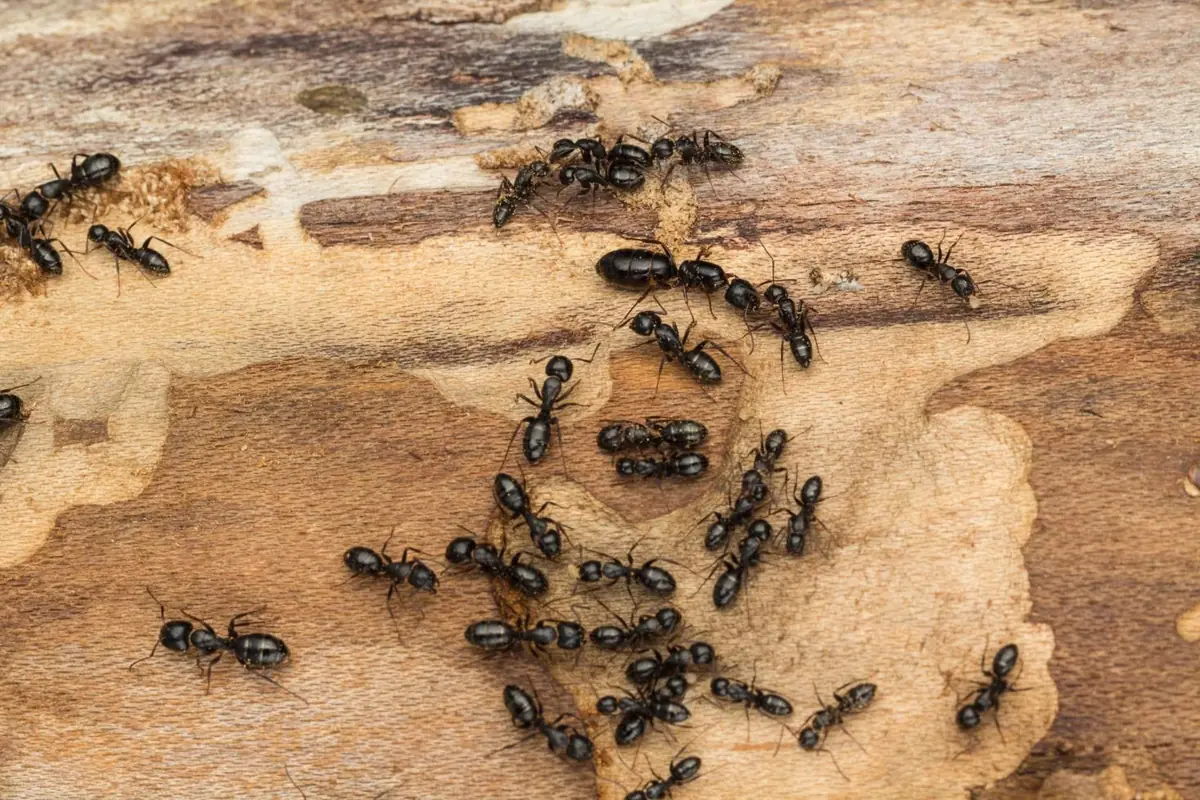
In a town of holiday flats, complexes and caravans, ants don't respect unit numbers. Treat one kitchen and they simply move next door, then back again.
In Hartenbos the approach that works is bait the colony will carry home, a treated band where the ants enter the building, and, wherever units share walls, gardens or paving, treating the whole block together rather than one flat at a time. One kitchen sprayed in isolation pushes the colony into the neighbours' units, and within a month the trail is back where it started.
We treat ants in houses, holiday flats, sectional title complexes, retirement villages, caravans and chalets, shops and restaurants in Hartenbos and along the coast towards Mossel Bay.
Why complexes are different
Where flats are stacked or townhouses share walls, an ant colony doesn't live under one unit. It lives in the sand under the shared paving, in the garden beds along the boundary wall, in the cavities of walls that two units share, and in service ducts where pipes run between floors. The workers that turn up in number 4's kitchen and number 6's bathroom may well come from the same nest.
That's why we suggest the body corporate or managing agent arranges a treatment for the complex as a whole, covering the common property and all the units on the same day. It costs less per unit than individual call-outs, and the result lasts far longer. If only some owners want it, we treat the common areas and their units, and we'll tell you honestly how much difference the gaps are likely to make.
Holiday flats that stand empty
Plenty of Hartenbos flats are full in December and at Easter and quiet for much of the rest of the year. A quiet flat with a few crumbs in the toaster and a forgotten packet of rusks in the cupboard is an easy find for scouts. Owners arriving for the holidays then meet a trail on the first morning. A treatment two or three weeks before the season, while the flat is empty, gives the bait time to work without anyone needing to clear the kitchen around it.
Caravans and chalets
Ants find their way into caravans and park homes that stand in one place for weeks. They climb the jockey wheel, the corner steadies, the power cable and the gas pipe, and once inside they head for the food cupboards. To keep them out:
- Stand each steady and the jockey wheel on a small plate or tin with a ring of grease, or treat the ground around them
- Keep the power cable and hoses off the grass where you can, and don't let them touch nearby branches
- Store sugar, cereals and biscuits in sealed tubs, not their packets
- Sweep the awning floor and pick up dropped food every evening
If a trail is already inside, we'll treat around the stand and bait inside, taking care with the confined space.
Retirement villages
Older residents often can't bend to wipe a trail away every morning, and they shouldn't be climbing onto chairs to spray the top of cupboards. In retirement villages we work with management to treat units and common areas together, place bait out of the way where nobody will knock it, and explain to each resident what we've done and what to expect. Nobody needs to move anything heavy or empty cupboards for a normal treatment.
How we treat
- Find the source Each line of ants leads back to where they live, whether that's under the paving, in the boundary beds, inside a wall or in a service duct.
- Bait It's laid along the routes the ants use and close to where they nest, tucked into cracks and stations, so the colony takes it home.
- Treat the outside The spray goes where the ants get in: door thresholds, window frames, pipe entries and the joints between paving and wall.
- Treat common property In a complex, that means the paving, garden beds, refuse areas and service ducts as well.
Once it's dry, the family and pets can use treated areas as usual.
What not to do
Don't spray the trail. It kills the workers carrying food home, leaves the queens untouched, and can cause the nest to split into several smaller ones, each with its own trail. If you're waiting for us, wipe the counter, keep food sealed and leave the trail alone.
What it costs
One flat with a trail or two doesn't take long. A complex is quoted on the number of units and the size of the common property, and the per-unit cost drops when everyone is done together. Retirement villages and caravan parks can go onto a regular service through our commercial pest control contracts, which spreads the cost through the year and means someone is checking even when nobody has complained.
Our general ant control page explains baits in more detail, and the ant control in Mossel Bay page covers the sandy paving next door. Everything else we offer locally is on pest control in Hartenbos. Body corporates and owners can call 044 012 5011 or request a complex quote.
Frequently asked questions
Why do the ants keep coming back from the flat next door?
Because they're probably from the same nest, under the shared paving or in a shared wall. Treating the whole block on the same day stops them moving between units.
Can the body corporate book one treatment for the whole complex?
Yes, and it's the most effective way. We treat the common property and all the units together, and the cost per unit is lower.
How do I keep ants out of my caravan?
Stand the steadies and jockey wheel in tins with a ring of grease, keep cables and hoses off the grass, and store food in sealed tubs.
Should I treat my holiday flat before the season?
Yes. Two or three weeks before you arrive gives the bait time to work while the flat is empty.
Can you treat a retirement village unit without the resident moving things?
Yes. Bait goes into cracks and corners, nothing heavy needs moving, and we explain to each resident what we've done.
Is ant treatment safe around grandchildren and pets?
Yes, once it's dry. Bait is placed out of reach, and you'll know before we leave when the floors can be used again.