


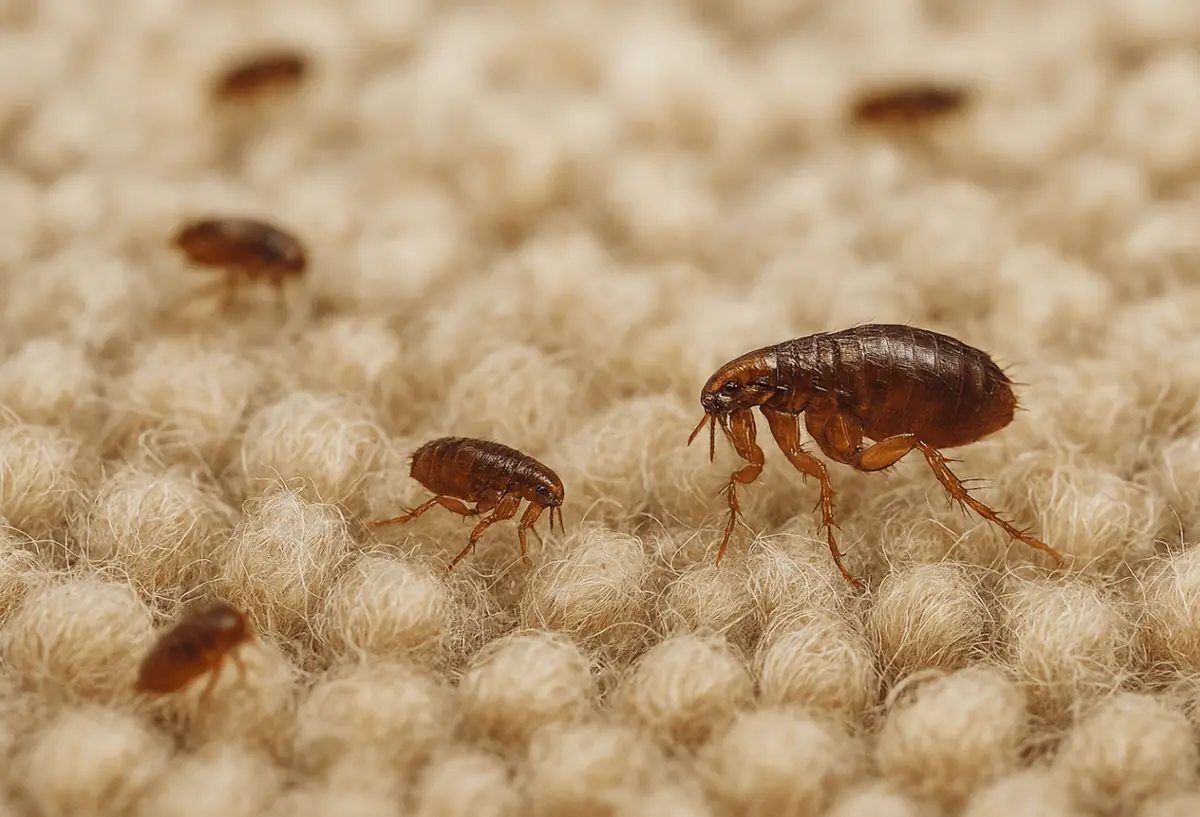
Arrive at the holiday flat, put the bags down, and by bedtime there are bites round your ankles. Fleas in Hartenbos often come with the booking, left by somebody else's dog.
Fleas in a Hartenbos home, flat or chalet are cleared by treating the inside, where eggs, larvae and pupae live in carpets, rugs and soft furnishings, together with any shaded outside areas where pets lie, in the same week as every pet in the house gets a flea treatment from the vet. Ticks are handled the same way: the animals by your vet, the kennels, runs and resting spots by us. Leave out any one of those three and the fleas come back.
We treat fleas and ticks in houses, holiday flats, sectional title complexes, chalets, caravans, kennels and catteries in Hartenbos and the surrounding area.
Fleas that came with the last guests
Pet-friendly holiday flats and houses have a predictable problem. A family stays for a week with their dog, the dog has fleas, and flea eggs drop into the carpet, the couch and the dog's favourite corner. The eggs hatch into larvae that hide deep in the carpet pile, then spin cocoons. Those cocoons can sit for weeks or months until they feel the vibration and warmth of people walking in, and then the adults emerge together, hungry.
The next guests, with or without a pet, get bitten within hours. If you let a property that accepts pets, a flea treatment between pet-friendly bookings, and especially before the December season, saves a lot of complaints. If you're the guest, tell the owner or agent straight away.
Complexes and shared gardens
In a complex, fleas don't stay in one unit. Cats that roam between gardens, dogs that share a lawn, and the shady spots under shared hedges all carry fleas from one unit to the next. A complex-wide treatment of the shared garden areas, alongside the units with pets, gives a much better result than each owner treating on their own at different times. The body corporate or managing agent can arrange it.
Ticks from the dunes and the veld
The grass on the dunes, the reeds along the river and the open veld on the edge of town are where ticks sit with their legs out, waiting for a dog to brush past. People collect them too, mostly on the legs. After a walk, run your hands slowly over your dog's ears, neck, armpits and paws, and look under the collar, because that's where they settle. Your vet will suggest a tick product that suits your dog, and in this climate it needs keeping up all year.
To take one off, use fine-pointed tweezers, hold it right at the skin and ease it out in one slow, even pull. Don't burn it, smother it in petroleum jelly or squeeze its body.
Ticks walking up the inside walls are another matter. That's the brown dog tick, the one species happy to breed indoors, tucked into cracks and behind skirtings, so the house itself needs treating. And if your dog turns listless, won't eat, or passes red-brown urine in the days after a tick, take it to the vet that day; biliary moves fast.
Bitten, but there's no pet
Fleas without a pet in the house usually have a source you haven't spotted. A stray or a neighbour's cat sleeping under the floor or in the roof, rats or mice in the ceiling with fleas of their own, birds nesting in the eaves, or a previous tenant's dog are the usual suspects. Treating the carpets helps for a while, but until the animal bringing them in is dealt with, the bites return. We look for the source as part of the visit.
Caravans
A caravan where a dog sleeps can hold a flea population of its own in the cushions, the carpet and the bed. We treat caravans and park homes with care for the confined space, and the same rule applies: treat the dog the same week.
How we treat
- Pets first Every dog and cat in the home is treated by you with a product your vet recommends, around the time we treat. We'll ask what was used.
- Inside Every carpet and rug, the floor under beds and couches, skirting edges, pet baskets and the couch the dog isn't supposed to sleep on. The product includes a growth regulator, which stops young fleas ever maturing.
- Outside Shaded areas where pets lie, kennels, runs and the spaces under decks and stoeps.
- Follow-up Some fleas are still in their cocoons on the day. We'll tell you how the next fortnight should go and, if a second round is needed, when.
After the treatment
Run the vacuum over the floors, the couch and along the skirtings every day or second day for a fortnight. The vibration makes waiting pupae hatch and meet the treatment, and the vacuum picks up eggs. Empty it outside. Wash pet bedding hot. Seeing a few fleas in the first week or two is normal; seeing them after that is a reason to call us.
What it costs
We quote on floor area, the amount of carpet and soft furniture, the outdoor space the animals use, any kennels or caravan, and whether a return visit is likely. A bachelor flat with a cat costs a lot less than a family house with three dogs, a sandy yard and a caravan in the drive.
For more, see our fleas and ticks profiles, the main flea and tick control page, and flea and tick control in Mossel Bay. Our other Hartenbos services are listed on pest control in Hartenbos. Ring 044 012 5011 or fill in the booking form, and mention any pets in the house.
Frequently asked questions
We were bitten on the first night in our holiday flat. Why?
Flea pupae left by a previous guest's pet can wait in the carpet for weeks and hatch when people walk in. Tell the owner or agent so the flat can be treated.
How often should a pet-friendly holiday flat be treated?
Between pet-friendly bookings when you can, and always before the December season.
Can the whole complex be treated for fleas?
Yes. Treating shared gardens and the units with pets on the same day stops fleas moving between units.
Do I still need to treat my dog if you treat the house?
Yes. Without a vet-recommended treatment on the dog, it keeps bringing fleas back into the house.
How do I check my dog for ticks after a walk on the dunes?
Run your hands over the ears, neck, between the toes and under the collar. Remove any tick with fine tweezers close to the skin.
Can fleas live in a caravan?
Yes, in cushions, carpets and bedding where a pet sleeps. A caravan is treated like a small room, at the same time as the pet.