


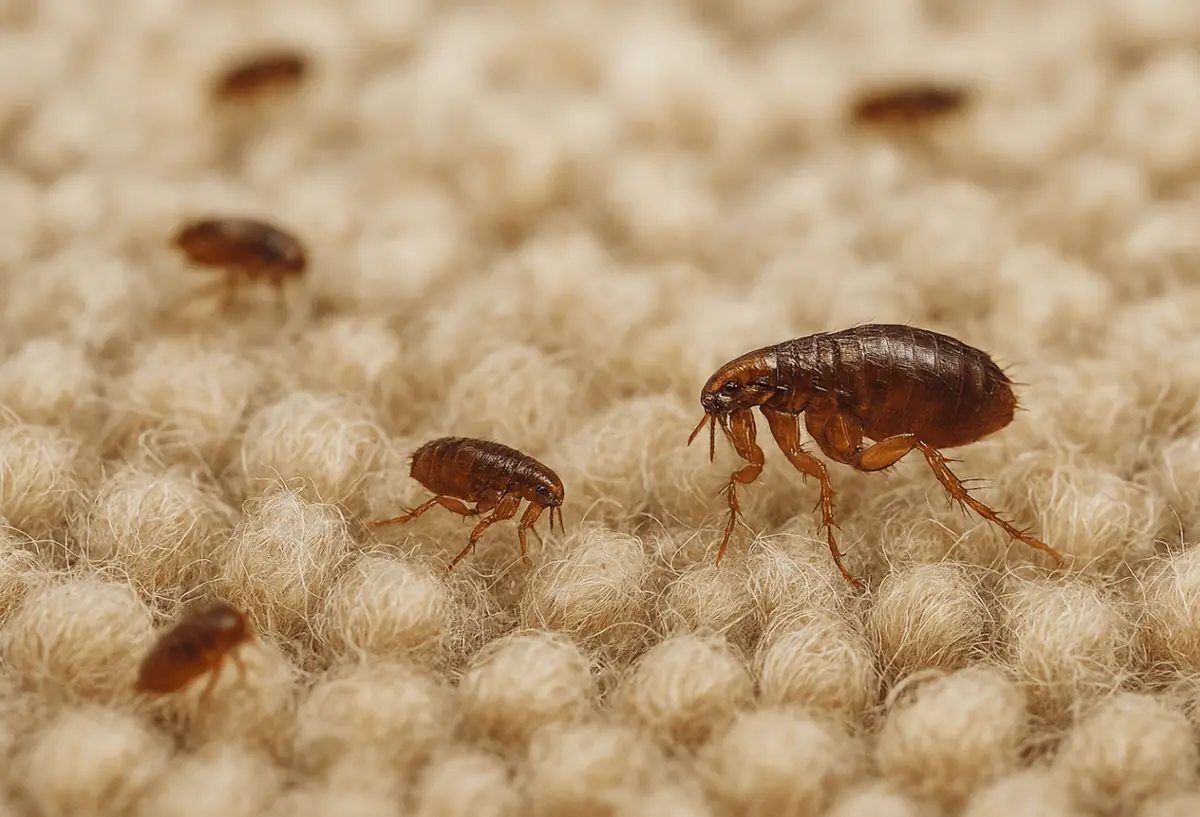
Little bites in a ring around your ankles, a dog that won't stop scratching, a tick on the toddler after a walk in the veld. Fleas and ticks are easy to pick up around Mossel Bay, and harder to get rid of than the shop shelf suggests.
A flea or tick problem in a Mossel Bay home is solved by treating three things in the same week: every pet in the house, with a product your vet recommends; the inside of the house, where flea eggs and larvae live in carpets, rugs and pet beds; and the shaded parts of the yard where pets lie. Treat only the dog and the fleas in the carpet re-infest it within days. Treat only the house and the dog brings in new ones. "We've tried everything" can still mean only two of the three have been done.
We treat fleas and ticks in homes, flats, rental houses, holiday homes, kennels and catteries around Mossel Bay.
Why sandy yards and fleas go together
Flea larvae don't live on your pet. They live in the ground and the carpet, feeding on debris and the droppings of adult fleas, and they need shade, a little moisture and something loose to burrow into. Sandy soil under a deck, along the shady side of the house, or in the cool hollows dogs dig under shrubs is ideal. A lot of Mossel Bay gardens are exactly that. On a hot day, when the dog lies in its hollow in the shade, it's lying in the flea nursery.
Fleas in full sun dry out and die, which is why the shaded spots matter more than the lawn.
Ticks on walks and in the veld
Ticks wait on grass and low plants for an animal, or a person, to brush past. Around Mossel Bay that means the veld and fynbos on the edges of town, hiking paths along the coast, smallholdings and any long grass where dogs are walked. A dog that walks the cliff paths or runs through the veld every day will pick up ticks in the warmer months, however good the garden is.
Ticks matter more than fleas for health. In dogs they spread biliary, which can kill a dog quickly if it isn't treated, and people can get tick bite fever. Remove a tick by gripping it close to the skin with fine tweezers and pulling steadily, without twisting or squeezing the body. If your dog goes off its food, seems weak or has dark urine after a tick bite, see your vet the same day.
One tick deserves special mention. The brown dog tick is unusual because it can live and breed indoors, laying eggs in cracks in walls, behind skirtings and in kennels. If you're finding ticks crawling up the walls inside, that's almost always the one, and the house itself needs treating.
Signs it's fleas
- Small, itchy bites in clusters on the ankles and shins
- A pet that scratches constantly, nibbles at the base of its tail or is losing hair there
- Tiny dark specks in the pet's coat or bedding that turn reddish when wet. That's flea dirt, which is digested blood
- Put on white socks and walk slowly across the carpet: fleas show up clearly against them
Bites on the upper body, in lines, in a house without pets, point to something else. Have a look at our page on bed bug treatment in Mossel Bay if that sounds familiar.
How we treat
- Line up the pets first Before we come, every dog and cat in the house should be treated with a flea and tick product recommended by your vet, including the cat that never goes out. We'll ask what was used and when.
- Inside Carpets, rugs, under furniture, skirtings, pet beds and baskets, and the upholstery where pets sleep get a flea treatment that includes an insect growth regulator, so the larvae never become adults.
- Outside Shaded sand and soil where pets lie, under decks and stoeps, kennels and runs, along walls, and the grass close to the house.
- Follow-up Flea pupae are protected inside their cocoons, so new adults can keep hatching for a couple of weeks after treatment. We'll explain what to expect and when a second treatment makes sense.
Once it has dried, children and pets can go back onto treated areas.
Your part of the job
- Vacuum every day for two weeks after treatment, including under furniture and along skirtings. Vibration makes pupae hatch into the treated area, and the vacuum picks up eggs. Empty the vacuum outside each time
- Hot-wash the pet bedding
- Keep pets' flea and tick treatment up to date, on schedule, all year
- Fill or block off the hollows dogs dig under shrubs and decks, or treat them regularly
- Check dogs for ticks after every walk in the veld, especially around the ears, between the toes and under the collar
Moving into a rental, or opening up a holiday house
Fleas can wait in an empty house for months. Pupae sit dormant in the carpet until they feel footsteps and warmth, then hatch all at once. That's why people moving into a Mossel Bay rental where the last tenants had dogs, or families opening up a holiday house for December, get bitten within an hour of arriving. Have the place treated before your boxes or your family go in, as our holiday home pest control page explains, and the first night is bite-free.
What it costs
The quote is built from the size of the house, the amount of carpet and soft furnishing, the size of the yard and how much of it is in shade, any kennels or cattery, and whether a follow-up visit makes sense. A small flat with one cat is a short job. A large house on a big sandy plot with several dogs takes longer, and it's worth doing properly once.
For more background, see the fleas and ticks profiles, our main flea and tick control page, or the guide to flea season with pets. If you're in Hartenbos, read our page on flea and tick control in Hartenbos. Other pests around town are covered on pest control in Mossel Bay. Book the house and the yard together on 044 012 5011, or online.
Frequently asked questions
Why do I keep getting fleas when my dog is treated?
Because the eggs, larvae and pupae are in the carpet and the yard, not on the dog. The house and the shaded parts of the garden need treating in the same week as the pets.
Do I need to take my pets to the vet before you treat?
Your pets should be treated with a flea and tick product your vet recommends, ideally the same week we treat. We don't treat the animals themselves.
Why are there ticks crawling up my walls inside?
Almost certainly the brown dog tick. Unlike other ticks it breeds inside, laying eggs in wall cracks and behind skirtings, so the house gets treated along with the dog.
Why did we get bitten as soon as we moved into the house?
The house was full of pupae waiting in their cocoons, and your footsteps woke them up. Treat before moving in and they never get the chance.
Is the flea treatment safe for my children and pets?
Yes, once it has dried. We'll tell you how long to keep everyone off the treated areas on the day.
How do I remove a tick safely?
Grip it close to the skin with fine tweezers and pull steadily, without twisting or squeezing. If a dog seems weak or off its food afterwards, see a vet the same day.