

Cooing in the ceiling at five in the morning. A white streak down the front of the shop every week. Twigs sticking out from under the solar panels. In a harbour town, birds find every gap you leave them.
The way to stop birds nesting and roosting on a Mossel Bay house or building is to clean out the nests, close the gaps they use to get in, and make the ledges and beams they perch on unusable, so they move somewhere else. Scaring them off with a plastic owl, a spinning gadget or a hose works for a week at most. Pigeons especially are loyal to a site once they've nested there, and they'll keep coming back until the spot itself is changed. The aim is to keep birds off your property, not to harm them.
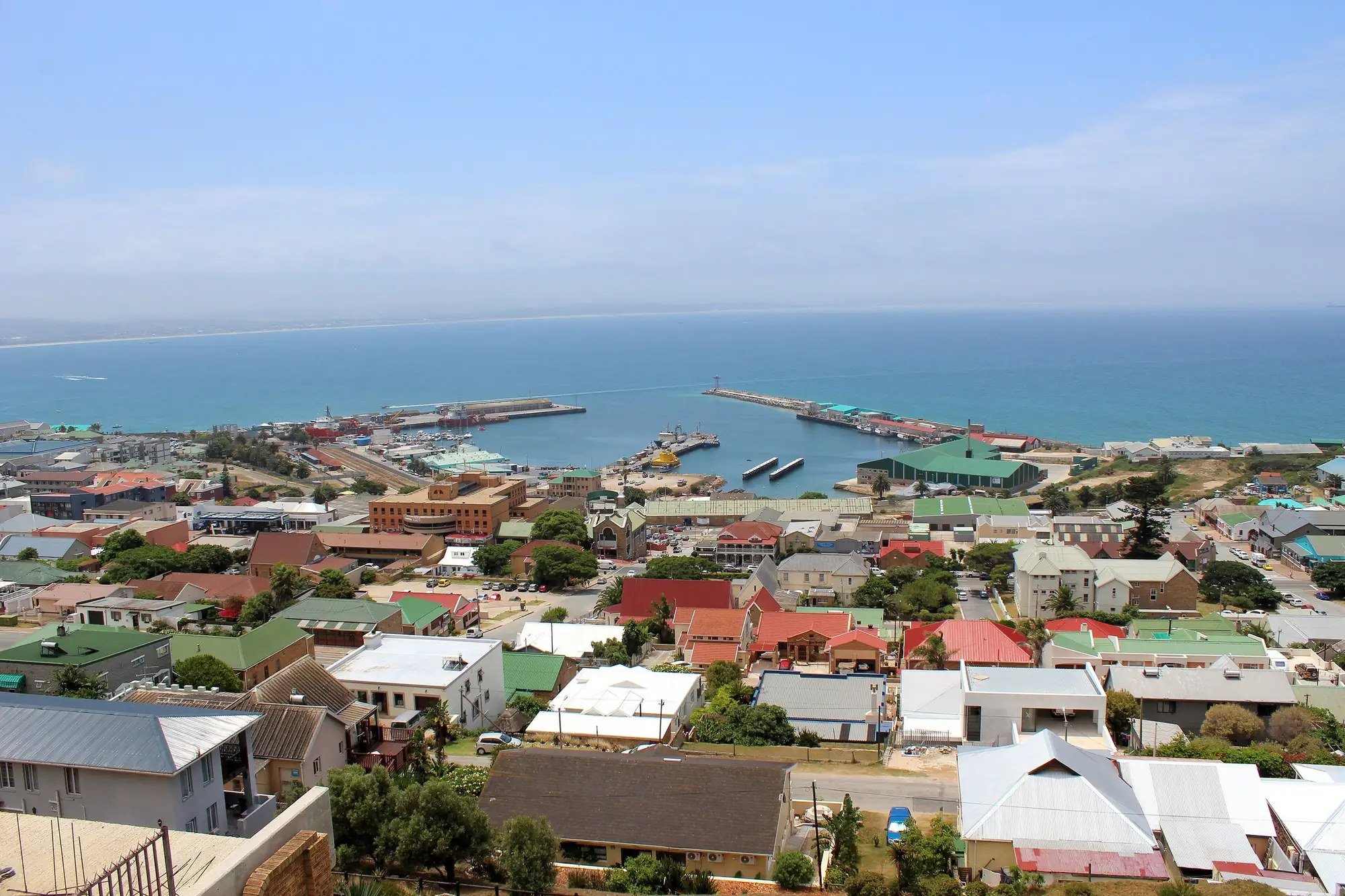
We do bird control for homes, complexes, shops, warehouses, factories and harbour-side buildings in Mossel Bay and the towns close by.
The usual problem birds
Feral pigeons cause most of the trouble. They're the descendants of domestic pigeons, they're not indigenous, and they thrive wherever there are ledges, roof spaces and spilt food: around the harbour, warehouses, shopping centres, flats and older buildings in town. A pair can raise several broods a year in the same nest, and they build on top of their own droppings. Our pigeon profile has more on how they live.
Starlings and sparrows squeeze in under roof tiles and into gaps at the eaves, and build bulky nests in the roof space.
Gulls perch and sometimes nest on flat roofs near the sea. They're indigenous and protected, so the answer with gulls is making a roof less attractive outside the nesting season, not removing them.
Swallows build mud nests under eaves and over doorways in summer. They're protected too. Their nests are left alone while they're in use, and the eaves can be proofed once the birds have left at the end of the season.
Solar panels: the new favourite
Over the last few years, as more Mossel Bay homes and businesses have put solar panels on the roof, pigeons have discovered the space underneath. It's sheltered from the wind, warm, out of sight of predators and close to the roof gutters for water. Once pigeons nest under panels, you'll hear them on the roof from first light, droppings build up on the tiles and in the gutters, and nesting material can block water from draining off the roof.
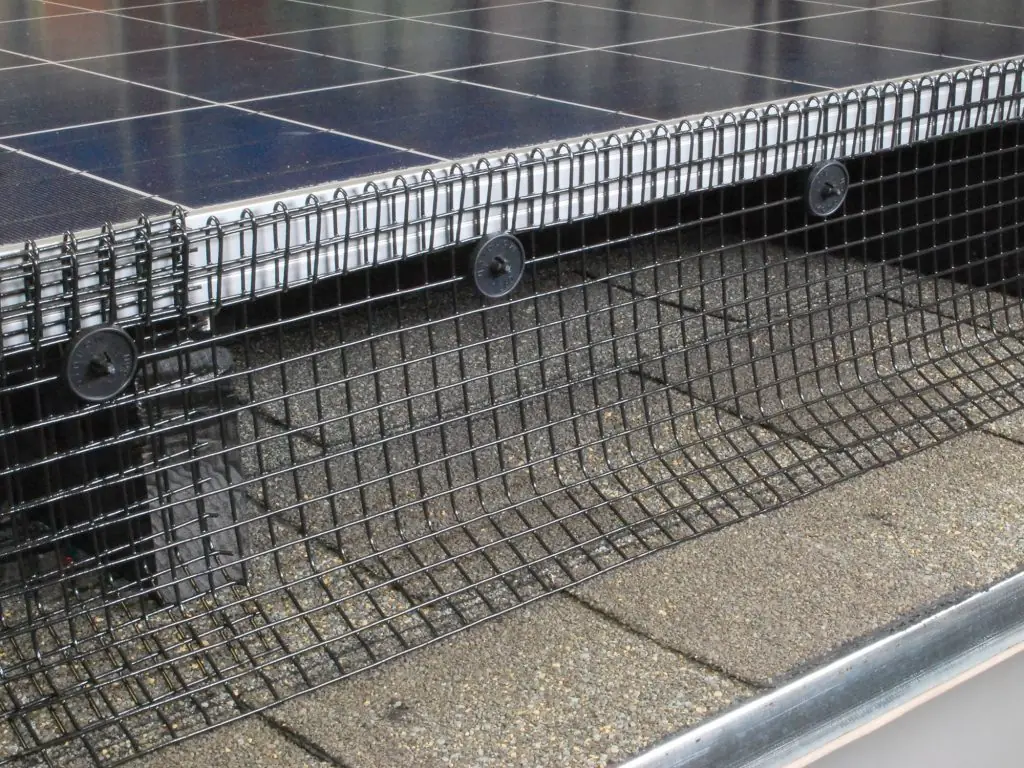
The fix is to clear out the nests and droppings and fit mesh around the edges of the panel array, so birds can't get underneath. It's done without drilling into the panels.
Signs you have birds in the roof
- Cooing, scratching or flapping above the ceiling, especially early in the morning
- Twigs, feathers or grass sticking out from under tiles or panels
- Droppings on window sills, the stoep, the car or the paving below the same spot every day
- Water marks on the ceiling where nesting material has blocked a gutter or valley
- Tiny biting mites in the house in summer, which often come from a nest in the roof after the young birds have left
That last one surprises people. When a nest is abandoned, bird mites go looking for a new host and can wander down through light fittings and cornices into bedrooms. They don't live on people for long, but they bite. Removing the old nest is the cure.
How we deal with it
- Survey We look at where birds are nesting and roosting, how they're getting in, and what is drawing them: food scraps, spilt feed, open bins, a neighbour who feeds them.
- Clean-out Nests and droppings are removed from the areas being proofed. Dried pigeon droppings can carry fungal spores that are harmful to breathe, so this is done with the right protection.
- Proofing Mesh around solar panels, closing gaps at the eaves and under tiles, and deterrents on ledges, beams and signage where birds perch.
- Advice Stopping feeding, sorting bins and spilt food, and checking the building after the next nesting season.
Warehouses, shops and harbour buildings
Large buildings near the harbour and in the industrial areas have high roof beams, open loading doors and plenty of spilt product, all of which suit pigeons. Droppings on stock, on machinery and on staff walkways are a hygiene problem, and in a food warehouse they're a serious one. Droppings are also acidic and, in salty sea air, help speed up corrosion on roof sheeting and steel. For these sites, proofing the roof structure, keeping loading doors closed when not in use, and controlling spilt product is the plan. Where pests besides birds are an issue, it ties in with our commercial pest control service.
Don't feed the pigeons
It sounds obvious, but in many cases someone nearby is feeding them, whether bread on the stoep, seed for "the birds" in general, or scraps from a takeaway. Pigeons that are fed will never leave, however good the proofing. In a complex, it's worth raising with the body corporate.
Holiday homes
A house that stands empty for months is perfect for birds. Pigeons and starlings move into the roof and under the panels, and you only find out when the family arrives in December and the ceiling smells. A check before the season, as part of holiday home pest control, catches it early.
What it costs
Bird control is priced on the size of the roof or building, how many nests and how much droppings need clearing, how many metres of mesh or deterrent are needed, and how hard the access is. A small solar array on a single-storey house is a short job. A two-storey building with birds in every eave takes more work and more equipment. You'll get a quote after we've seen it.
For more background, read our main bird control page, or see pest control in Mossel Bay for other services in town. Pigeons on the roof or gulls on the ledge? Ring 044 012 5011 and describe the building, or write to us. A photo of the roof or panels helps us plan.
Frequently asked questions
How do I stop pigeons nesting under my solar panels?
Clear out the nests and droppings, then fit mesh around the edges of the panel array so birds can't get underneath. It doesn't involve drilling into the panels.
Do plastic owls or reflective tape keep pigeons away?
Not for long. Pigeons quickly learn they're harmless. Closing gaps and making ledges unusable is what makes them move on.
Can you remove swallow nests?
Not while they're in use. Swallows are protected, so active nests are left alone and the eaves are proofed after the birds have left for the season.
Are pigeon droppings dangerous?
They can be. Dried droppings can carry fungal spores that are harmful to breathe, so large build-ups should be cleaned with proper protection rather than swept up.
Do pigeons affect what my solar panels produce?
Droppings on the glass cut the light reaching the panels, and nests underneath trap debris and damp against the roof. Cleaning and proofing deal with both.
Do you harm the birds?
No. The aim is to keep birds off your property by removing nesting sites and closing access, not to hurt them.