


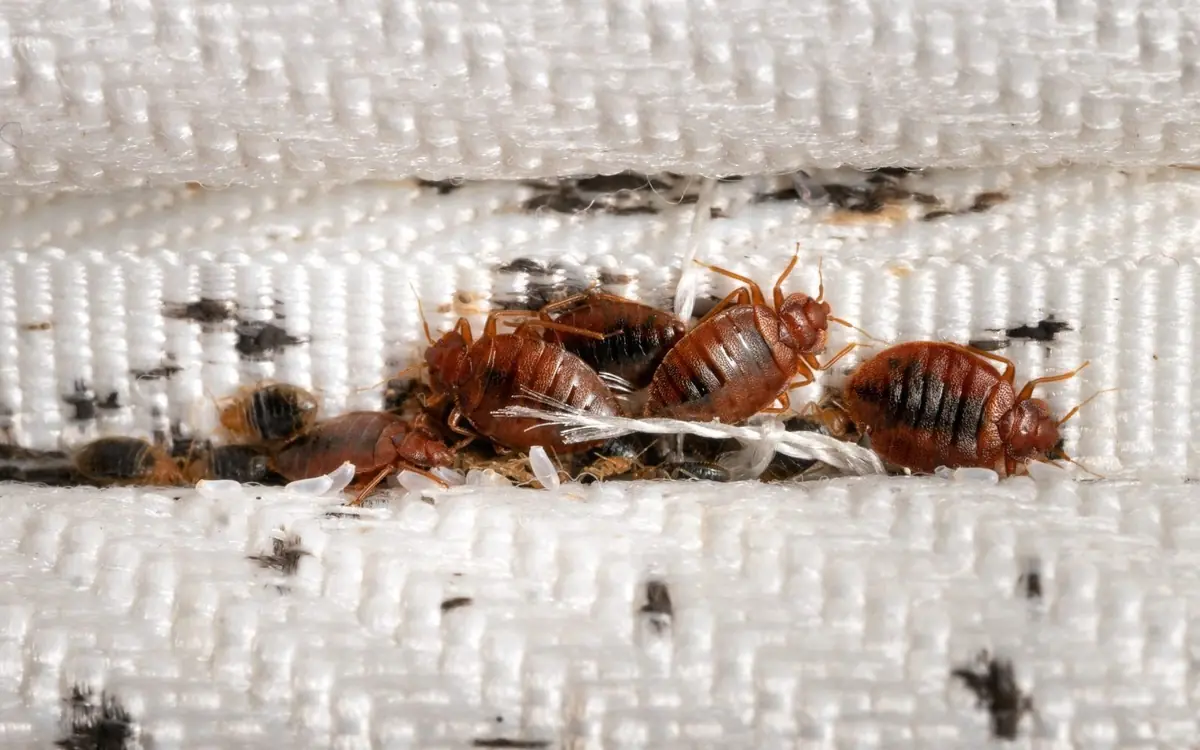
George is a crossroads. Travellers on the N2, students, business visitors, people moving for work: a lot of luggage passes through town, and bed bugs travel in luggage. They're treatable, but only if it's done properly.
Getting rid of bed bugs in a George home takes two treatments, roughly a fortnight apart. The first goes into every seam, joint and crack close to the bed, roughly an arm's length or two around it. The second kills the young bugs that hatch afterwards from eggs no treatment can get into. Skip that second visit and they're very likely to be back within weeks. And having bed bugs says nothing about your housekeeping. They're carried in on luggage, backpacks, second-hand furniture and visitors' bags, and a tidy house in a good suburb is as likely to get them as anywhere.
We deal with bed bugs, quickly and without fuss, in homes, flats, guest houses, B&Bs, student and staff accommodation, hostels and lodges throughout George.
Where George's bed bugs come from
George is the Garden Route's biggest town and a stopping point for a lot of people: travellers on the N2, business visitors, students, people coming in for work at the airport, hospital and businesses, and families moving between towns. The bugs ride along in bags and climb out wherever the bags are unpacked. Typical ways they get in:
- A trip away, with bugs carried home in a suitcase
- A visitor's bags in the spare room
- A second-hand bed, couch or headboard
- Shared accommodation where one room passes them to the next
Signs to look for
- Itchy welts in a line or a small group on the arms, neck and shoulders, new each morning
- Black pinpoint spots along the mattress seams, the base and the headboard, which streak if you rub them with a wet cloth
- Tiny white eggs and see-through cast skins tucked into seams and joints
- Small rust-coloured marks on the sheets
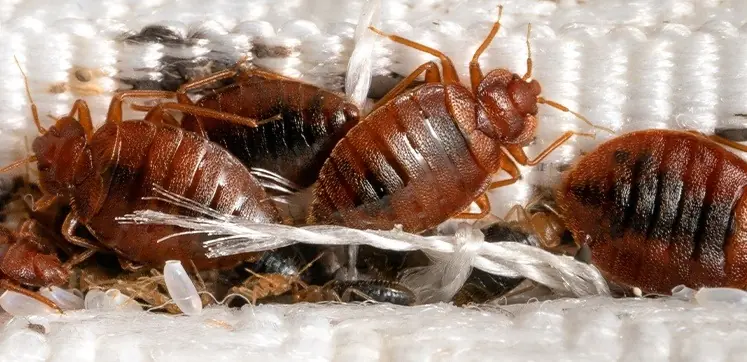
- The bugs: flat, oval and reddish brown, about as big as a lentil when adult
Not everyone reacts to the bites, which is why one person in a double bed can be covered while the other has nothing to show. Our bed bugs profile shows each stage of the life cycle.
How we treat
- Everything near the bed, then next door The bed and its room first, then the rooms around it. In a guest house that also means the linen store.
- First round The seams and piping of the mattress, the base, bed frame and headboard, bedside tables, skirtings, the folds of curtains, plug points and any upholstered chairs.
- Second round, about two weeks on This catches bugs that have hatched since, before they're old enough to lay eggs of their own.
- A last look We check for anything fresh and give you a straight answer on whether more is needed.
Preparing the room
- Put all bedding, curtains and clothes from the room through the hottest wash the fabric can take, then a hot tumble dry
- Seal the clean washing in bags until the treatment is finished
- Empty the bedside drawers and clear the floor around the bed
- Leave beds, bedding and furniture where they are rather than moving them to another room
- Keep the mattress unless we tell you it can't be saved
Guest houses and B&Bs in George
A bed bug review can hurt a guest house for years. The best response is fast and quiet: close the affected room, book a treatment, check the rooms around it and write down what was done and when. Train housekeeping to check mattress seams and headboards when they change the linen. For guest houses that want regular checks, our commercial pest control contracts include them.
Student and staff accommodation
Rooms with many beds, frequent turnover and shared furniture let bed bugs spread quickly. Treating one room and ignoring the rest rarely works. We plan treatments for when rooms can be emptied, such as weekends or holidays, and treat neighbouring rooms in the same visit.
After a trip away
Most bed bugs arrive home in a suitcase, so a few habits on the way home save a lot of trouble. In the hotel or guest house, keep your luggage on the rack rather than on the bed or the floor, and look at the mattress seams and headboard when you arrive. At home, unpack straight into the washing machine rather than onto the bed, wash everything on the hottest cycle the fabric allows and tumble dry it, and vacuum the suitcase before it goes back in the cupboard. If you think you've stayed somewhere with bed bugs, keep the suitcase in the garage until it's been checked.
Bitten, but no sign of bugs?
Plenty of bites that look like bed bugs turn out to be something else. Fleas usually go for the ankles and shins, and mosquito bites are scattered over whatever was outside the sheet. We find the evidence before we treat, and if it isn't bed bugs we'll tell you.
Three things that make it worse
Bug bombs and foggers fill the air but don't get into seams or cracks, so the bugs simply retreat further into the walls or the next room. Moving to the couch takes the problem with you, because the bugs follow the sleeper. And putting the bed out on the pavement without treating the room leaves the rest of the colony in the skirtings and furniture.
What it costs
The number of rooms and beds involved, how much upholstered furniture there is and how long the bugs have had to settle in all affect the price. Both visits are built into the quote from the start.
How bed bugs travel from house to house is explained on the bed bug treatment page, and the rest of what we do in town is on pest control in George. To book, call 044 012 5011 or send a discreet request online. A WhatsApp photo of a bug, or of the spots on the mattress, helps us confirm it before we come.
Is it a bed bug?
Flat, oval and reddish brown, about the size of an apple pip. Here's what to look for.
 In the bed
Bed bug
Cimex lectularius
- Size
- 5 to 7 mm, like an apple pip
- Colour
- Reddish brown, darker after feeding
- Hides
- Mattress seams, bases, headboards
- Arrives in
- Luggage and second-hand furniture
What you'll notice
Itchy bites in a row by morning, ink-like dark spots on the mattress seams, and pale eggs and shed skins in the piping.
Risk level
- Bites and itching
- Spreads room to room
- Hard to get rid of
Frequently asked questions
How do I know if I have bed bugs?
Itchy bites in rows, mostly where skin was uncovered in bed, tiny black dots along mattress seams that smear when you wipe them with a damp cloth, and flat, reddish-brown bugs tucked into seams and bed joints.
What should I do before you arrive?
Strip the beds in the affected rooms, seal the linen in a bag before carrying it out, and wash it hot. Please don't shift beds or couches to other rooms, so the bugs stay where we can find them.
Can you treat a guest house discreetly?
Yes. The room with the problem and its neighbours are done, and we're happy to time the visit for when guests are out.
Is it safe for the children to sleep in their beds afterwards?
Once the treated surfaces have dried, yes. Keep sleeping in your own beds: hungry bugs leave their hiding places to find you, and that's when they pick up the treatment.
We bought a second-hand couch and now we're being bitten. Could that be it?
It could. Upholstered furniture and bed bases are one of the ways bed bugs travel. Check the seams and the underside, and call us before you move it to another room.
How long does the whole process take?
Two visits roughly two weeks apart. On each, the time we need depends on how many rooms and how much furniture are involved.