


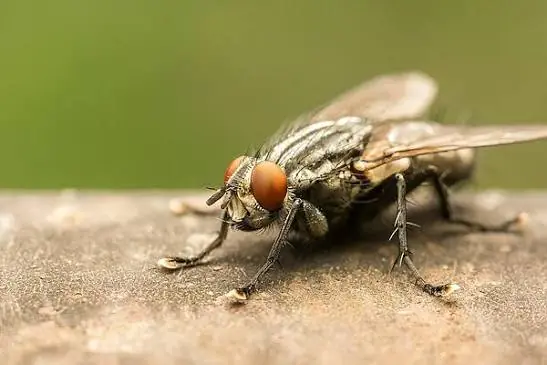
A harbour town with a busy beachfront, warm summers and farms just inland has everything a fly could want. The flies on your kitchen counter almost certainly started life within a few hundred metres of it.
Flies in a Mossel Bay home or business stop when the place they breed is found and dealt with, and the surfaces they rest on are treated so that the adults still around keep dying off. A spray at the flies buzzing around the kitchen does almost nothing on its own, because for every fly you see there are many more maggots and pupae developing in a bin, a drain, a compost heap or a pile of fish scraps nearby. Most fly problems are breeding problems, and the breeding site is usually closer than people think.
We do fly control for homes, restaurants, takeaways, fish shops, guest houses, complexes, shops and farms in and around Mossel Bay.
Which fly is it?
The type of fly tells you where to look:
- House flies are the grey ones that land on food and on you. They breed in rotting organic material: bins, dog mess, compost, kitchen waste, manure
- Blow flies, the big shiny green or blue ones, breed in meat, fish and dead animals. A sudden swarm of them inside the house, especially in one room, very often means a dead rat or bird in the roof, a wall or under the floor
- Fruit flies are the tiny ones around the fruit bowl, the wine glasses, the bar and the bottle bin. Overripe fruit in the bowl, a splash of beer under the braai, the slimy film in a kitchen drain: that's their nursery
- Drain flies look like tiny grey moths and turn up in bathrooms of houses that stand empty for weeks. They breed in drains and traps that hardly ever get flushed
- Lesser house flies fly slow loops in the middle of a room under the light and rarely land. They breed in much the same places as house flies
If you can, catch one in a glass or take a sharp photo. Our flies profile has more on each type, and if it's a blow fly invasion with a bad smell, our rodent control in Mossel Bay page may be the more useful one.
Where Mossel Bay's flies come from
Fish is part of life in this town. Boats come in at the harbour, people fish off the rocks at the Point and along the coast, and plenty of households clean their own catch. Fish heads, guts and scales in a household bin on a warm afternoon will have blow fly eggs on them within hours, and maggots by bin day.
The other big sources are the same as anywhere, sharpened by the heat and wind of a dry summer:
- Wheelie bins standing in the sun, especially ones without a tight lid or that are never washed
- Dog mess left in sandy yards and along the side of the house
- Compost heaps with kitchen scraps on top and no soil cover
- Blocked or slow drains, grease traps and gully traps at restaurants
- Fallen fruit under trees in older gardens
- Animal pens, stables, chicken runs and manure on smallholdings outside town
How we tackle it
- Find the source We walk the property: bins and bin areas, drains, grease traps, compost, pet areas, animal pens and the kitchen. For a business, we also look at deliveries, back doors and waste storage.
- Treat the breeding material Anything that can be removed or cleaned, we'll point out. Where breeding material can't be removed right away, it is treated to stop the larvae developing into adults.
- Treat the resting spots Flies spend a surprising amount of time sitting still, on walls near bins, on ceilings, along fences, on the underside of eaves and on the rims of bins. Treat where they rest, and the treatment carries on working long after we've gone.
- Give you a plan A short, practical list of what to change. For food businesses we put it in writing, so it can go in the hygiene file.
A local tip for anyone who fishes
If you clean fish at home, bag the heads, guts and skins tightly, and freeze them until the night before bin day. Rinse the cleaning table and the area around it with water and a little dish soap rather than just a hose, because scales and slime stuck to the paving are enough for blow flies to lay on. It sounds fussy. It's the single biggest difference you can make to blow flies around a Mossel Bay house in summer.
Restaurants, takeaways and fish shops
At the harbour, along the beachfront and in town, food premises fight flies all summer. Flies carry bacteria from bins and drains straight onto food and prep surfaces, and an environmental health inspection that finds flies in a kitchen is a bad day. For these businesses, fly control works best as part of a regular service: bins and bin rooms, drains, grease traps and the yard checked and treated on a schedule, with records kept. Our commercial pest control contracts cover this, and our food premises guide runs through the records an environmental health officer will ask to see.
Practical changes that help: keep back doors closed or fit strip curtains, empty and wash bins daily, keep the bin area away from the kitchen door, get the grease trap pumped on time, and wipe up sugary spills behind the bar before close.
Farms and smallholdings
Inland from Mossel Bay there are dairies, cattle, sheep, chickens and horses, and every one of them produces manure and spilt feed. Flies on a farm aren't only a nuisance: they bother livestock, spread disease between animals and fill the farmhouse kitchen. Here the work is mostly about manure handling, feed spills and treating the walls and rafters of sheds where flies rest. Our farm pest control page covers this in more detail.
Holiday homes and rentals
When holiday guests leave on a Saturday morning, the bins often leave with them only in theory. A full bin left in the yard for a week in December is a fly factory, and the next guests arrive to a kitchen full of flies. If you let a house, make sure your cleaner or caretaker takes the bins out and rinses them between stays. Our holiday home pest control visits can include a fly check.
What it costs
A house with a fruit fly problem in the kitchen is a quick job. A takeaway on the beachfront, or a smallholding with horses and a compost heap, needs more time and usually a few visits over summer, and the price follows that. A house with one problem bin is a short visit. A restaurant or a dairy is better served by a scheduled service. We'll tell you honestly if all you need is a better bin routine.
For the bigger picture there's our main fly control page, and the Mossel Bay page covers the rest of what we handle here. Ring 044 012 5011, or send us the details and we'll come back to you.
Frequently asked questions
Why are there so many flies in my house all of a sudden?
Usually because something nearby has started breeding them, like a bin, dog mess, compost or a blocked drain. A sudden swarm of big shiny flies often means a dead animal in the roof or wall.
Will spraying the flies inside get rid of them?
Only for an hour or two. The flies come from a breeding site outside, so the source has to be dealt with as well as the surfaces they rest on.
What are the tiny flies around my fruit bowl and drains?
Fruit flies or drain flies. Fruit flies breed in fermenting fruit and spilt drinks, and drain flies breed in the slime inside drains, so cleaning those spots is the main cure.
How do I stop blow flies after cleaning fish?
Bag and freeze the scraps until bin day, and wash the cleaning area with soapy water rather than only hosing it. Blow flies lay eggs on fish waste within hours.
Do you do fly control for restaurants in Mossel Bay?
Yes. For restaurants and food businesses we recommend a regular service covering bins, drains and grease traps, with written records for your hygiene file.
Do you treat flies on farms?
Yes. On farms we focus on manure, feed spills and the sheds and rafters where flies rest, and we give practical advice on managing breeding sites.