


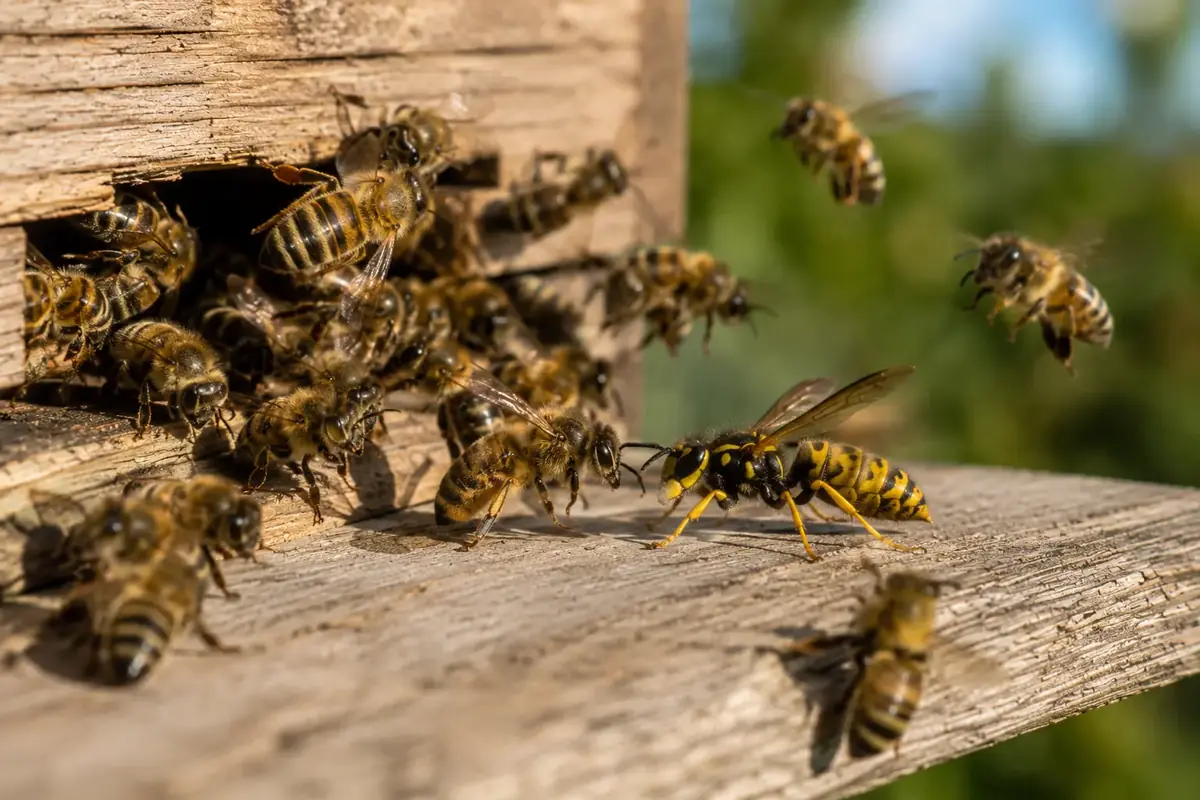
A line of bees flying into one small gap, all day long, means a colony has moved in. It won't move out by itself, and it gets bigger and harder to reach every week.
If honey bees have moved into your roof, wall, chimney or water meter box in Mossel Bay, the colony needs to be removed, the comb taken out, and the entrance sealed so another swarm can't move into the same space next spring. Doing nothing usually means a bigger colony and more comb to remove later, and blocking the hole or spraying it from the outside often drives angry bees into the house through a different gap. Bees in a structure are a job for someone with protective gear and a plan.
We remove bees from homes, holiday houses, schools, businesses and farm buildings in Mossel Bay and the surrounding area.
Is it a colony, a swarm or just thirsty bees?
These three look alike at first and need very different responses.
A swarm is a clump of bees clinging to a tree, a washing line or a gutter. It's a colony on the move, resting while its scouts look for a new home. Swarms are usually fairly calm, and many move on within a day or two. Keep people and pets well back, don't spray it, and call us if it starts moving into a gap in a building. We've written up what to do about a bee swarm in more detail.
A colony is bees flying in and out of one opening all day, with a hum you can sometimes hear through the wall or ceiling. They've built comb inside and are there to stay. This is the one that needs removal.
Thirsty bees are a summer thing in a dry town like Mossel Bay. In hot, dry weather, bees fly a long way for water, and swimming pools, bird baths, pet bowls, dripping taps and the overflow from a geyser are all easy sources. A few dozen bees at the edge of the pool every afternoon doesn't mean there's a hive in your house. It means your pool is the nearest water. Covering the pool where possible, fixing drips and putting out a shallow dish of water with stones in it further down the garden often moves them along.
Where Mossel Bay bees set up home
Honey bees look for a dry, dark cavity with a small entrance. Around Mossel Bay, we find colonies in:
- Water meter boxes on the pavement or at the gate, a perfect bee-sized cavity at ground level, and a nasty surprise for whoever lifts the lid
- Roof spaces, entering under a loose tile, a gap in the fascia or a hole in the gable
- Wall cavities, through a weep hole or a crack in the plaster
- Chimneys of fireplaces that aren't used much in the warmer months
- Old fridges, compost bins, sheds, Wendy houses and owl boxes
- Holiday homes that stand empty for months with nobody noticing the first scouts
Spring is the main swarming season, so the most new colonies turn up from about September into early summer. Bees can swarm at other times too, particularly in drought, when a colony may abandon its site and look for a better one.
How a removal works
- Look first We watch where the bees go in and trace the comb, which isn't always right behind the entrance. That decides how much needs opening and how long the job will take.
- Clear the area Everyone who doesn't need to be there moves inside or away, pets included. We wear full bee suits and time the work to suit the street, the school or the shop.
- Remove the colony Bees whose comb can be lifted out cleanly may be moved alive; a colony wedged into a wall or grown very large usually can't be. You'll get an honest view before we start. If the bees can't be saved, they're destroyed first and the comb comes out after.
- Seal We close the entrance or tell your builder what needs closing. Leftover wax and honey are what draw the next swarm, so getting the comb out and the hole shut is the whole point.
Reaching comb in a roof may mean lifting some tiles or opening part of the ceiling or a fascia board. In a wall, a brick or some plaster sometimes has to come out. We'll explain that before we begin, so there are no surprises.
What not to do
- Don't block the hole. The bees inside will look for another way out, sometimes through a light fitting or an air vent into the house
- Don't spray it with insect spray. It rarely reaches the comb, and it makes the bees defensive
- Don't pour petrol or anything flammable into it. That's a fire risk and won't reach the colony anyway
- Don't try to remove comb yourself. A colony defending its comb is a very different animal from a calm swarm
If someone is stung many times, or has an allergy and shows signs of swelling around the face or difficulty breathing, get medical help straight away. Scrape a sting out with a fingernail or a bank card rather than pinching it.
Bee or wasp?
Honey bees are hairy, golden-brown and a little chunky, and they live in large colonies with wax comb. Wasps are slender, shiny, often yellow and black or reddish-brown, and build papery nests under eaves and in shrubs. They need a different approach; see wasp removal and our wasps profile. The honey bee profile explains how a colony works and why it grows so quickly.
What it costs
We quote after we've seen the colony. A ground-level meter box is a quick job. A colony that has spent two summers inside the wall of a double-storey house is a different story. The main things that affect the quote are where the comb is, how much there is, the height and access, and whether sealing is part of the job.
Our main bee removal page has more background, and pest control in Mossel Bay lists everything else we treat around town. If your holiday house stands empty for long stretches, a holiday home pest control visit can include a look for bees. For a colony at your home or business, ring 044 012 5011 or use the online form.
Frequently asked questions
Why are there so many bees at my swimming pool?
In hot, dry weather bees collect water, and a pool is an easy source. It doesn't mean there's a hive in your house. Fixing drips and offering water elsewhere in the garden helps.
Is it a swarm or a colony?
A swarm is a ball of bees hanging off a branch or wall, resting on its way somewhere. A colony has moved into something, a roof, a wall or a meter box, and bees fly steadily through one gap. The first usually leaves; the second won't.
There are bees in our meter box. Can I lift the lid to look?
Please don't. Opening it lets the whole colony out at once. Keep people away from the box and give us a call.
How do I tell bees from wasps?
Bees are hairy and golden brown and build wax comb inside a cavity. Wasps are smooth and shiny, often with dangling legs, and build an open, papery nest under eaves or in shrubs.
Can the bees be moved alive?
When the comb can be reached without wrecking the building, sometimes. We'll say what's realistic once we've had a look.
Do bees in a wall damage the house?
The bees don't chew timber, but the comb and honey can stain and seep through plaster and ceilings, and the colony grows each year it's left.