


You're paying for the house, but the builder runs the site. These are the questions that make sure the termite protection under your slab actually gets done, at the right time, and stays intact.
For a first-time owner, the job is simple: make sure soil poisoning is in the building programme, find out who books it, check it happens before the plastic goes down, and get the certificate at the end. That's all. The treatment itself takes a few hours. When it goes wrong, it's usually the scheduling, and you're the one person on the project who has a reason to keep asking about it.
If you want the technical side, our main soil poisoning page covers how it works. This guide is about your role.
First question: is it in the quote?
Look through your building quote or contract for soil poisoning, soil treatment or termite treatment. Three possibilities:
- It's there, and the builder arranges it. Good. Ask which company and when they plan to call them
- It's there as a provisional amount. Ask what it covers and who books it
- It isn't mentioned. Ask why. On a slab-on-ground house in this region, it should be part of the job. You can arrange it yourself directly with us if the builder prefers
Settle this before the first spade goes in. Once trenches are open, the clock is running.
Questions to ask your builder
Write these down and ask them at the start. The answers tell you whether it's been thought about.
- Who is booking the soil poisoning, you or me?
- At which stages will it be done? (The answer should include the foundation trenches and the ground under the slab, before the membrane.)
- How much notice will the pest controller get?
- Will plumbing and electrical trenches inside the footprint be treated too?
- What happens if it rains on the day?
- Who keeps the certificate, and when do I get a copy?
- Are there any paved areas, patios or garden beds planned right against the walls?
A builder who answers all seven without hesitating has done this many times. One who says "we'll sort it out" deserves a follow-up call when the trenches are dug.
What you'll see on site
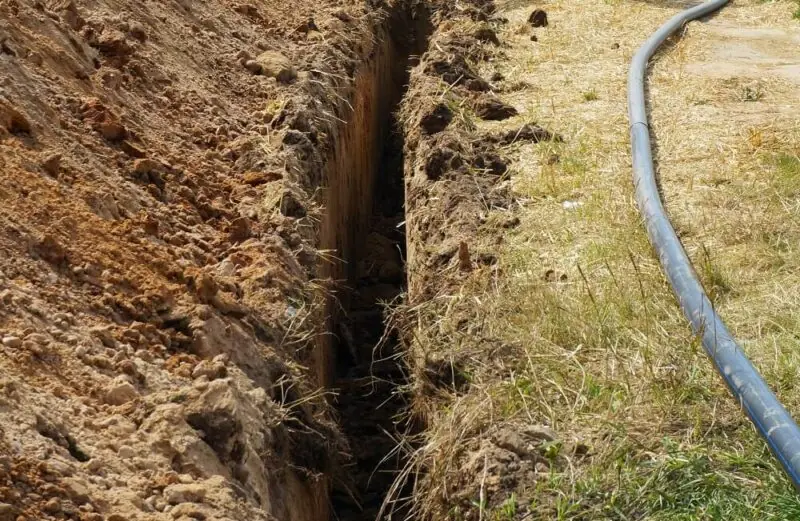
On the day, an operator arrives with a tank and spray equipment and wets down the soil in the bottom and sides of the open foundation trenches. A while later in the build, once the fill inside the foundations has been compacted, they come back and treat the whole area that will be under the floor, plus any service trenches cut into it. The final visit, if your job needs one, treats the soil along the outside of the walls once the building is up.
Each visit is a few hours. The builder's team keeps off the wet ground until it has soaked in, and then work carries on.
You don't need to be there. If you'd like to be sure, ask the builder or us for a photo of each stage, with the date. It's a reasonable request and it costs nobody anything.
Mistakes that undo the treatment
The treatment only protects the ground it's applied to. A surprising number of things on a building site disturb or bypass it.
- The membrane goes down first. If the plastic is already laid, the under-slab stage can't be done properly. This is the classic scheduling error
- Ground is moved after treatment. A trench re-dug for a drain someone forgot, or extra fill brought in and spread over treated ground, leaves gaps
- Timber buried on site. Offcuts, old formwork boards and pegs left in the backfill against the foundations feed termites right next to your walls. Ask the builder to keep wood out of the fill
- Late additions. A braai room, a carport slab or a garden shed added at the end of the job sits on ground nobody treated
Paperwork to keep
At the end, you should get a soil poisoning certificate showing the site address, the product applied, which areas were done and on which dates. The work should follow SANS 10124, the national standard for soil treatment against termites. File the certificate with your approved plans. When you sell, a buyer's attorney or a cautious buyer may ask for it, and it's much easier to hand over than to explain.
After you move in
Your new house sits on a treated layer, but what happens around it over the next few years matters just as much.
- Don't build up the garden against the walls. Raised beds, soil banked against the house and thick mulch over the foundations all bury the treated zone under untreated ground
- Keep the outside ground level below the damp course. The line of the damp-proof course should stay visible all the way round
- Point water away from the house. Downpipes and gutters that dump water against the foundations keep the soil damp, which suits termites
- No firewood or timber stacked against the walls
- Take a walk round the house once a year. Look at the foundations and the lower walls for pencil-thin mud tubes. Our subterranean termites profile shows what they look like
If you add paving, a patio or an extension later, the new ground needs its own treatment before it's covered.
Already built without it?
If the slab is in and nobody treated the ground, you haven't lost everything. An existing house can be protected by treating the soil around the foundations, which means trenching along bare ground and drilling through paving. It's more work than doing it on an open site, but it's what termite control for existing homes involves.
Building in George, or building an extension?
Our soil poisoning in George page covers working with local builders and estate developments. For a newer coastal suburb, see termite control in Dana Bay.
Send us your plans or the floor area through our contact page, or call 044 012 5011, and we'll quote and pencil in the stages with your builder.
Frequently asked questions
Is soil poisoning included in a normal building quote?
Not always. Some builders include it, some list it as a provisional amount, and some leave it out. Check your quote and ask before work starts.
Can I book the soil poisoning myself instead of the builder?
Yes. You'll just need to keep in close contact with the builder so we're called at each stage before it's covered up.
Do I need to be on site when it's done?
No. If you want reassurance, ask for a dated photo of each treated stage. That's a fair request and easy to provide.
Doesn't the plastic under the slab stop termites anyway?
No. The membrane has overlaps and gaps around every pipe that comes through it, and termites find them. It's there for damp, not for termites.
The slab has already been cast. Is it too late?
For under-slab treatment, yes. But the house can still be protected by treating the soil along the foundations from outside, which is how existing homes are done.
Is treated soil under the house a risk to my family?
Once the slab is cast, the treated soil is sealed underneath it. On site, workers keep off the wet ground until it has soaked in.