


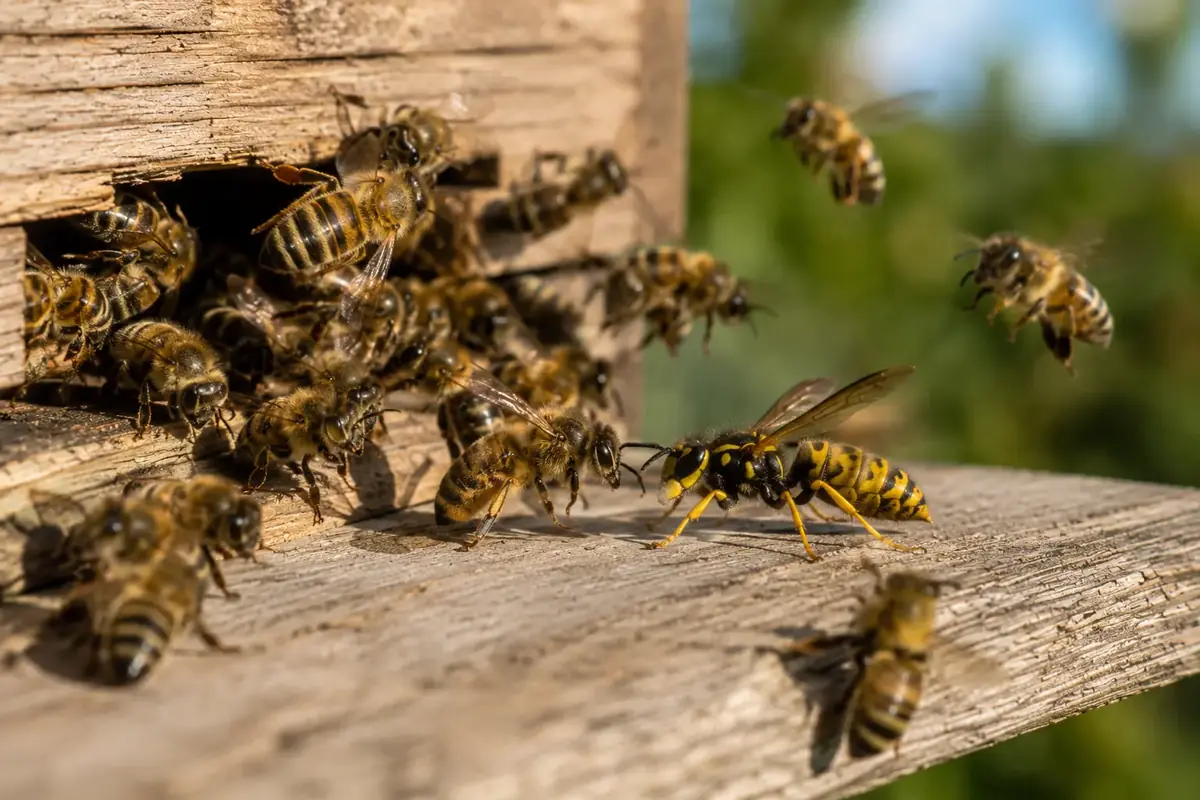
A steady stream of bees disappearing into a crack in the wall, a chimney humming in October, bees at every tap in the garden. Here's what each of those means in Oudtshoorn.
When bees are coming and going through a single crack or hole in the house, they've built comb inside and they won't leave on their own. The colony has to be taken out, along with all the wax and honey, and the gap closed so another swarm doesn't move into the same spot next spring. A cluster of bees hanging on a branch is different: that's a swarm resting while it looks for a home, and it normally leaves once its scouts have found somewhere to live.
Homes, guest houses, schools, shops and farm buildings: we take colonies out of all of them, in town and on the farms around it.
Water brings them close
In a Karoo summer, water is the thing bees need most after flowers. Foragers collect it from pools, dripping taps, bird baths, irrigation drippers and leaking troughs, and carry it back to cool the hive. A crowd of bees at your tap doesn't mean there's a colony in your roof; it means yours is the closest water. Fixing drips and putting out a basin with pebbles for the bees to land on, at the far end of the garden, draws them away from where you sit.
If, on the other hand, bees are going in and out of the house itself, the water is the least of it.
Where colonies settle in town
- Sandstone and old brick walls, where old mortar has crumbled or the plaster has cracked
- Chimneys that stand cold from October until the first winter fire
- Roof spaces under corrugated iron and at the eaves of older houses
- Meter and valve boxes set into the lawn or the pavement
- Old geysers, water tanks and stacked equipment in yards and sheds
On farms, add hollow trees along the river, old tractor tyres, disused tanks, the frames of parked machinery and quiet corners of the packing shed.
How a removal works
- We look first Watching where the bees go in, and listening and checking from inside, tells us where the comb is and how big the colony has grown.
- We open up as little as possible On a sandstone or plastered wall, we'll show you where we need to go in before we start, and keep it small.
- Colony and comb come out All of it. Wax and honey left behind melt in the heat, seep through walls and ceilings, smell, and draw the next swarm straight back.
- The entrance is closed Once the cavity is clear, the gap is sealed.
Where a colony can be taken out alive and a beekeeper can take it, we'll tell you. It comes down to where they've built and what we can get at.
Don't light the fireplace
When bees move into a chimney, lighting a fire to smoke them out seems obvious. It isn't safe. Smoke and heat drive the bees down into the room, and a chimney packed with wax is a fire risk. The same goes for spraying insecticide into the entrance or plugging it with foam: bees that can't use the front door find a back door, and that's often into a bedroom.
Allergies and stings
If anyone in the house is allergic to stings, keep them indoors on the far side of the house until the bees are out, make sure their medication is to hand, and tell us when you book. Many stings at once, swelling of the face or throat, or any difficulty breathing means medical help immediately.
After the bees are out
A colony that has been in a wall or ceiling for a season or two leaves its mark. You may have a brown stain on the ceiling where honey seeped through, a sweet smell for a while, or a patch of plaster that needs redoing where we opened up. Once the cavity is clean and sealed, those repairs are a job for your builder or painter. Keep an eye on the spot next spring: if bees start investigating the same wall, it means a gap has opened again or the old scent is still drawing them, and it's far easier to deal with scouts than a new colony.
What it costs
The price depends on where the colony is and how hard it is to reach, how big it is, how much opening up and closing is needed, and whether ladders or scaffolding are involved. A colony in a meter box is quick. One deep inside a double-storey sandstone wall takes much longer. We'll quote once we've seen it.
For the general picture, see bee removal and our honey bee profile, and if the bees are hanging in a tree, read what to do about a bee swarm first. Everything else we do locally is listed on pest control in Oudtshoorn. Call 044 012 5011, or describe where the bees are and we'll come back to you.
Frequently asked questions
Will the bees leave if I turn off the water?
Not if they've built comb in your house. Fixing drips keeps foragers away from where you sit, but a colony in a wall stays until it's removed.
Can you take bees out of a sandstone wall without wrecking it?
We'll show you where we need to open up before we start, and keep it as small as we can. Every job is different, so we decide once we've seen it.
Do you remove bees on farms outside town?
Yes, from sheds, old tanks, machinery and hollow trees near buildings, planned alongside other farm work where possible.
Bees have moved into our chimney. Can we light a fire to drive them out?
Please don't. Smoke and heat push the bees down into the house, and a chimney full of wax is a fire risk. Leave it to us.
Someone in the house is allergic. What should we do now?
Keep them indoors on the far side of the house with the windows closed, make sure their medication is at hand, and mention the allergy when you book.
When is swarm season in the Klein Karoo?
Mostly spring, when the veld and the orchards flower. Smaller swarms can turn up after good rain at other times of year.