


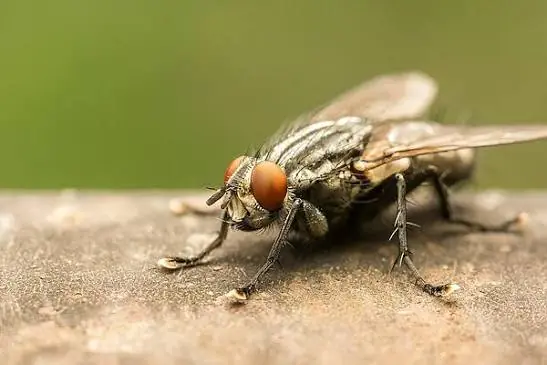
If you can't eat outside without flies landing on the plate, something close by is breeding them. In a Klein Karoo summer, that something works fast.
Flies around an Oudtshoorn property are controlled at the source first and on the walls second. Somewhere nearby there's manure, wet feed, a bin, a compost heap or a carcass producing them, and in summer heat a fresh batch can come out of it in well under two weeks. Find and fix that, then treat the surfaces where flies rest, and numbers drop quickly. Spraying the air in the kitchen without doing either just clears the room for an hour.
We treat flies on ostrich and cattle farms, at stables and kennels, in restaurants, butcheries, guest houses and ordinary homes in and around Oudtshoorn.
The heat is the problem
A fly's life cycle runs on temperature. In winter an egg laid in manure takes weeks to become an adult; in a hot Oudtshoorn January it can be about a week. That's why a bin that's emptied once a week is fine in July and a fly factory in December, and why a manure heap you could ignore in winter needs turning or removing every few days in summer. Getting the timing of your clean-up right does as much as any treatment.
Where they come from
- Animal yards. Ostrich camps, stables, calf pens, chicken runs and kennels, especially wet corners where manure mixes with spilt water and feed
- Feed. Wet lucerne, spilt pellets and the mush that collects under troughs
- Kitchens. Bins, grease traps, the drain under the dishwasher and fruit left in a warm room
- Dead animals. A rat that died in the roof, a bird in the chimney or a carcass in the veld near the house can produce a cloud of big shiny blowflies in a few days
- Compost and garden waste that stays wet in a watered garden
Which flies
House flies are the grey ones on the kitchen counter. Blowflies are the big metallic blue and green ones that buzz at the window. Stable flies are house-fly lookalikes with a bite, and they're the ones making horses stamp and cattle flick their tails. Little fruit flies hover over the fruit bowl and the recycling. Our flies profile has a closer look at each.
Farms and stables
On a farm, the biggest gains come from manure and feed handling. Clear wet manure and bedding often, keep feed dry and off the ground, fix leaking troughs and drinkers, and keep the area around the feed store swept. We then treat the walls, rafters, fences and shelters where flies rest during the heat of the day, and set a programme through the warm months rather than one treatment in January. Farm pest control covers how that fits with rodents and stored grain on the same property.
Slaughter days and the hunting season
On Karoo farms, home slaughter and the winter hunting season bring their own fly trouble, even in cooler weather. Offal, skins and blood on the concrete draw blowflies within hours. Bag or bury waste the same day, scrub the slaughter area with plenty of water rather than just hosing the worst off, and keep the cold room door shut and screened. If carcasses hang in a shed, a fine mesh over the windows keeps the flies off the meat.
Restaurants and guest houses
Oudtshoorn's tourist kitchens are busiest in exactly the months flies are worst. A regular service covers bins, drains, grease traps, screens and the outside areas where flies gather, with a written record after each visit for your hygiene file. Strip curtains on back doors and screens on kitchen windows keep a lot out while the source is dealt with. Our commercial pest control page explains the contracts.
How we treat
- Find the source We walk the property, inside and out, and show you what's breeding the flies.
- Treat resting surfaces A residual treatment on walls, ceilings, rafters, window frames and fences where flies settle. It's odourless, doesn't mark paint, and we keep it away from food, feed and water.
- Drains and bins Cleaning advice for drains, traps and bin areas, and treatment of the surrounds.
- Follow up On farms and food premises, a programme through spring and summer.
Fogging the yard
It's tempting to fog the whole yard before a braai. It kills the flies in the air that afternoon and does nothing to the larvae in the manure, so by the weekend they're back. Spend the effort on the source instead.
What it costs
A house with flies coming from one bin or a dead rat in the roof is a short visit. A dairy, ostrich farm or busy restaurant needs a programme, and the cost tracks the area involved, the number of breeding spots and how often we visit. We'll look first and give you a quote for what's actually there.
Our regional fly control page has more detail, and pest control in Oudtshoorn lists the rest of our local work. Phone 044 012 5011 or ask for a visit.
Frequently asked questions
Why are flies so much worse in Oudtshoorn in summer?
Heat. Flies develop far faster in hot weather, so a bin or manure heap left a few days longer produces a lot more of them.
Can you treat an ostrich farm for flies?
Yes. We treat the sheds, feed areas and walls where flies rest, and help you plan manure and feed handling around their breeding cycle.
Is the treatment safe near animals?
We treat resting surfaces, not the animals, their feed or their water, and let you know when they can go back into freshly treated areas.
Do fly screens make a difference?
A big one in kitchens and food storerooms. Screens on windows and strip curtains on back doors keep a lot of flies out while the source is dealt with.
Can a restaurant get regular visits?
Yes, on a service contract, with records for your hygiene file and a check of bins, drains and screens each time.
How long does it take to see a difference?
Once the breeding site is gone and resting surfaces are treated, numbers usually drop within days. Flies already in the area die off as they settle on treated surfaces.