


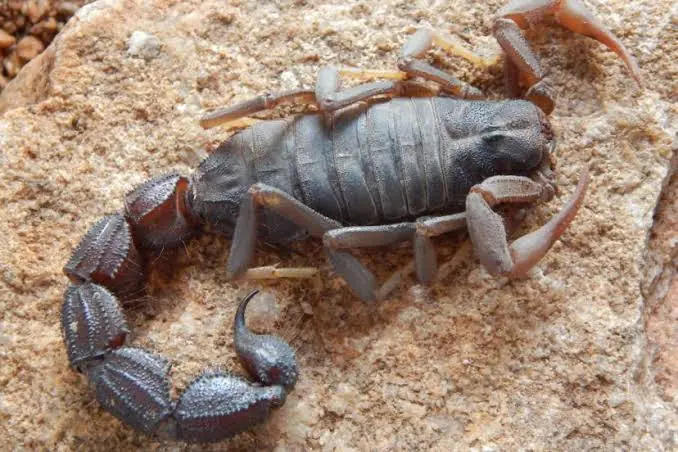
In Oudtshoorn, De Rust or Calitzdorp, a scorpion on the bathroom floor on a hot night is part of life. A few habits keep it from becoming a trip to the hospital.
Living with scorpions safely comes down to two things: making the house harder to get into, and building a handful of habits so that nobody puts a bare hand or foot where a scorpion is resting. Neither is complicated. Families who've grown up in the Karoo do most of it without thinking, and visitors and newcomers just need to be shown.
This guide is the checklist. For how the different scorpions look and how dangerous each one is, see our scorpions profile.
First, know which ones matter
Look at the tail before you look at anything else. A scorpion with a fat, heavy tail and dainty, slim pincers relies on its venom, and that is the one to treat with real respect, especially around small children and older people. A scorpion with chunky crab-like claws and a skinny tail relies on its grip; its sting hurts but is far less of a worry for a healthy person. It's a rule of thumb rather than a guarantee, and it's simple enough for a five-year-old to learn.
The bedroom
A scorpion that wanders in after dark looks for somewhere soft and dark to spend the day, and bedding on the floor is perfect.
- Move beds a hand's width off the wall so nothing can climb from the wall onto the mattress
- Tuck in sheets and duvets so they don't hang down to the floor
- Keep the floor under and around beds clear of clothes, bags and toys
- Before getting into bed, flick back the covers. It takes two seconds
- For a baby's cot, a smooth glass jar or bowl under each leg helps, because most scorpions can't climb clean glass. Keep the cot away from the wall and curtains
Shoes, clothes and towels
- Shake out shoes, boots and slippers before putting them on, every time. Keep them on a shelf or rack rather than on the floor if you can
- Hang towels up instead of leaving them on the bathroom floor, and give one a shake before drying yourself
- Don't leave washing in a heap on the floor overnight
- Shake out clothes that have been on the line into the evening
Outside after dark
Scorpions come out to hunt once the ground starts to cool. That's when people walking barefoot across a stoep or lawn get stung.
- Wear closed shoes outside at night, even just to fetch something from the car
- Carry a torch and use it on the path in front of you
- Don't sit on rock walls or the edge of a raised bed without looking first
- Wear gloves to move rocks, bricks, pots, firewood or anything that's been lying on the ground. Lift it towards you so that whatever is under it runs away from you
Children
Teach them the tail rule, then teach them not to touch any scorpion at all. Small children are the ones most at risk from a bad sting, and they're also the most likely to pick something up to show you. Make "call a grown-up" the only acceptable response to a scorpion, and praise them for doing it.
Guests and visitors
Visitors from the cities are the ones who get caught out, simply because nobody has told them the habits. If you host guests, a short card in each room goes a long way: shake out shoes, check towels, close the door at night, call us if you see one. Our scorpion control in Oudtshoorn page covers treating guest rooms between bookings.
Catching one safely
Never pick one up by hand, even with a glove. Put a glass or plastic tub over it, slide a stiff piece of card underneath, and turn the whole thing over with the card held firmly in place. Then you can take it well away from the house, or keep it in the container for a photo if someone has been stung. A clear photo of the tail and pincers is all a doctor or we need.
After a sting
- Sit the person down, keep them quiet, and catch or photograph the scorpion if that's quick and safe
- Put a cold pack, wrapped in cloth, on the sting
- A child, an older person, anyone with a heart or breathing condition, or anyone stung by a thick-tailed scorpion should see a doctor or go to a hospital emergency unit straight away
- For anyone else, watch closely for the next few hours. Spreading numbness or pins and needles, twitching muscles, a heavy tongue, drooling, trouble swallowing or breathing are signs to get medical help immediately
Don't cut the sting, don't try to suck out venom, and don't give alcohol.
Dogs and cats
Pets get stung on the nose and paws, usually while investigating something in the garden at night. If your dog yelps and starts pawing at its face, drools heavily, trembles or seems wobbly, take it to the vet. Small dogs and puppies are the most at risk.
Make the house harder to get into
Habits deal with the scorpion that's already inside. These steps cut down how many get in.
- Fit a brush or rubber strip along the bottom of every outside door, so there's no gap
- Fine mesh over weep holes and any opening at ground level
- Fill the gaps where pipes and cables pass through the walls
- Move rock edging, stacked bricks, firewood and old building rubble away from the walls. Scorpions shelter there by day and walk to the house at night
- Keep outside lights off where you can, or use yellow bulbs. Lights draw insects, and insects draw scorpions
When to bring in a treatment
If you're finding scorpions indoors regularly, it's time for a treatment. A residual spray goes onto the outside walls, door and window frames, weep holes, paving edges and the rockeries and walls nearby, with the inside skirtings and dark corners done as well. It doesn't replace the habits above. It cuts down the numbers reaching the house in the first place. Our spider and scorpion control page explains the process, and farms with outbuildings and staff housing are covered under farm pest control. Everything else we handle in the town is on pest control in Oudtshoorn.
To arrange a treatment, ring 044 012 5011, or tell us about your property and where in the house the scorpions keep turning up.
Frequently asked questions
Which scorpions in the Klein Karoo are dangerous?
The ones with thick, heavy tails and thin pincers are the ones to take seriously, particularly for children and older people. Big-clawed, thin-tailed scorpions have painful but much milder stings.
Can scorpions climb into a bed?
Yes, if the bedding touches the floor or the bed is against a wall. Keep beds slightly away from walls, tuck the bedding in, and check the covers before getting in.
How do I get rid of a scorpion in the house without touching it?
Cover it with a glass or plastic tub, slide a piece of stiff card under it, turn it over keeping the card in place, and release it far from the house.
Should a child who's been stung go to hospital?
Yes. A child stung by a heavy-tailed scorpion, or by one you didn't get a look at, should be seen by a doctor. Children react more strongly to the venom, so get them checked rather than waiting to see.
Does a treatment mean we can stop shaking out shoes?
No. A treatment reduces the number of scorpions reaching the house, but in scorpion country the habits stay. They're what protects you from the one that slips through.
My dog was stung by a scorpion. What should I watch for?
Pawing at the face, heavy drooling, shaking, wobbliness or rapid breathing. Any of those means a trip to the vet, especially for a small dog.