

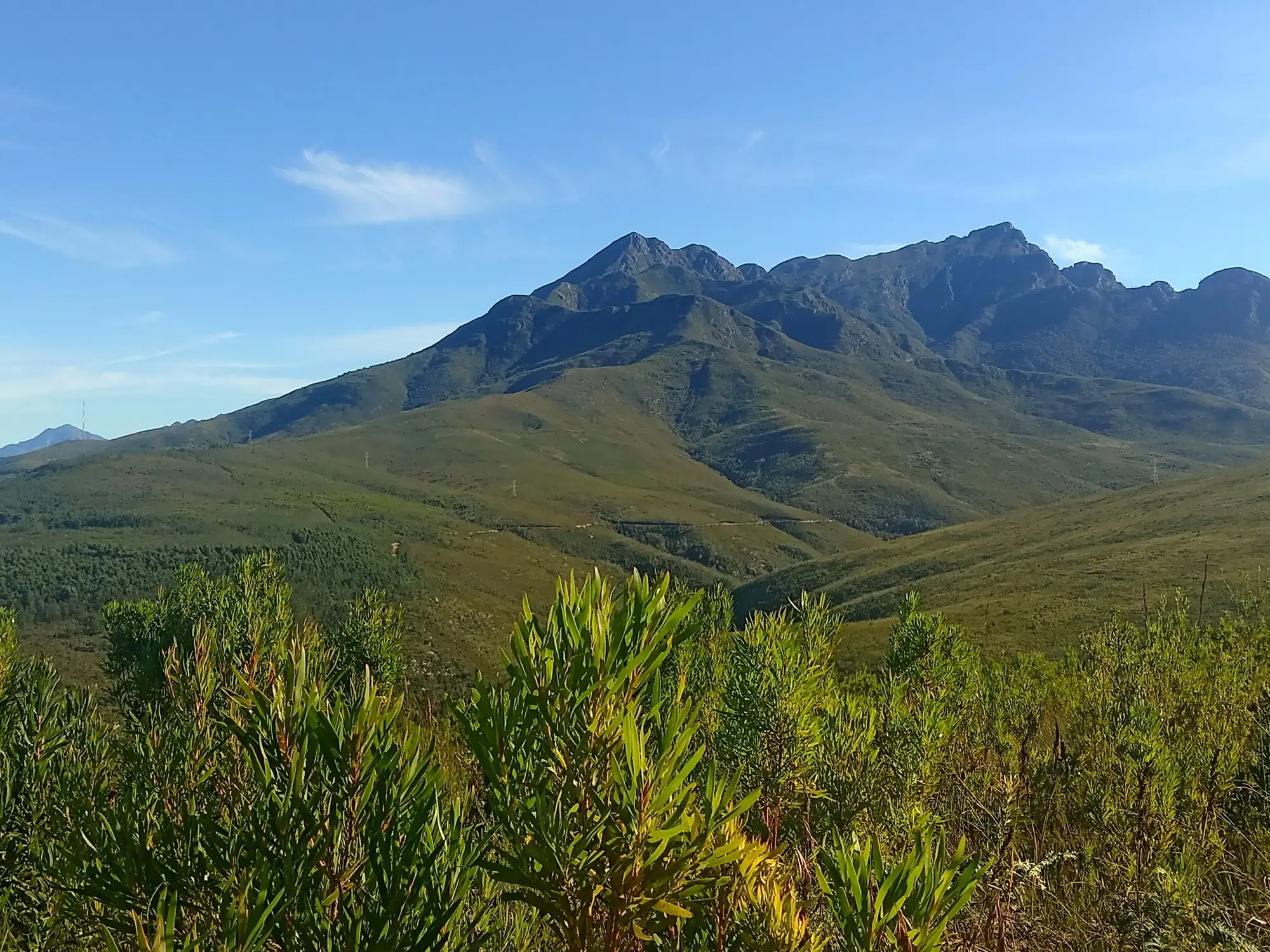

Big old trees, large gardens, horses next door and the Outeniquas right behind the house. Blanco is one of the prettiest corners of George, and the wildlife doesn't stop at the garden gate.
Blanco's big plots, mature trees, smallholdings and the mountain slopes right behind the suburb make it good country for roof rats, wasps, bees and molerats. Rats climb the trees into the roof. Paper wasps nest under deep eaves and in hedges. Bees move into wall cavities. Molerats push up mounds across big lawns. We deal with all of it from our base in George, a few minutes down the road, with treatments that are safe for children, pets and horses when used as we explain.
A suburb at the foot of the mountain
Blanco sits on George's northern edge, at the foot of the Outeniqua Mountains where the old Montagu Pass begins. It gets the rain that keeps George green, and then some. That means lush gardens, tall pines, oaks and indigenous trees, damp soil and plenty of shelter. Many properties are large, some with paddocks, stables, vegetable gardens and outbuildings. For pests, it's close to ideal.
Roof rats
Roof rats are the classic Blanco problem. They live in the trees and creepers and run along branches onto the roof, then in under the tiles or the eaves. The first sign is usually scratching in the ceiling at night, then droppings in the roof space or the pantry. With fruit trees, bird feeders, compost heaps and animal feed in many gardens, there's plenty of food.
We set lockable bait stations in the roof and on their runways, add traps where they make more sense, and show you how the rats are getting in. Cutting branches back at least a metre from the roof is the single most effective thing you can do. Our roof rat profile explains the signs, and rodent control covers the treatment.
Wasps and bees
Deep eaves, pergolas, hedges and outbuildings give paper wasps plenty of places to build their grey papery nests, and by late summer they can be on every side of the house. Honey bees look for cavities: a wall with a gap in the brickwork, the space under roof tiles, an old chimney or a water meter box. A colony in the wall needs removing, comb and all, or the next swarm moves straight back in. See wasp nest removal and bee removal, and our local pages for wasps in George and bees in George.
Molerats and big lawns
Large lawns and vegetable gardens on Blanco's softer soils attract molerats, which push up lines of soil mounds and eat roots and bulbs from below. Home remedies don't move them. Finding the active tunnel and treating it does. Our mole control in George page explains how.
Termites and older homes
Plenty of Blanco's older houses still have their original timber floors, ceilings and roof trusses. Subterranean termites build earthen tubes up from the ground, and in an older home they've had decades to find a route. If you see mud tubes, swarms of winged insects after rain, or hollow skirtings, have it inspected. Our termite control in George page has more.
Smallholdings and stables
On properties with horses, chickens or livestock, rats and mice live in the feed room, flies breed in manure, and ticks build up in paddocks. Bait stations in feed stores need careful placement so animals and farm dogs can't reach them, and fly control starts with clearing manure regularly. Our farm pest control page covers this, scaled down for a smallholding.
Spiders and other visitors
Homes next to the mountain and big gardens see their share of spiders, including brown button spiders under garden furniture. Millipedes come in after heavy rain. A treatment of the outside walls, the house and the outbuildings, keeps the bulk of them out.
New houses on old plots
As big Blanco properties are subdivided, new houses go up on land that has been garden or paddock for decades, often right next to old trees and established termite colonies. Building? Protect the new house before the concrete goes in, with the soil in the trenches and under the floor treated. Your builder will usually welcome it, and you get a certificate for the file. Our page on soil poisoning in George explains how it fits into the building schedule.
Older Blanco homes with suspended timber floors are worth a look underneath now and then too. Damp, dark crawl spaces under the floor are where termites and wood borer go unnoticed longest.
What it costs
Blanco jobs tend to be bigger than average, simply because the properties are. What we charge depends on how many buildings there are, which pests, how long they've been settled, and whether we need to come back. A large roof plus a stable and a store full of rats needs more bait stations and visits than a couple of mice in the pantry. We'll quote after we've looked.
We also look after the rest of George and the smallholdings out towards Hoekwil. Blanco households can reach us on 044 012 5011, or by message.
Frequently asked questions
Why do we get rats in the roof in Blanco?
Big trees and creepers touching the roof give roof rats an easy way in, and fruit trees, compost and animal feed give them food. Cutting branches back helps a lot.
Can you get bees out of a wall?
Yes. We remove the colony and its comb, then close the entrance, because comb left behind melts, stains and draws new swarms.
How do I get rid of molerats in a big lawn?
The tunnel they're using has to be found and treated. Flooding and vibrating stakes just make them dig around the problem.
Do you treat stables and feed rooms?
Yes. Feed rooms get rodent control, and stables and manure heaps get fly treatment, all placed so horses and dogs can't reach it.
When should I look for wasp nests?
Early spring. Look under the eaves, in pergolas, in hedges and in outbuildings, and get nests removed while they're small.
We bought an older house on a big plot. What should we check first?
Have the roof timbers and floors checked for borer and termites, and the roof space for signs of rats, before you start renovating.