

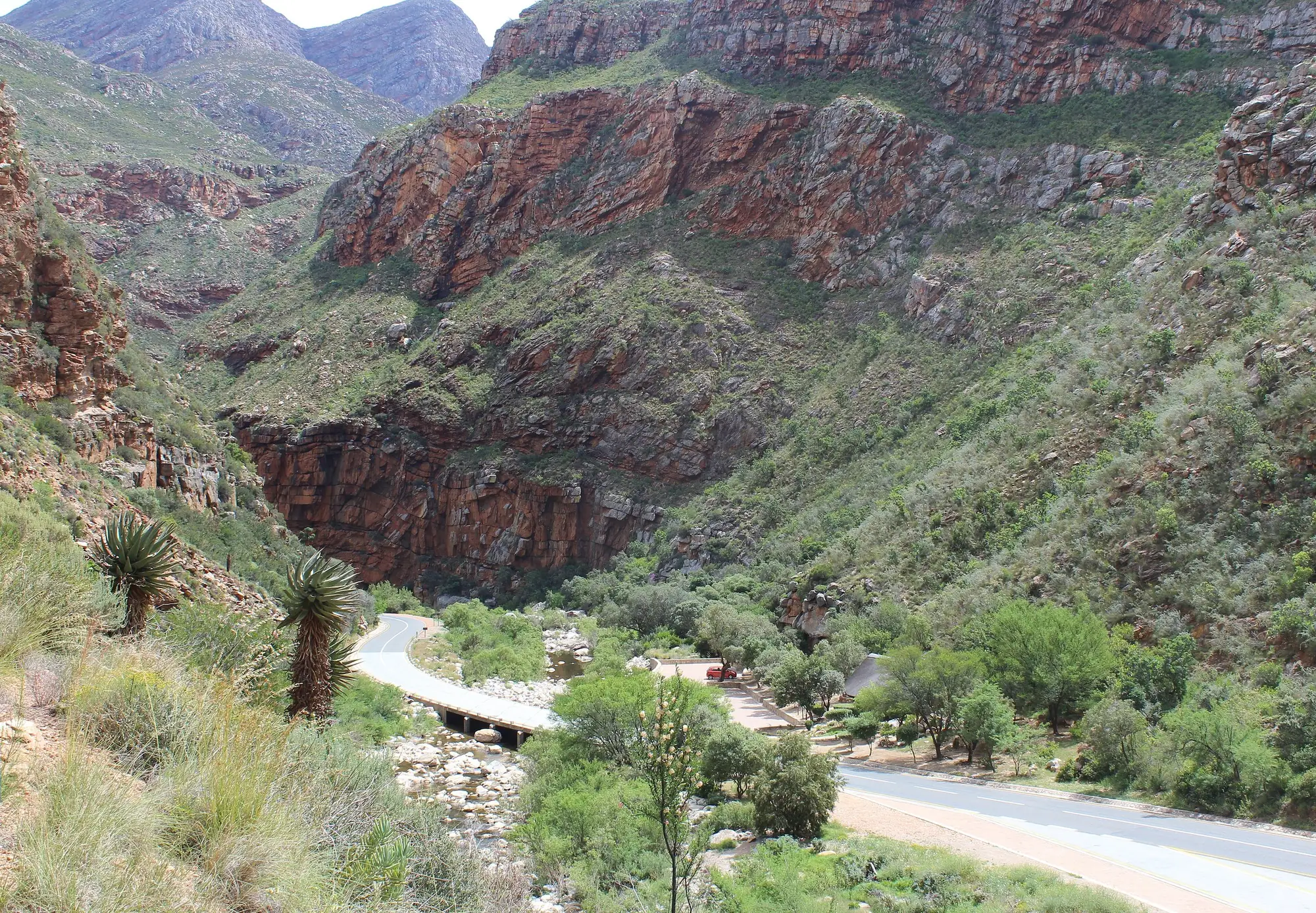

Towerkop's split peak watches over the town, the orchards and the dairy farms. In Ladismith, food is made, packed and stored all around you, and keeping pests out of it is part of the job.
Ladismith's pest problems are closely tied to its farming: rats and mice in dairies, packing sheds, feed stores and barns, flies around cattle and fruit waste, stored product insects in grain and feed, and the scorpions, spiders and harvester termites of the dry Klein Karoo. In town, it's cockroaches, ants, mice and fleas. We treat homes, farms and food businesses, plan our Ladismith trips well ahead, and treat everything we can on one visit. Indoors, we use treatments with no smell that are safe for children and pets as soon as they're dry, and our 3-month guarantee covers them.
A town under Towerkop
Ladismith sits at the western end of the Klein Karoo on Route 62, at the foot of the Swartberg, where the peak of Towerkop is split down the middle as if by an axe. The farms around it grow fruit, vines and lucerne, and dairy farming is part of the valley. Summers are hot and dry, winters cold, and water from the mountains keeps the valley green between the dry hills.
Dairies and cattle
Dairies, calf pens and feedlots bring flies, and flies in a dairy are a hygiene problem as well as a nuisance. Most fly control is about the breeding sites: manure, wet bedding, spilt feed and silage. Clearing those every few days, then treating the walls, rafters and fences where adult flies rest, keeps numbers down through the season. Feed rooms and silage areas also bring rats and mice, which we control with tamper-resistant bait stations placed out of reach of cattle and farm dogs. See fly control and farm pest control.
Fruit, packing sheds and food businesses
Packing sheds, cold stores and anywhere food is processed or packed need rodents and insects kept out, and buyers and auditors want to see records that prove it. We set up regular service with numbered bait stations, monitors and written reports for each visit. See commercial pest control. Fruit waste and spoiled produce also breed fruit flies and house flies, so waste handling is part of the plan.
Stored grain and feed
Weevils, beetles and moths in stored grain, seed and feed can ruin a season's stock in the summer heat, because they breed faster when it's warm. Fumigation under gas-tight sheets with a registered fumigant reaches insects inside the grain, and the store stays closed until it's cleared. See our stored product insects profile.
Scorpions, spiders and termites
The dry, stony hills around Ladismith suit scorpions, including thick-tailed species, and button spiders. A barrier treatment around houses and outbuildings, and clearing rubble and rock edging away from walls, reduces them. In lawns and grazing, harvester termites cut grass and leave bare patches with small soil heaps. See scorpions and harvester termites.
Hay, lucerne and owls
Hay and lucerne bales stacked in a shed are close to the perfect rodent home: warm, dry, full of nesting material and right next to the feed. Rats and mice tunnel through the stack, foul the hay and chew wiring in the shed. Stacking bales on pallets away from walls, leaving an inspection gap so you can see behind them, and placing bait stations along the walls of the shed all help. So do barn owls. A pair of owls catches a lot of rodents, and many farmers put up owl boxes. If you have owls, tell us, and we'll plan the baiting to keep the risk to them as low as possible.
Homes in town
Town homes deal with the familiar list: German cockroaches behind the fridge, ants after rain, mice in the roof in winter, fleas and ticks from the dogs, and wasps under the eaves in summer. Each needs its own approach, and we'll explain which before we start.
Booking a visit
Ladismith is one of the furthest towns we serve, over the mountains from George. We book visits ahead and try to group jobs in the valley on the same day, which keeps travel costs down. Tell us what you're seeing and the size of the property when you book.
Water, gardens and mosquitoes
The irrigation that keeps the valley green brings its own small problem. Still water in dams, furrows, troughs and garden ponds can breed mosquitoes on summer evenings. Fish in ponds, covers on tanks and emptying troughs and containers regularly keep them down. Lush gardens in an otherwise dry landscape also attract ants, millipedes after rain and the occasional snake hunting the rodents that live there, which is one more reason to keep rodents under control around the house.
What it costs
House, farm or business; the number of buildings; the pests; stored product to fumigate, if any; once-off or regular; and the distance from George. Those are the variables. A house with mice is a small job; a dairy or packing shed programme is a bigger one. We'll quote before we come out.
We also work in Calitzdorp and Oudtshoorn. To set up a visit, call 044 012 5011 or book here.
Frequently asked questions
Do you do pest control in Ladismith?
Yes, homes, farms and food businesses in and around town, booked ahead and grouped where we can.
How do we get the flies down in the dairy?
Start with the muck: manure, wet bedding and spilt feed are where they breed. We treat the walls and rafters where they rest, and the two together give the best result.
Do you keep records for packing sheds and audits?
Yes. Regular service includes numbered bait stations, monitoring and a written report after every visit.
How do you deal with weevils in stored feed?
The feed is fumigated with phosphine under sealed sheets, which reaches the insects inside the grain. The store stays closed until it's cleared.
Barn owls hunt over our lucerne. Is rodent bait a risk to them?
It's a fair worry. We keep bait inside stations around the buildings rather than out in the fields, and use traps where owls or other animals could be affected.