


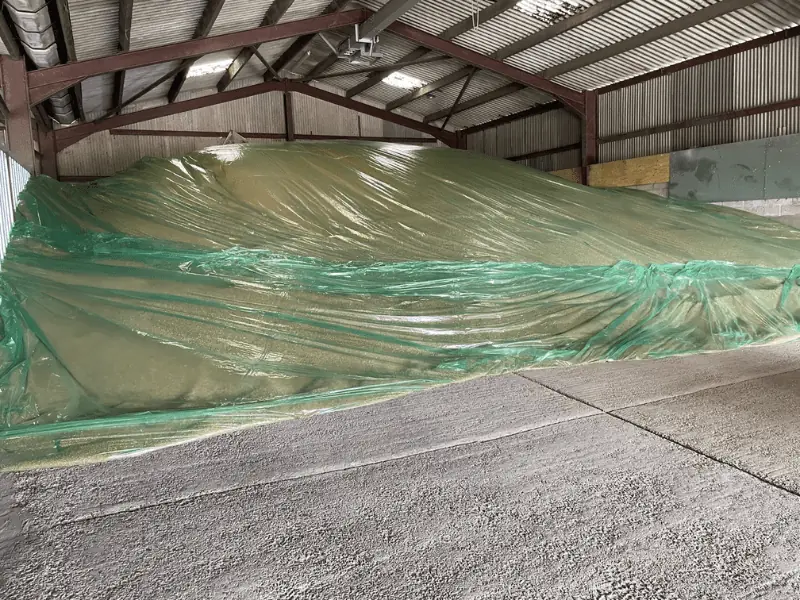
A fumigation that leaks does more harm than wasting the money. The beetles that live through it breed, and their offspring are harder to kill the next time.
Between Stil Bay, Riversdale and Albertinia, farms keep grain, seed and animal feed in sheds, bins and stacks of bags, and when weevils, grain borers or flour beetles get into that stock, phosphine fumigation is the tool that reaches them inside the kernels. It works when the gas is held in a properly sealed space, at a strong enough concentration, for long enough. Cut any of those three short and some of the insects survive. Worse, the survivors tend to be the toughest of the bunch, and over a few rounds a population can build up resistance to phosphine. This page is about doing it properly so that doesn't happen on your farm.
How resistance builds
Picture a stack of maize bags with a sheet thrown over it, not sealed at the floor. The gas seeps out under the edges, so the concentration inside never gets where it should be. The weakest beetles die. The ones with a bit more natural tolerance hang on, and when the sheet comes off they breed. Repeat that a few times and you have beetles that shrug off a dose that would have wiped out their grandparents.
This isn't theory. Phosphine resistance has been recorded in grain insects in many countries, including the lesser grain borer, the rusty grain beetle and the red flour beetle. Once it's established in a store, a normal fumigation may no longer finish the job, and the options get fewer and more expensive. The best defence is simple: every fumigation done properly, every time.
Where the gas escapes
A fumigation can only be as good as its seal. The places we check before any gas is released:
- Sheet edges. Gas-tight sheets have to lie flat on the floor and be weighted down along their full length with sand snakes, the long sand-filled tubes made for the purpose
- Tears and pinholes in old sheets, which get patched or the sheet gets replaced
- The floor itself. Cracked concrete or a bare earth floor lets gas leak downwards, so a stack may need a sheet underneath as well as over the top
- Shed doors, vents and roof gaps, if the whole shed is being sealed rather than a sheeted stack
- Silo hatches, aeration fans and ducting, which are built to move air and will happily move gas out too
If a store can't be sealed, we'll say so, and suggest moving the stock to somewhere that can be.
Long enough to reach every stage
Adult beetles die fairly quickly in phosphine. Eggs and pupae are much more tolerant, and they're tucked away inside the grain. The exposure has to last long enough for the gas to kill those stages too, and that's measured in days, not hours. In cold weather insects slow down and the gas works more slowly, so the exposure has to be longer still. A shed near the coast in winter and a hot inland store in February are not the same job.
Opening the store early because the smell has faded hands the survivors exactly what they need. The garlic or fishy smell isn't a reliable guide to whether gas is present or how much.
A few tablets in the bags
Dropping a handful of fumigation tablets into feed bags or a bin, closing the shed and hoping for the best is exactly the kind of half-measure that breeds resistance. It's also dangerous. Tablets that get damp or are heaped together can catch fire, the gas drifts to wherever people are working or sleeping, and nobody knows when it's safe to go back in. Leave it to a registered fumigator who seals, doses, signs the area, keeps everyone out and clears it before use.
Signs a fumigation didn't work
- Live beetles or moths in the stock within a few weeks of the sheets coming off
- Insects crawling on the outside of the sheets during the exposure, which points to a leak
- Fresh dust and new holes in kernels after treatment
If you see any of these, don't simply repeat the same job. Something let the insects survive, and we need to find out what before gassing them again. Send us a photo and tell us how the last fumigation was done.
After the sheets come off
Phosphine leaves nothing behind to protect the grain, so insects can move straight back in from old residues, empty bags or a neighbouring stack. Keep new stock apart from old, use the oldest first, and check the bottom bags and the bin corners every month or so. More on the insects themselves is on our stored product insects page.
In town
Inside Stil Bay, fumigation comes up less with grain and more with furniture or stored goods carrying wood borer or beetles. A borer-riddled cupboard can sometimes be sheeted on its own, away from the house. Borer is covered under wood borer treatment, and the household side of the town on pest control in Stil Bay.
Nearby
We also cover Riversdale and Albertinia. The whole-farm picture, including rats in the feed shed, is on farm pest control, and the method in general on fumigation.
What it costs
The tonnage, whether it's bagged or in bulk, the state of the floor and the building, and how much sealing has to be done all go into the price. We look at the store first and give you a quote before anything is sealed.
Phone 044 012 5011 with an idea of what's stored and how it's kept, or request a visit online.
Frequently asked questions
Why do some fumigations fail?
The space leaked, the gas concentration was too low, or the store was opened before the exposure was finished. Any of these lets eggs and pupae survive.
What is phosphine resistance?
Beetles that survive weak or short fumigations breed, and over several rounds the population becomes harder to kill with a normal dose. Proper sealing and exposure prevent it.
How long does sealed grain need to stay closed?
Days, not hours, and longer in cold weather. The exact period depends on the temperature and the fumigant's label, and the store stays closed until it's been cleared.
Can we put a few tablets in the feed bags ourselves?
No. It's dangerous for people and animals, and a half-dose in an unsealed shed is how resistant beetles are bred. Use a registered fumigator.
Will fumigated grain stay free of insects?
Not on its own. Phosphine leaves no residue, so keep fresh stock away from old, clean out residues and check regularly.
We fumigated and the beetles are back. Should we just do it again?
Not without finding out why the first one failed. Repeating a leaky or rushed fumigation makes resistance more likely.